| Piú viste - Curiosity and the Exploration of Gale Crater |

SOL0060-NRA_402815986EDR_F0050104NCAM00451M_.jpgHorizon and Sky at Gale - Sol 60 (Absolute Natural Colors; credits for the additional process. and color.: Dr Paolo C. Fienga/Lunar Explorer Italia/Italian Planetary Foundation) 96 visiteFrame taken at 11:34:19 Mars Local Solar TimeMareKromium
|
|

SOL0051-EB-MF-LXTT-IPF.jpgGale's Horizon - Sol 51 (an Image Mosaic in Natural Colors; credits for the additional process. and color.: Elisabetta Bonora and Marco Faccin/Lunar Explorer Italia/Italian Planetary Foundation)96 visitenessun commentoMareKromium
|
|

SOL0059-PIA16452-PCF-LXTT-IPF.jpgRocknest 3 - Sol 59 (Absolute Natural Colors; credits for the additional process. and color.: Dr Paolo C. Fienga/Lunar Explorer Italia/Italian Planetary Foundation)96 visiteThis view of a Martian Rock nicknamed "Rocknest 3" combines 4 (four) images taken by the right-eye camera of the Mast Camera (MastCam) Instrument located onboard the NASA - Mars Exploration Rover - Mars Laboratory "Curiosity", which has a telephoto, 100-millimeter-focal-length lens. The component images were taken a few minutes after Martian noon (---> 12:00 Mars Local Solar Time) on the 59th Martian Day, or Sol, of Curiosity's operations at Gale Crater, Mars.
Rocknest 3 is a Sedimentary Rock approximately 15" (such as about 40 centimeters) long and about 4" (approx. 10 centimeters) tall; next to "Rocknest 3" there is a patch of windblown Dust and Sand where Curiosity scooped and analyzed several Soil Samples. The MastCam was about 13 feet (approx. 4 meters) from Rocknest 3 when the component images were taken, thus providing an image scale of about 0,01" (approx. 0,3 millimeter) per pixel.
This picture (which is an Original NASA - Mars Exploration Rover - Mars Laboratory "Curiosity" white-balanced color frame published on the NASA - Planetary Photojournal with the ID n. PIA 16452) has been additionally processed and then re-colorized in Absolute Natural Colors (such as the colors that a human eye would actually perceive if someone were near the NASA - Mars Exploration Rover (MER) - Mars Laboratory "Curiosity" and then looked down, towards the Rock known as Rocknest 3), by using an original technique created - and, in time, dramatically improved - by the Lunar Explorer Italia Team. Different colors, as well as different shades of the same color, mean, among other things, the existence of different Elements (Minerals) present on the Surface of Gale Crater, each having a different Albedo (---> Reflectivity) and Chemical Composition.MareKromium
|
|
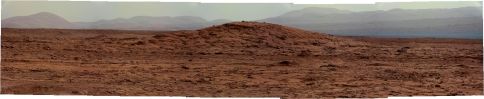
SOL0141-EB-MF-LXTT-IPF.jpgFeatures of Yellowknife Bay - Sol 127 (an Image-Mosaic in RAW Natural Colors; credits for the additional process. and color.: Elisabetta Bonora and Marco Faccin/Lunar Explorer Italia/Italian Planetary Foundation)96 visitenessun commentoMareKromium
|
|
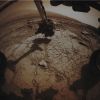
SOL0182-PIA16728-PCF-LXTT-IPF.jpgDrilling Time! - Sol 182 (Absolute Natural Colors; credits for the additional process. and color.: Dr Paolo C. Fienga/Lunar Explorer Italia/IPF)96 visitenessun commentoMareKromium
|
|
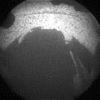
SOL0001-PIA15970.jpgWelcome to Gale Crater: Curiosity's Shadow - Sol 1 (RAW b/w Original NASA Frame; credits: NASA/JPL-Caltech)95 visitenessun commentoMareKromium
|
|

SOL0020-0020MR0057011000C0_DXXX.jpgWhite Edge - Sol 20 (RAW b/w Original NASA Frame; credits: NASA/JPL-Caltech - Research: Dr Gianluigi Barca/Lunar Explorer Italia/Italian Planetary Foundation)95 visitenessun commentoMareKromium
|
|

SOL0058-PIA16193-PCF-LXTT-IPF.jpgHigh-Resolution View of a Cross-Section through a Martian Ripple - Sol 58 (Absolute Natural Colors; credits for the additional process. and color.: Dr Paolo C. Fienga - Lunar Explorer Italia - Italian Planetary Foundation)95 visiteCaption NASA:"This image shows the wall of a "scuffmark" made by the NASA - MER Curiosity in a Windblown Ripple of Martian Sand, by using one of its wheels. The upper half of the image shows a small portion of the side wall of the scuff and a little bit of the floor of the scuff (bottom of this image). The prominent depression with raised rims at the bottom center of the image was formed by one of the treads on Curiosity's front right wheel.
The largest Grains of Sand in this image are about 0,04 to 0,08" (such as about 1 to 2 millimeters) in size. Those large Grains were on top of the Windblown Ripple and fell down to this location when the scuff was made. The bulk of the Sand in the Ripple is smaller, in the range below 0,002 to 0,008" (i.e.: 50 to 200 microns). The full scuffmark is about 20" (such as approx. 50 centimeters) wide which is, by the way, the same width of Curiosity's wheel.
This image from the Mars Hand Lens Imager (MAHLI) is the product of merging 8 (eight) images acquired at 8 (eight) slightly different focus settings to bring out details on the wall, slopes, and floor of the wheel scuff. The merge was performed onboard the MAHLI instrument to reduce downlinked data volume.
The image was acquired by MAHLI with the lens about 4,7" (approx. 12 centimeters) from the target. The pixel scale is about 0,002" (such as approx. 50 microns) per pixel. The image covers an area, roughly 3 by 2" (such as about 8 by 6 centimeters). The image was obtained on October, 4, 2012 - such as the 58th Sol, or Martian Day, of operations of the MER Curiosity on the Surface of Gale Crater".MareKromium
|
|

SOL0103-NRA_406647988EDR_F0050388NCAM07754M-PCF-LXTT-IPF.jpgTwilights over Gale Crater - Sol 103 (Absolute Natural Colors; credits for the additional process. and color.: Dr Paolo C. Fienga/Lunar Explorer Italia/Italian Planetary Foundation)95 visitenessun commentoMareKromium
|
|

SOL0472-EB-MF-LXTT-IPF-00.jpgGold?!? - Sol 472 (an Image-Mosaic in Natural Colors; credits for the additional process. and color.: Elisabetta Bonora and Marco Faccin/Lunar Explorer Italia/Italian Planetary Foundation)95 visiteIl titolo del frame è una "provocazione", e non lo è. Mi è capitato, infatti, nella Vita, di vedere dell'Oro sia "libero" (le classiche "pepite" di fiume, ad esempio), sia ancora "incastonato" nella roccia (come è quello che viene estratto dalle miniere). L'elaborazione del frame, è in Colori Naturali, ed il Colore Naturale dell'Oro è proprio quello che caratterizza il dettaglio posto sul margine superiore dell'immagine. Sarà Oro davvero? Beh, su Marte, a quanto pare (ed in accordo a recentissime scoperte, ancora non pubblicizzate), esistono (o meglio: esisterebbero) Diamanti - anche di cospicue dimensioni - sparpagliati sulla Superficie. Se questo è vero, allora perché escludere la possibilità che vi sia anche dell'Oro (o altri Minerali, per noi Terrestri, preziosi) in bella vista, sulla Superficie di Marte?...MareKromium
|
|

SOL0133-PIA16564-PCF-LXTT-IPF.jpgSnake River - Sol 133 (Absolute Natural Colors; credits for the additional process. and color.: Dr Paolo C. Fienga/Lunar Explorer Italia/Italian Planetary Foundation)94 visiteThe sinuous Rock Feature visible in the lower center and left (Sx) side of this mosaic of frames recorded by the NASA - Mars Exploration Rover (MER) - Mars Laboratory "Curiosity" has been nicknamed "Snake River" (and we honestly believe that, once you notice the actual physical configuration of the Rocky Feature that is now under a - relatively - close observation, the reason of the nickname will result more than obvious...).
The images forming the mosaic were taken by Curiosity's Navigation Camera (NavCam) during the 133rd Martian Day, or Sol, of the Rover's Mission in Gale Crater - Mars (such as December, 20th, 2012). On Sol 147 (such as January, 3rd, 2013), the NASA - Mars Exploration Rover (MER) - Mars Laboratory "Curiosity" drove about 10 feet (approx. 3 meters) to get a closer look at "Snake River", before proceeding to watch, photograph and then examine other Rocky Features located in the same area as well as in other areas nearby.
This picture (which is an Original NASA - Mars Exploration Rover - Mars Laboratory "Curiosity" b/w image-mosaic published on the NASA - Planetary Photojournal with the ID n. PIA 16564) has been additionally processed and then colorized in Absolute Natural Colors (such as the colors that a human eye would actually perceive if someone were near the NASA - Mars Exploration Rover (MER) - Mars Laboratory "Curiosity" and then looked ahead, towards the Rocky Surface Feature called "Snake River", the Rocky Paving located in front of and around the Rover, as well as the more distant Horizon of Gale Crater), by using an original technique created - and, in time, dramatically improved - by the Lunar Explorer Italia Team. Different colors, as well as different shades of the same color, mean, among other things, the existence of different Elements (Minerals) present on the Surface of Gale Crater, each having a different Albedo (---> Reflectivity) and Chemical Composition.MareKromium
|
|

SOL3747-mars_nasa_gov_msl-raw-images_proj_msl_redops_ods_surface_sol_03747_opgs_edr_ncam_NRB_730154125EDR_S1000696NCAM00545M_.JPGDark Clouds over Gale - Sol 374794 visiteSuggestiva. Peccato non sia a colori.MareKromium
|
|
| 261 immagini su 22 pagina(e) |
 |
|
|
|
|
16 | |
|
|
|
|








