| Piú viste - Curiosity and the Exploration of Gale Crater |

SOL0003-0003ML0000010000E1_DXXX-PCF-LXTT.jpgExtremely Foggy Horizon at Gale Crater - Sol 3 (Absolute Natural Colors; credits for the additional process. and color.: Dr Paolo C. Fienga/Lunar Explorer Italia/Italian Planetary Foundation)118 visitenessun commentoMareKromium
|
|

SOL0038MR0171000000E1_DXXX.jpgUnusually-looking Igneous Rock - Sol 38 (Absolute Natural Colors; credits for the research and the additional process.: Dr Gianluigi Barca/Lunar Explorer Italia/Italian Planetary Foundation)118 visitenessun commentoMareKromium
|
|
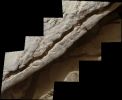
SOL0158-EB-MF-LXTT-IPF.jpgLooking for something?!? - Sol 158 (an Image-Mosaic in Natural Colors; credits for the additional process. and color.: Elisabetta Bonora and Marco Faccin/Lunar Explorer Italia/Italian Planetary Foundation)118 visitenessun commentoMareKromium
|
|
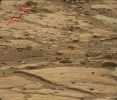
SOL0198-MR1007056000E1_DXXX-1-GB-LXTT-IPF-1.jpgExtremely unusually-looking Surface Features on the Floor of Gale Crater - Sol 198 (Calibrated Natural Colors; EDM: Absolute Natural Colors - Credits: Dr Gianluigi Barca/LXTT/IPF)117 visiteIndicate dalla freccia di color rosso, altre due straordinarie Features che "appaiono" sulla Superficie del Cratere Gale: la prima (quella più in alto), sembra una sorte di "Proboscide" che sembra sbucare da una crepa o un foro; la seconda, ricorda tanto il corpo sinuoso di un Sauro, la cui "pelle" ha esattamente lo stesso colore della Superficie su cui giace.
Ed anche in questo caso, un GRANDISSIMO COMPLIMENTO al nostro Vice-Presidente e Partner Storico, Dott. Gianluigi Barca (alisa Big "G").
Non possiamo "spiegare", perché non ne abbiamo i mezzi. Possiamo solo invitarVi a GUARDARE e, se ci riuscite, a VEDERE...MareKromium
|
|

SOL3563-1-PIA25413-DeepZoom.jpgPanorama - Sol 3563117 visitenessun commentoMareKromium
|
|

SOL0001-PIA15971.jpgWelcome to Gale Crater! (First Light) - Sol 1 (RAW b/w Original NASA Frame; credits: NASA/JPL-Caltech)116 visiteNASA's most advanced Mars Rover Curiosity has landed on the Red Planet. The one-ton Rover, hanging by ropes from a Rocket Backpack, touched down onto Mars Sunday to end a 36-week flight and begin a two-year investigation. The Mars Science Laboratory (MSL) Spacecraft that carried Curiosity succeeded in every step of the most complex landing ever attempted on Mars, including the final severing of the bridle cords and flyaway maneuver of the Rocket Backpack.
"Today, the wheels of Curiosity have begun to blaze the trail for human footprints on Mars. Curiosity, the most sophisticated Rover ever built, is now on the Surface of the Red Planet, where it will seek to answer age-old questions about whether life ever existed on Mars - or if the Planet can sustain life in the future", said NASA Administrator Charles Bolden. "This is an amazing achievement, made possible by a team of scientists and engineers from around the world and led by the extraordinary men and women of NASA and our Jet Propulsion Laboratory. President Obama has laid out a bold vision for sending humans to Mars in the mid-2030's, and today's landing marks a significant step toward achieving this goal".
Curiosity landed at 10:32 p.m. Aug. 5, PDT, (01:32 a.m. EDT Aug. 6, 2012) near the foot of a Mountain 3 (three) miles tall and 96 miles in diameter inside Gale Crater. During a nearly two-year prime mission, the rover will investigate whether the region ever offered conditions favorable for microbial life.
"The Seven Minutes of Terror has turned into the Seven Minutes of Triumph", said NASA Associate Administrator for Science John Grunsfeld. "My immense joy in the success of this mission is matched only by overwhelming pride I feel for the women and men of the mission's team".
Curiosity returned its first view of Mars, a wide-angle scene of Rocky Ground near the front of the Rover. More images are anticipated in the next several days as the mission blends observations of the Landing Site with activities to configure the Rover for work and check the performance of its instruments and mechanisms.
"Our Curiosity is talking to us from the surface of Mars", said MSL Project Manager Peter Theisinger of NASA's Jet Propulsion Laboratory in Pasadena, Calif. "The landing takes us past the most hazardous moments for this project, and begins a new and exciting mission to pursue its scientific objectives."
Confirmation of Curiosity's successful landing came in communications relayed by NASA's Mars Odyssey orbiter and received by the Canberra, Australia, antenna station of NASA's Deep Space Network.
Curiosity carries 10 science instruments with a total mass 15 times as large as the science payloads on the Mars rovers Spirit and Opportunity. Some of the tools are the first of their kind on Mars, such as a laser-firing instrument for checking elemental composition of rocks from a distance. The rover will use a drill and scoop at the end of its robotic arm to gather soil and powdered samples of rock interiors, then sieve and parcel out these samples into analytical laboratory instruments inside the Rover.
This is the first image taken by NASA's Curiosity Rover, which landed on Mars the evening of Aug. 5 PDT (morning of Aug. 6 EDT). It was taken through a "fisheye" wide-angle lens on one of the Rover's Rear Left Hazard-Avoidance Cameras at one-quarter of full resolution. The camera is the left eye of a stereo pair positioned at the back left, or port, side of the Rover.
The Clear Dust Cover on the camera is still on in this view, and dust can be seen around its edge, along with three cover fasteners. One of the Rover's wheels is in the lower right corner. As planned, the Rover's early engineering images are lower resolution. Larger color images are expected later in the week when the Rover's Mast, carrying high-resolution cameras, is deployed.MareKromium
|
|

SOL0058-EB-MF-LXTT-IPF-4.jpgGale's Surface - Sol 58 (an Image-Mosaic in High-Def-3D and Natural Colors; credits for the additional process. and color.: Elisabetta Bonora and Marco Faccin/Lunar Explorer Italia/Italian Planetary Foundation)116 visitenessun commentoMareKromium
|
|

SOL0194-MF-EB-LXTT-IPF-1.jpgHorizon... - Sol 194 (an Image-Mosaic in Natural Colors; credits for the additional process. and color.: Elisabetta Bonora and Marco Faccin/Lunar Explorer Italia/Italian Planetary Foundation)116 visitenessun commentoMareKromium
|
|
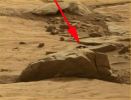
SOL0198-MR1007052000E1_DXXX-2-GB-LXTT-IPF-3.jpgExtremely unusually-looking Surface Feature on the Floor of Gale Crater: "The Mushroom" - Sol 198 (EDM - Enhanced Natural Colors; Credits: Dr Gianluigi Barca/LXTT/IPF)116 visitenessun commentoMareKromium
|
|

SOL0034-MH0063001000E1_DXXX-2-GC-LXTT-IPF.jpgNOT a "Martian Fly"! - Sol 34115 visiteRisolto il "Mistero" della "Mosca Marziana": grazie all'attenzione prestata a tutti i dettagli (anche i più nascosti) del frame da parte del nostro Grande Amico e Senior Partner, Gianluca Caricchia (alias "Omomoto") abbiamo scoperto che il particolare controverso è un image-artifact, ossìa non si tratta di un oggetto reale, bensì di una aberrazione dell'immagine. A scopo di promemoria, Vi ricordiamo che questa "aberrazione" che chiamiamo "artifact" può avere diverse origini e caratterizzazioni. Ad esempio, essa può essere causata da un vizio nella trasmissione del frame a Terra (ex.: "dead pixel"), altre volte da un gioco di luci ingannevole o da un contrasto eccessivo luce/ombra o anche da riflessi (ex.: "lens flares" e "strutture effimere") ed altre volte ancora da un vizio "fisico" della fotocamera (ex.: scheggiature e/o graffiature della lente o di un filtro/colore oppure presenza di uno o più corpi estranei - polvere o particolato - all'interno della fotocamera).
In questo caso specifico, la nostra ipotesi è che ci si trovi davanti ad un vizio fisico della fotocamera (probabilmente una microscopica serie di tre corpi estranei, due minori ed una maggiore - la "Mosca", appunto). Che altro dire? Complimenti a TUTTI, poichè è così che si fa vera Ricerca e Divulgazione: guardando, scoprendo e poi verificando, con ognuno di noi che agisce in piena indipendenza e con TUTTI noi che agiamo sempre in piena Onestà Intellettuale. Più di così...MareKromium
|
|

SOL0101-NLA_406456425EDR_F0050178NCAM00528M-PCF-LXTT-IPF.jpgHorizon and Sky at Gale - Sol 101 (Absolute Natural Colors; credits for the additional process. and color.: Dr Paolo C. Fienga/Lunar Explorer Italia/Italian Planetary Foundation) 115 visitenessun commentoMareKromium
|
|
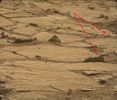
SOL0198-MR1007052000E1_DXXX-2-GB-LXTT-IPF-2.jpgExtremely unusually-looking Surface Features on the Floor of Gale Crater - Sol 198 (Calibrated Natural Colors; EDM: Absolute Natural Colors - Credits: Dr Gianluigi Barca/LXTT/IPF)115 visiteVi suggeriamo di focalizzare la Vostra attenzione sulla Feature situata più in basso rispetto al punto di osservazione di Curiosity.
L'apparenza, forse (e magari anche spesso), inganna... Ma il dettaglio scuro situato circa ad ore 3 del frame, a noi sembra un "Fungo" che si è piegato su se stesso (che si è "afflosciato" o "flesso", insomma). La texture ed il colore del dettaglio, comunque, mal si sposano con il macigno sul quale esso giace e le rocce che lo circondano e questa coppia di circostanze già ci dovrebbe spingere a pensar bene a quello che REALMENTE stiamo guardando.
Indicato dalla prima freccia, invece, una sorta di "Sauro" ma, in questo caso, visto frontalmente e che mostra occhi (simmetrici) e bocca. Per Onestà Intellettuale, riteniamo questo secondo particolare un possibile - e semplice - effetto ottico (un'illusione ottica, o pareidolia, in altre parole).
Ma sul "Fungo", sinceramente, noi riteniamo che bisognerebbe riflettere MOLTO BENE!...MareKromium
|
|
| 261 immagini su 22 pagina(e) |
 |
|
|
|
|
11 | |
|
|
|
|








