| |

| Piú viste - Curiosity and the Exploration of Gale Crater |
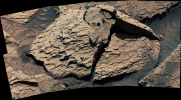
SOL4887-PIA26724.pngAtacama - Sol 4877 (Credits: NASA/JPL-Caltech)123 visiteNASA’s Curiosity Mars rover used its Mast Camera, or Mastcam, to capture this view of a rock nicknamed “Atacama” on May 6, 2026, the 4,877th Martian day, or sol, of the mission. The rock had gotten stuck to the drill on the end of Curiosity’s robotic arm on April 25. Engineers spent several days repositioning the arm and vibrating the drill to try and get the rock loose, finally detaching the rock on May 1.
Atacama is estimated to be 1.5 feet in diameter at its base and 6 inches thick. It would weigh roughly 28.6 pounds (13 kilograms) on Earth (and about a third of that on Mars). The circular hole produced by Curiosity’s drill is visible in the rock.
This mosaic is made up of eight images that were stitched together after being sent back to Earth. The color has been approximately white-balanced to resemble how the scene would appear under daytime lighting conditions on Earth.
Curiosity was built by NASA’s Jet Propulsion Laboratory, which is managed by Caltech in Pasadena, California. JPL leads the mission on behalf of NASA’s Science Mission Directorate in Washington as part of NASA’s Mars Exploration Program portfolio. Malin Space Science Systems in San Diego built and operates Mastcam.MareKromium
|
|

SOL0368-MF-EB-LXTT-IPF.jpgHorizon - Sol 368 (Natural Colors; credits for the additional process. and color.: Elisabetta Bonora and Marco Faccin/Lunar Explorer Italia/Italian Planetary Foundation)122 visitenessun commentoMareKromium
|
|

SOL0486-EB-MF-LXTT-IPF-01.jpgBad Wheel, Bad Luck... - Sol 486 (EDM - HighDef3D - Natural Colors - Credits for the additional process. and color.: Elisabetta Bonora and Marco Faccin/LXTT/IPF)122 visiteRibadiamo: il danno c'è e si vede. La causa? Ignota (anche se si può speculare...). L'unica "certezza", si fa per dire, è che qualche errore nella concezione delle ruote deve pur esser stato fatto. Ed anche questa è Materia ampia per speculare e teorizzare.MareKromium
|
|

SOL3466-mars_nasa_gov_msl-raw-images_msss_03466_mcam_3466MR1019650291602657C00_DXXX-2.jpgInteresting, but this is NOT a "Door"!122 visiteFoto palesemente alterata ed ingrandita per evidenziare l'inesistente. Perché è stato escluso il "sasso" - proprio davanti alla "porta" - le cui dimensioni sono note? Dalle dimensioni del "sasso", leggerete, si possono - sebbene con una certa approssimazione - le dimensioni della "porta". Maddai!!! Un pizzico di Onestà Intellettuale, almeno...MareKromium
|
|

SOL0379-MF-EB-LXTT-IPF.jpgMorning "Frost" at Gale? - Sol 379 (Natural Colors; credits for the additional process. and color.: Elisabetta Bonora and Marco Faccin/Lunar Explorer Italia/Italian Planetary Foundation)121 visiteSia detto senza polemica, le immagini NASA in Natural, Approximately and Almost True/Natural Colors del Pavimento (Floor) di Gale Crater ci hanno abituato ad un giallo opaco, con pressocchè zero sfumature e zero colorazioni diverse. uUna colorazione - a parere di chi scrive - veramente innaturale.
Ma è davvero così? A noi, come Gruppo Lunexit/IPF, sembra poco credibile.
Ed il dubbio cresce di molto, una volta che si sia adottato lo stesso Image and Color Processing usato dalla NASA, ma ottenendo risultati RADICALMENTE differenti. Molti di Voi ricorderanno lo strato di "Brina" (---> Frost) che, tutto intorno al Viking Lander 2, caratterizzava la Pianura di Utopia, durante i lunghi mesi del gelido Inverno Marziano. Ora, perché escludere a priori che, anche all'interno del Cratere Gale, possano verificarsi delle "brinate"?
Ma siamo realmente sicuri che, negli strati più bassi dell'Atmosfera Marziana (a ridosso del suolo, praticamente), non vi sia del vapore acqueo che, ad alcune ore della giornata, congela e si deposita, colorando di bianco/grigio i rilievi giallastri dell'interno del Cratere Gale?
Ci hanno chiamati "complottisti" ed "incompetenti". Sarà anche così. Ma immagini come questa, NON "taroccate" e NON "alterate" in alcun modo, le quali ci fanno nascere dei legittimi dubbi e dunque ci fanno pensare (l'attività più ALTA - e meno usata... - dagli "umani), dove altro pensate di trovarle, se non qui?!? Quale Sito "Dedicato" e NON SCHIERATO, oltre a Lunar Explorer Italia, potete trovare sulla Rete?!?
Si, lo sappiamo: la NASA è la NASA. Ma l'Uomo, l'Essere Umano, con la sua Intelligenza e Capacità di discernimento e di critica, è sempre e comunque di più. Noi Vi offriamo il massimo che possiamo ottenere, con i nostri mezzi e le nostre capacità e competenze. E lo facciamo in Buona Fede, SEMPRE. Non Vi piace? Girate pagina. Ma se non sapete far nulla di realmente Vostro e di realmente valido, almeno evitate di criticare e di parlare a vanvera. Per favore. Lo diciamo per Voi, perché la "figura" che fanno i nostri (ignoti, incappucciati ed ignorantissimi) detrattori, è veramente patetica....MareKromium
|
|

SOL0370-RRB_430342965EDR_F0130156RHAZ00305M_.jpgWatch carefully!- Sol 370121 visiteImmagine pessima. Ma nulla che "intacchi" le lenti della RC del Rover. Guardate le altre immagini per capire meglio.MareKromium
|
|

SOL0037MR0156001000E1_DXXX.jpgExtremely unusually-looking Rock: "Mid-Air" - Sol 37 (Credits: NASA/JPL-Caltech; Research: Dr Gianluigi Barca - Lunexit Team/Italian Planetary Foundation)120 visiteTanto affascinante, la "postura" di questo "sasso", quanto inusuale e, chissà..., "Anomalo". Un Grande abbraccio al Dr barca (Big "G") per la continua - e sempre proficua! - ricerca del "dettaglio impossibile". Si, impossibile. Perchè questo "sasso" poggia ESATTAMENTE su un impossibile equilibrio (a meno che quanto vediamo non sia altro che la porzione superiore di un macigno più grande ed infossato - ma, onestamente, questa ipotesi non ci pare molto valida). E comunque sia, pensiamoci sopra...MareKromium
|
|

SOL0039-PIA16156.jpg"Hard" Mars... - Sol 39 (Credits: NASA/JPL-Caltech/MSSS)120 visite...Bisogna pure sorridere, in qualche modo ed in qualche misura...
Caption NASA:"NASA's Curiosity Rover found evidence for an ancient, flowing Stream on Mars at a few sites, including the Rock Outcrop pictured here, which the science team has named "Hottah" after Hottah Lake in Canada's Northwest Territories. It may look like a broken sidewalk, but this geological feature on Mars is actually exposed Bedrock made up of smaller fragments cemented together, or what geologists call a "Sedimentary Conglomerate". Scientists theorize that the Bedrock was disrupted in the past, giving it the titled angle, most likely via impacts from Meteorites.
The key evidence for the ancient Stream comes from the size and rounded shape of the Gravel in and around the Bedrock. Hottah has pieces of gravel embedded in it, called clasts, up to a couple inches (few centimeters) in size and located within a matrix of sand-sized material. Some of the clasts are round in shape, leading the Science Team to conclude they were transported by a vigorous flow of Water. The Grains are too large to have been moved by Wind. A close-up view of Hottah reveals more details of the Outcrop. Broken surfaces of the Outcrop have rounded, Gravel Clasts, such as the one circled in white, which is about 1,2" (3 centimeters) across. Erosion of the Outcrop results in Gravel Clasts that protrude from the Outcrop and ultimately fall onto the Ground, creating the Gravel Pile at left".MareKromium
|
|

SOL0066-EB-MF-LXTT-IPF.jpgDigging at Rocknest - Sol 66 (Natural Colors; credits for the additional process. and color.: Elisabetta Bonora and Marco Faccin/Lunar Explorer Italia/Italian Planetary Foundation)120 visitenessun commentoMareKromium
|
|

SOL0084-MF-LXTT-IPF-1.jpgH E L L O! (High-Def-3D; credits for the additional process. and color.: Marco Faccin/Lunar Explorer Italia/Italian Planetary Foundation)120 visiteOur personal and "tri-dimensional" Tribute, as IPF, to the NASA - Mars Exploration Rover and Mars Laboratory "Curiosity". We hope that you may like it and, of course, if you really want to enjoy this work, do not forget to wear your red and blue glasses!...MareKromium
|
|

SOL1441.pngInteresting... - Sol 1441120 visitenessun commentoMareKromium
|
|

SOL0130-1-GB-IT-LXTT-IPF-00.jpgLook who's watching!... - Sol 130 (an Image-Mosaic in Calibrated Natural Colors; credits for the Research: Ivana Tognoloni/Lunar Explorer Italia/Italian Planetary Foundation)119 visiteSenza parole, o quasi: da dietro una roccia, posizionata (andiamo "a occhio"...) ad una trentina di metri da "Curiosity", SEMBRA (e sottolineiamo: SEMBRA!) che ci sia un volto "familiare" che spia i movimenti del Rover.
Il volto i chi? Ma di un "Grigio", naturalmente! Un Grigio il quale, per l'occasione, ha adottato un camouflage perfetto, ha cambiato colore e si è neascosto benissimo tra le rocce di Yellowknife Bay. Ma i suoi grandi ed affusolati occhi neri, uniti al suo inconfondibile "testone", non sono sfuggiti all'occhio della nostra eccezionale Amica e Partner, Ivana Tognoloni.
Che cosa stiamo guardando, quindi? Un'ennesima illusione ottica? Un'ennesima distorsione dell'immagine derivata dall'eccessiva compressione del frame? O forse un Alieno che osserva Curiosity, cercando di non farsi notare?
Cari Amici, il dettaglio è lì, bello chiaro, e l'ingrandimento isolato del dettaglio è nel prossimo frame. Giudicate Voi, ovviamente. Con benevolenza, equilibrio e, soprattutto, tanto acume. Perchè su Marte, a quanto abbiamo imparato in anni di analisi ed investigazione, "qualcosa" (o "qualcuno"), in Superficie, che si muove e lascia tracce del suo passare, SEMBRA esserci davvero.....MareKromium
|
|
| 261 immagini su 22 pagina(e) |
|
|
|
|
|
10 | |
|
|
|
|
|
|








