| Piú viste - Mars from Orbit (from July 2009) |
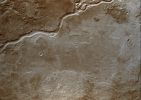
Channels-Apsus_Vallis-PIA02170-PCF-LXTT-00.jpgApsus Vallis (1 - Natural Colors; credits for the additional process. and color.: Dr Paolo C. Fienga - Lunar Explorer Italia)61 visiteThe channel in this image is called Apsus Vallis and it is located near the Elysium volcanic complex. Lava may have played a part in the formation of Apsus Vallis.
Image information: VIS instrument;
Latitude: 35,3° North;
Longitude: 134,9° East;
Resolution: 19 meter/pixelMareKromium
|
|
Volcanic_Features-Lava_Flows-Arsia_Mons-20091201a.jpgLava Flows (False Colors; credits: Lunexit)61 visitenessun commentoMareKromium
|
|

Ascraeus_Mons-PIA13209.jpgPortion of the N/W Flank of Ascraeus Mons (Enhanced and Saturated Natural Colors; credits for the additional process. and color.: Dr Paolo C. Fienga - Lunexit Team)61 visitenessun commentoMareKromium
|
|

Landslides-Chrise_Planitia-PIA13254.jpgChrise Chaos (Saturated Natural Colors; credits for the additional process. and color.: Dr Paolo C. Fienga - Lunexit Team)61 visitenessun commentoMareKromium
|
|
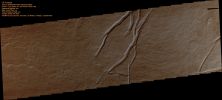
Pits_and_Channels-Oti_Fossae-PIA13253.jpgPits and Channels in Oti Fossae (Natural Colors; credits for the additional process. and color.: Dr Paolo C. Fienga - Lunexit Team)61 visitenessun commentoMareKromium
|
|

North_Polar_Dunes-PIA13300.jpgNorth Polar Dunefields (Natural Colors; credits for the additional process. and color.: Dr Paolo C. Fienga - Lunexit Team)61 visiteCaption NASA:"In this image we can see Dunes near the North Pole of Mars. It appears that small individual Dunes are coalescing into larger dune forms (Dunefields)".
Orbit Number: 37623
Latitude: 78,6159° North
Longitude: 118,498° East
Instrument: VIS
Captured: 2010-06-08 at 05:01 MLT (early morning)MareKromium
|
|
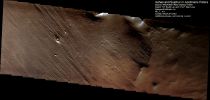
Volcanic_Features-Yardangs-Apollinaris_Patera-20080111a-PCF-LXTT.jpgYardangs and more in Apollinaris Patera (Absolute Natural Colors; credits for the additional process. and color.: Dr Paolo C. Fienga)61 visitenessun commentoMareKromium
|
|
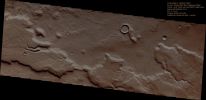
Channels-Tempe_Terra-PCF-LXTT.jpgFeatures of Tempe Terra (Absolute Natural Colors; credits for the additional process. and color.: Dr Paolo C. Fienga)61 visitenessun commentoMareKromium
|
|
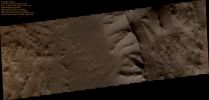
Coprates_Chasma-PIA13786-PCF-LXTT.jpgFeatures of Coprates Chasma (Natural Colors; credits for the additional process. and color.: Dr Paolo C. Fienga - Lunexit Team)61 visitenessun commentoMareKromium
|
|
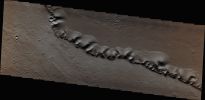
Volcanic_Regions-Tharsis-Uranius_Dorsum-PIA16336-PCF-LXTT-IPF.jpgUranius Dorsum (Absolute Natural Colors; credits for the research and the additional process.: Dr Paolo C. Fienga/Lunar Explorer Italia/Italian Planetary Foundation)61 visiteOrbit Number: 47664
Latitude (centered): 22,1827° North
Longitude (East): 282,689°
Instrument: VIS
Captured: September, 11th, 2012MareKromium
|
|

Craters-Unnamed_Crater-NT-PIA17420-PCF-LXTT-IPF.jpgUnnamed Crater with Dunefield (Absolute Natural Colors; credits for the additional process. and color.: Dr Paolo C. Fienga/Lunar Explorer Italia/Italian Planetary Foundation)61 visiteIn this VIS image, taken by the NASA - Mars Odyssey Orbiter on July 2nd, 2013, and during its 51.232nd orbit around the Red Planet, we can see a relatively large, dark and, probably, "Migrating" Dunefield that is found on the Floor of an old and Unnamed Impact Crater located in the Martian Southern Region known as Noachis Terra.
Even this Dunefield (just like the one found on the Floor of Proctor Crater - please, refer to yesterday's APOD if you want to know more -, as well as many others, located on both Martian Hemispheres) is being monitored by several Spacecrafts now orbiting the Red Planet (including the NASA- Mars Reconnaissance Orbiter) with the aim of identifying the movements (---> shifting, if any) of the Dunefield and the changes (again, if any) which might have occurred - over time - in the shape of the Dunefield itself.
Latitude (centered): 52,1373° South
Longitude (centered): 30,6046° East
Instrument: VIS
This frame (taken from an Original Mars Odyssey Orbiter b/w and Map-Projected frame published on the NASA - Planetary Photojournal with the ID n. PIA 17420) has been additionally processed, magnified, contrast enhanced, Gamma corrected and then colorized in Absolute Natural Colors (such as the colors that a human eye would actually perceive if someone were onboard the NASA - Mars Odyssey Orbiter and then looked down, towards the Surface of Mars), by using an original technique created - and, in time, dramatically improved - by the Lunar Explorer Italia Team.MareKromium
|
|

Craters-Proctor_Crater-PIA17421-PCF-LXTT-IPF.jpgProctor Crater's Dunefield (Absolute Natural Colors; credits for the additional process. and color.: Dr Paolo C. Fienga/Lunar Explorer Italia/IPF)61 visiteIn this VIS image, taken by the NASA - Mars Odyssey Orbiter on July 4th, 2013, and during its 51.257th orbit around the Red Planet, we can see part of the very large Dunefield that is located located on the Floor of Proctor Crater (a large Impact Crater found in the Noachis Quadrangle of Mars, at about 48° South Latitude and 330,5° West Longitude).
Proctor Crater is approx. 168 Km (such as about 104,3 miles) in diameter and it was so named after Dr Richard A. Proctor, a British Astronomer (who was born in Chelsea - London, UK, on March, 23rd, 1837 and died in New York - USA - on September, 12th, 1888). Proctor Crater contains an approx. 35 x 65 Km (such as about 21,7 x 40,36 miles) Dark Dunefield that was one of the first Sand Dunefields ever recognized on Mars - note: this discovery was based on the NASA - Mariner 9 Spacecraft's images. Just out of curiosity, Proctor's Dunes are still being monitored by several Spacecrafts now orbiting the Red Planet (including the NASA- Mars Reconnaissance Orbiter) with the aim of identifying the changes (if any) which might have occurred - over time - in the shape of the Dunefield itself.
Latitude (centered): 47,4158° South
Longitude (centered): 30,9423° East
Instrument: VIS
This frame (taken from an Original Mars Odyssey Orbiter b/w and Map-Projected frame published on the NASA - Planetary Photojournal with the ID n. PIA 17421) has been additionally processed, magnified, contrast enhanced, Gamma corrected and then colorized in Absolute Natural Colors (such as the colors that a human eye would actually perceive if someone were onboard the NASA - Mars Odyssey Orbiter and then looked down, towards the Surface of Mars), by using an original technique created - and, in time, dramatically improved - by the Lunar Explorer Italia Team.MareKromium
|
|
| 1003 immagini su 84 pagina(e) |
 |
|
|
|
|
57 | |
|
|
|
|





