| Piú viste - Mars from Orbit (from July 2009) |

Inca_City-PIA14281-PCF-LXTT.jpgInca City (Absolute Natural Colors; credits for the additional process. and color.: Dr Paolo C. Fienga - Lunexit Team) 65 visiteOrbit Number: 41834
Latitude: 81,408° South
Longitude: 295,701° East
Instrument: VIS
Captured: 2011, May, 20th
Mars Local Time (M.L.T.): 21:31 (Late Evening Hours)
MareKromium
|
|
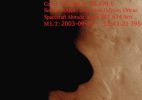
Craters-Unnamed_Crater_with_possible_Oil_Lake-V07738009-PCF-LXTT-00.jpgMigrating Dunes, Dirty Waters or maybe Surfacing Hydrocarbons? (1 - Natural Colors; credits for the additional process. and color.: Dr Paolo C. Fienga - Lunexit Team)64 visiteAttraverso la ricerca e selezione, operata dal bravissimo Dr Gianluigi Barca, di 5 frames, ottenuti nell'arco di 4 anni ma TUTTI relativi al medesimo rilievo superficiale (ossìa un cratere di modeste dimensioni situato ad una relativamente elevata Latitudine Sud), è possibile vedere con estrema chiarezza la - diciamo così... - "bizzarra" evoluzione di un "qualcosa" che giace sul fondo del cratere stesso.
Non è necessario spendere troppe parole sull'evidenza delle variazioni (anche cromatiche) occorse al materiale inquadrato in questi 5 frames, ma ci sembra opportuno sottolineare che una sequenza talmente incredibile e così chiaramente indicativa del verificarsi di eventi caratterizzati da una matrice (forse) indicativa di una recentissima - ed ancora perdurante - attività geologica avrebbe meritato l'attenzione di Scienziati e Ricercatori di tutto il Mondo. Attenzione che, invece (ed almeno per quanto ci è dato sapere) non c'è stata. Zero, nihil: totale silenzio. Curioso. Curioso specialmente allorchè andiamo a vedere (e leggere, in 1000 salse diverse!) che un evento di gran lunga meno eclatante - il rinnovarsi/ampliarsi di un "gully" - ha trovato spazio ed interesse (forse eccessivi e sproporzionati) nell'intera Comunità Scientifica.
Attenzione: che l'ampliarsi e modificarsi di "gullies" sia un possibile indice della presenza di acque superficiali su Marte è un fatto importante, senza dubbio; ma anche l'avanzare, il ritrarsi ed il mutare di forma di questo "materiale" (il quale potrebbe anche avere una origine organica) in un arco di tempo così piccolo - geologicamente parlando - a noi pare un evento meritevole di grande - anzi GRANDISSIMA - attenzione!
Ma che cosa stiamo guardando? Un nuovo - e terribilmente ingannevole gioco di chiaro/scuri (al quale si abbina un ulteriore elemento fuorviante per i nostri occhi il quale è derivante da leggeri mutamenti della luce sull'Orizzonte Locale e/o da variazioni dell'altezza e dell'angolazione da cui le riprese sono state effettuate)?
Secondo noi, fra le ipotesi (pur) logiche e pragmatiche considerabili, questa è decisamente la meno soddisfacente (anche se non possiamo comunque escluderla al 100%).
Si tratta allora di "dune migranti"? Tendenzialmente, anche dopo aver esaminato altri frames relativi a queste "migrating dunes", saremmo portati a dire di no (manca l'effetto "scia" - di polveri e sabbie (collose) residuali - che caratterizza questo particolare fenomeno).
Si tratta forse di "fanghi" (ossìa di "acque sporche")? Ipotesi plausibile.
O magari si tratta di Idrocarburi Affioranti? Ecco: questa idea ci piace e, ora che stiamo osservando Marte con sempre maggiore attenzione e - soprattutto - "sapendo" quello che cerchiamo, l'ipotesi di cui sopra ci sembra attendibilissima. Idrocarburi frammisti a polveri e residui di CO2: osservate il frame n. 4 con particolare attenzione e poi, se volete, comunicateci le Vostre opinioni.
E COMPLIMENTI vivissimi al Dr Barca!MareKromium
|
|

Craters-Unnamed_Crater_with_Frost-00-PCF-LXTT.jpgClouds over "Frosty" Crater (EDM - Natural Colors; credits for the additional process. and color.: Dr Paolo C. Fienga - Lunar Explorer Italia)64 visitenessun commentoMareKromium
|
|

Craters-RabeCrater-20091030a.jpgWarm Dunes inside Rabe Crater (Daytime IR)64 visiteCoord.: 43,8° South Lat. and 34,4° East Long.MareKromium
|
|
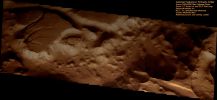
Craters-Timbuktu_Crater-20080101a-PCF-LXTT.jpgFeatures of Timbuktu Crater (Absolute Natural Colors; credits for the additional process. and color.: Dr Paolo C. Fienga - Lunexit Team)64 visitenessun commentoMareKromium
|
|

Dust_Devils_Tracks-Noachis_Terra-PCF-LXTT.jpgDust Devils Tracks in Noachis Terra (Absolute Natural Colors; credits for the additional process. and color.: Dr Paolo C. Fienga - Lunexit Team)64 visitenessun commentoMareKromium
|
|

Craters-Kaiser_Crater-PIA13835-PCF-LXTT.jpgDunefield inside Kaiser Crater (Absolute Natural Colors; credits for the additional process. and color.: Dr Paolo C. Fienga - Lunexit Team)64 visitenessun commentoMareKromium
|
|
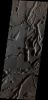
Volcanic_Features-Collapse_Pits_and_Chains-AM-PIA16647-PCF-LXTT-IPF.jpgCollapse Features on the Northern Flank of Ascraeus Mons (Absolute Natural Colors; credits for the additional process. and color.: Dr Paolo C. Fienga/Lunar Explorer Italia/Italian Planetary Foundation)64 visiteThis image was taken by the NASA - Mars Odyssey Orbiter, this time during its 47952nd Orbit, and it shows us a small fraction of the unbelievably compllicated Network of Collapse Features (Pits, Pit-Chains, Channels and Fissures) which are located on the Northern Flank of the Martian Volcano known as Ascreaus Mons (a large Shield Volcano located in the Tharsis Region of the Red Planet). Ascraeus Mons is the Northernmost and tallest of the 3 (three) Shield Volcanoes collectively known as the Tharsis Montes,being the other two huge Volcanoes known as Pavonis and Arsia Mons (if you wish to have an orbital vision of all these three fascinating Volcanoes, as well as a portion of the Noctis Labyrinthus Region of Mars, please go to Archive and refer to the APOD of February, 14th, 2012). Out of curiosity, Ascraeus Mons' location corresponds to the so-called "Classical Albedo Feature" which was known as Ascraeus Lacus.
Ascraeus Mons was actually discovered by the NASA - Mariner 9 Spacecraft in 1971. This enormous Volcano, however, was originally just called "North Spot", since it was the Northernmost of the only 4 (four) "Spots" (---> Reliefs) visible on the whole Surface of Mars which, at that time (and due to a Global Dust Storm), looked completely featureless from the orbit. As the Dust cleared, the abovementioned "Spots" were revealed to be extremely tall Shield Volcanoes whose Summits stood above the Dust-flooded, Lower Atmosphere. The Volcano's name officially became Ascraeus Mons in 1973.
Latitude: 13,6538° North
Longitude: 257,429° East
Instrument: VIS
Captured: October, 5th, 2012
This frame (which is an Original Mars Odyssey Orbiter b/w frame published on the NASA - Planetary Photojournal with the ID n. PIA 16647) has been additionally processed and then colorized in Absolute Natural Colors (such as the colors that a human eye would actually perceive if someone were onboard the NASA - Mars Odyssey Orbiter and then looked down, towards the Surface of Mars), by using an original technique created - and, in time, dramatically improved - by the Lunar Explorer Italia Team.MareKromium
|
|

Coprates_Labes-PIA16271-PCF-LXTT-IPF.jpgCoprates Labes (Absolute Natural Colors; credits for the additional process. and color.: Dr Paolo C. Fienga/Lunar Explorer Italia/Italian Planetary Foundation)64 visiteThe finely ridged Materials visible in the upper portion of this NASA - Mars Odyssey Orbiter image - taken by the Spacecraft during its 49.450th orbit around the Red Planet - are huge Landslide (associated, most likely, with Mudslide) Deposits called Coprates Labes. These Deposits are found on the Floor of Coprates Chasma: a huge Canyon characterized by very steep Walls which is located in the Coprates Quadrangle of Mars, at 13,4° South Latitude and 61,4° West Longitude. Coprates Chasma is just a portion of the Valles Marineris Canyon System; it is approx. 966 Km (such as a little less than 600 miles) long and it got its name after a so-called "Classical Albedo Feature".
Latitude (centered): 11,7442° South
Longitude (centered): 292,003° East
Instrument: VIS
Captured: February, 5th, 2013
This frame (which is an Original Mars Odyssey Orbiter b/w frame published on the NASA - Planetary Photojournal with the ID n. PIA 16271) has been additionally processed and then colorized in Absolute Natural Colors (such as the colors that a human eye would actually perceive if someone were onboard the NASA - Mars Odyssey Orbiter and then looked down, towards the Surface of Mars), by using an original technique created - and, in time, dramatically improved - by the Lunar Explorer Italia Team.MareKromium
|
|

Channels-Terra_Cimmeria-PIA16274-PCF-LXTT-IPF-2.jpgChannels in Terra Cimmeria (Absolute Natural Colors; credits for the additional process. and color.: Dr Paolo C. Fienga/Lunar Explorer Italia/Italian Planetary Foundation)64 visiteThis VIS frame shows us a network of large and small Channels dissecting the Surface of an Highland Region located in Terra Cimmeria. The frame was acquired by the NASA - Mars Odyssey Orbiter during its 49.492nd orbit around the Red Planet.
Latitude (centered): 34,904° South
Longitude (centered): 157,710° East
Instrument: VIS
Captured: February, 9th, 2013
This frame (which is an Original Mars Odyssey Orbiter b/w frame published on the NASA - Planetary Photojournal with the ID n. PIA 16274) has been additionally processed and then colorized in Absolute Natural Colors (such as the colors that a human eye would actually perceive if someone were onboard the NASA - Mars Odyssey Orbiter and then looked down, towards the Surface of Mars), by using an original technique created - and, in time, dramatically improved - by the Lunar Explorer Italia Team.MareKromium
|
|

North_Polar_Regions-The_Erg-PIA18233-PCF-LXTT-IPF.jpgFeatures of the North Polar Erg (Absolute Natural Colors; credits for the additional process. and color.: Dr Paolo C. Fienga/Lunar Explorer Italia/Italian Planetary Foundation)64 visiteIn this VIS image, taken by the NASA - Mars Odyssey Orbiter on February, 26th, 2014, and during its 54.141st orbit around the Red Planet, we can see a small area of the North Polar Erg (---> Sea of Dunes). As the season changes from Spring to Summer, the Dunes surrounding the North Polar Cap, as you can see here, become darker and darker.
Only the round and bright Feature located on the left (Sx) margin of the frame (that we have already noticed in the past, when other pictures of this very same area were taken even by other Orbiters), seems to remain - basically - unchanged during the entire Martian Year. Unfortunately, we do not know what that Feature actually is, but our educated guess is that it could reasonably be a (relatively large) patch of Permanent Ice and Frost, thick and compacted enough to resist to the Winds' Action and then make it through the whole Martian Summer, when the temperature considerably raises, without sublimating or melting.
Latitude (centered): 79,7727° North
Longitude (centered): 198,7900° East
Instrument: VIS
This image (which is an Original Mars Odyssey Orbiter b/w and Map-Projected frame published on the NASA - Planetary Photojournal with the ID n. PIA 18233) has been additionally processed, magnified to aid the visibility of the details, contrast enhanced, Gamma corrected and then colorized in Absolute Natural Colors (such as the colors that a human eye would actually perceive if someone were onboard the NASA - Mars Odyssey Orbiter and then looked down, towards the Surface of Mars), by using an original technique created - and, in time, dramatically improved - by the Lunar Explorer Italia Team.
MareKromium
|
|

Aeolian_Features-DD_Tracks-PIA02185-1.jpgDeep Dust Devil Tracks between Brashear and Ross Crater (Original NASA/JPL/ASU b/w Frame)63 visiteCaption originale:"Dust Devil activity in this region between Brashear and Ross Craters is very common.
Large areas full of DD tracks surround the South Polar Region of Mars.
Image information: VIS instrument;
Latitude: - 55,2° North;
Longitude: 244,2° East;
Resolution: 17 meter/pixel.
|
|
| 1003 immagini su 84 pagina(e) |
 |
|
|
|
|
54 | |
|
|
|
|





