| Piú viste - Mars from Orbit (from July 2009) |
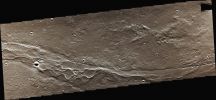
Channels-Enipeus_Vallis-PIA16332-PCF-LXTT-IPF.jpgFeatures of Enipeus Vallis (Absolute Natural Colors; credits for the additional process. and color.: Dr Paolo C. Fienga/Lunar Explorer Italia/Italian Planetary Foundation)79 visiteOrbit Number: 47340
Latitude: 36,0802° North
Longitude: 267,124° East
Instrument: VIS
Captured: August, 16, 2012MareKromium
|
|

North_Polar_Regions-North_Polar_Erg-PIA17866-PCF-LXTT-IPF-1.jpgSpring over the North Polar Erg (Absolute Natural Colors; credits for the additional process. and color.: Dr Paolo C. Fienga - Lunar Explorer Italia/Italian Planetary Foundation)79 visiteIn this VIS image, taken by the NASA - Mars Odyssey Orbiter on December, 1st, 2013, and during its 53.077th orbit around the Red Planet, we can see, once again, the Erg (---> Sea/Ocean of Dunes) that surrounds the North Polar Cap of Mars. It is Springtime, now, at the North Pole (---> in the Northern Hemisphere of Mars) and the Dunes are starting to lose their Frost cover. As the season continues towards Summer, the Dunes will appear darker and darker, as the Frost sublimates.
Specifically, throughout the accurate observation (and, even more, after the colorization) of the landscape that is shown here, we are able to easily notice that, in this portion of the North Polar Erg (a portion that is positioned a little more towards the South of the Northern Hemisphere - as compared to the Latitude of the Region observed during the 53.076th orbit of the NASA - Mars Odyssey Orbiter), there has been more Frost lost from the Dunes, and this circumstance caused them to appear darker than the Dunes that were shown in yesterday's APOD.
Latitude (centered): 79,990° North
Longitude (centered): 128,365° East
Instrument: VIS
This image (which is an Original Mars Odyssey Orbiter b/w and Map-Projected frame published on the NASA - Planetary Photojournal with the ID n. PIA 17866) has been additionally processed, magnified, contrast enhanced, Gamma corrected and then colorized in Absolute Natural Colors (such as the colors that a human eye would actually perceive if someone were onboard the NASA - Mars Odyssey Orbiter and then looked down, towards the Surface of Mars), by using an original technique created - and, in time, dramatically improved - by the Lunar Explorer Italia Team.MareKromium
|
|

Craters-Unnamed_Craters_at_Night-PIA07385.jpgNight on Mars... (Original NASA/JPL/ASU b/w Frame)78 visiteUna veduta davvero curiosa di una Pianura Marziana e dei suoi rilievi, ripresa durante la notte del Pianeta Rosso.
|
|
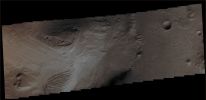
Craters-Gale_Crater-PIA15311-PCF-LXTT.jpgFeatures of Gale Crater (Absolute Natural Colors; credits for the additional process. and color.: Dr Paolo C. Fienga - Lunexit Team)78 visiteOrbit Number: 44524
Latitude: 4,640° South
Longitude: 137,685° East
Instrument: VIS
Captured: December, 28th, 2011
Mars Local Solar Time: 07:29 (Early Morninh Hours)MareKromium
|
|
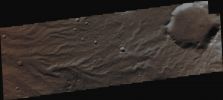
Channels-Unnamed_Channels_near_Huygens_Crater-PIA16322-PCF-LXTT-IPF.jpgUnnamed Channel near Huygens Crater (Absolute Natural Colors; credits for the additional process. and color.: Dr Paolo C. Fienga/Lunar Explorer Italia/Italian Planetary Foundation)78 visiteOrbit Number: 47248
Latitude: 16,8887° South
Longitude: 61,3382° East
Instrument: VIS
Captured: August, 8, 2012MareKromium
|
|

Craters-Martz_Crater-PIA16273-PCF-LXTT-IPF.jpgFeatures of Martz Crater (Absolute Natural Colors; credits for the additional process. and color.: Dr Paolo C. Fienga/Lunar Explorer Italia/Italian Planetary Foundation)78 visiteThis picture, taken by the NASA - Mars Odyssey Orbiter during its 49.480th orbit around the Red Planet, shows us a small portion of the Inner Rim of the ancient Martz Crater, heavily dissected by a great number of small Channels.
Martz Crater is located in the Southern Hemisphere of Mars, in a Region known as Terra Cimmeria; it is almost 100 Km (such as a little more than 62 miles) wide and approximately 1,5 Km (such as about 0,9 miles) deep. Martz Crater is well known among Planetary Scientists because of its very prominent and steep Complex Central Peak (which is approx. 1500 meters - or 5000 feet - tall): a Central Peak that formed, like you know, at the same time of the Crater (and as a consequence of a phenomenon known as "Rebound Effect"), right after a medium-sized Celestial Object (probably something in between 0,5 to 1 Km - such as from 0,31 to 0,62 miles - across) impacted the Surface of Mars.
Latitude (centered): 34,614° South
Longitude (centered): 143,722° East
Instrument: VIS
Captured: February, 8th, 2013
This frame (which is an Original Mars Odyssey Orbiter b/w frame published on the NASA - Planetary Photojournal with the ID n. PIA 16273) has been additionally processed and then colorized in Absolute Natural Colors (such as the colors that a human eye would actually perceive if someone were onboard the NASA - Mars Odyssey Orbiter and then looked down, towards the Surface of Mars), by using an original technique created - and, in time, dramatically improved - by the Lunar Explorer Italia Team.MareKromium
|
|

Dunes-North_Polar_Dunes-PIA13344.jpgNorth Polar Dunefields (Natural Colors; credits for the additional process. and color.: Dr Paolo C. Fienga - Lunexit Team)77 visiteCaption NASA:"As Northern Summer approaches on Mars, the Dunes near the North Polar Regions defrost and become darker".
Source: NASA/2001 Mars Odyssey Orbiter
Orbit Number: 37996
Latitude: 78,969° North
Longitude: 158,204° East
Instrument: VIS
Captured: 2010-07-08MareKromium
|
|
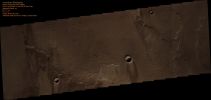
Volcanoes-Arsia-Windstreaks-PIA13356-1.jpgWindstreaks on Arsia Mons (Natural Colors; credits: Dr Paolo C. Fienga - Lunexit Team)77 visitenessun commentoMareKromium
|
|
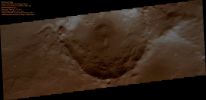
Craters-Balvicar_Crater-PIA13431.jpgBalvicar Crater (Natural Colors; credits for the additional process. and color.: Dr Paolo C. Fienga - Lunexit Team)77 visitenessun commentoMareKromium
|
|
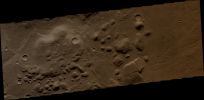
Terra_Sabaea-PIA13554.jpgThe Boudary between Highlands and Lowlands (Natural Colors; credits for the additional process. and color.: Dr Gianluigi Barca - Lunexit Team)77 visiteOrbit Number: 38884
Latitude (centered): 30,4564°
Longitude (East): 81,8197°
Instrument: VIS
Captured: September, 20th, 2010MareKromium
|
|

Dunes-PIA13733.jpgLarge Dunes (Absolute Natural Colors; credits for the additional process. and color.: Dr Paolo C. Fienga - Lunexit Team) 77 visitenessun commentoMareKromium
|
|
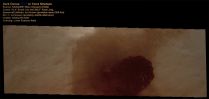
Dunes-Terra_Sirenum-PCF-LXTT.jpgDark Reddish Dunes in Terra Sirenum (Absolute Natural Colors; credits for the additional process. and color.: Dr Paolo C. Fienga - Lunexit Team)77 visitenessun commentoMareKromium
|
|
| 1003 immagini su 84 pagina(e) |
 |
|
|
|
|
44 | |
|
|
|
|





