| Piú viste - Mars from Orbit (from July 2009) |

Channels-Patapsco_Vallis-20100113a.jpgPatapsco Vallis and Elysium Fossae (Enhanced Natural Colors; credits: Dr Paolo C. Fienga - Lunexit Team)84 visiteThis VIS image shows two different types of "Linear Depressions".
The wide depression on the left of the frame is a wide trough known as "Elysium Fossae", which most likely formed due to tectonic activity.
The Fossae is probably bounded on both sides by faults.
The narrow depression on the right of the frame, instead, is a Lava Channel called Patapsco Vallis.
This Channel has Lava Flows on both sides which were probably formed by over spilling of lava as it flowed down the Channel.
Both these features are located East of Elysium Mons.MareKromium
|
|
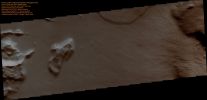
Volcanoes-Olympus_Mons-PIA13713.jpgPortion of the Northern Escarpment of Olympus Mons (Absolute Natural Colors; credits for the additional process. and color.: Dr Paolo C. Fienga - Lunexit Team)84 visitenessun commentoMareKromium
|
|

Ganges_Chasma-20080318a.jpgFeatures of Ganges Chasma (Absolute Natural Colors; credits for the additional process. and color.: Dr Paolo C. Fienga - Lunexit Team)84 visitenessun commentoMareKromium
|
|

Landslide_Deposits-20080423a-PCF-LXTT.jpgLandslide Deposits in Aeolis Planum (Natural Colors; credits: Dr Paolo C. Fienga - Lunexit Team)84 visitenessun commentoMareKromium
|
|
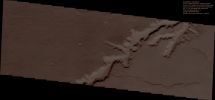
Channel-20090619a-PCF-LXTT.jpgSouthern Drainage Channel (Absolute Natural Colors; credits: Dr Paolo C. Fienga - Lunexit Team)84 visitenessun commentoMareKromium
|
|

Clouds-South_Polar_Regions-20090416a-PCF-LXTT-2.jpgSouthern Storm (2 - Natural Colors; credits for the additional process. and color.: Dr Paolo C. Fienga - Lunar Explorer Italia)83 visiteCoord.: 68,2° South Lat. and 190,6° East Long.MareKromium
|
|

Craters-Tikhonravov_Crater-PIA13410.jpgChannel inside Tikhonravov Crater (Natural Colors; credits for the additional process. and color.: Dr Paolo C. Fienga - Lunexit Team)83 visitenessun commentoMareKromium
|
|
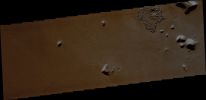
Yardangs-PIA13569.jpgPossible unusually-looking Yardangs (Natural Colors; credits for the additional process. and color.: Dr Paolo C. Fienga - Lunexit Team)83 visiteOrbit Number: 38919
Latitude (centered): 7,7213°
Longitude (East): 148,828°
Instrument: VIS
Captured: September, 22nd, 2010
Mars Local Time: 22:33 (late evening hours)MareKromium
|
|

Yardangs-Zephyria_Planum-PIA13636.jpgYardangs in Zephyria Planum (Absolute Natural Colors; credits for the additional process. and color.: Dr Paolo C. Fienga - Lunexit Team)83 visitenessun commentoMareKromium
|
|
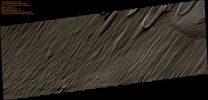
Yardangs-PIA13606.jpgPeri-Equatorial Yardangs (Absolute Natural Colors; credits for the additional process. and color.: Dr Paolo C. Fienga - Lunexit Team)83 visitenessun commentoMareKromium
|
|
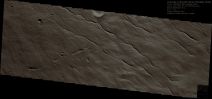
Volcanoes-Hecates_Tholus-Channels-20080702a-PCF-LXTT.jpgChannels on Hecates Tholus (Absolute Natural Colors; additional process.: Dr Paolo C. Fienga - Lunexit Team)83 visitenessun commentoMareKromium
|
|

Aeolian_Features-Windstreaks-SMP-PIA17683-PCF-LXTT-IPF.jpgWindstreaks in Syrtis Major Planum (EDM - Absolute Natural Colors; credits for the additional process. and color.: Dr Paolo C. Fienga/Lunar Explorer Italia/Italian Planetary Foundation)83 visiteIn this VIS image, taken by the NASA - Mars Odyssey Orbiter on September, 24th, 2013, and during its 52.254th orbit around the Red Planet, we can see (an count) a series of at least 8 (eight) Windstreaks (probably the most common Aeolian - meaning Wind-caused/related - Surface Feature found on Mars), which are located in the (VERY dark, as far as its Albedo - Reflectivity - is concerned) Region known as Syrtis Major Planum.
Syrtis Major Planum - when observed through a telescope - looks like a "Dark Spot" (---> Albedo Feature) located at the Boundary between the Northern Lowlands and Southern Highlands of Mars, just West of the large Impact Basin known as Isidis Planitia. In fact, Syrtis Major Planum was discovered, on the base of data collected by the NASA - Mars Global Surveyor Orbiter, to be a low-relief Shield Volcano, when it was formerly believed to be just a Plain (and it was then known as Syrtis Major Planitia). The very dark color of its Surface comes - most likely - from the Basaltic Volcanic Rocks that form (---> are found all over) the Region and a corresponding (and relative) relative lack of the Red/Orange Dust that covers most of the Red Planet.
Latitude (centered): 5,90248° North
Longitude (centered): 69,73730° East
Instrument: VIS
This image (which is an Original Mars Odyssey Orbiter b/w and Map-Projected frame published on the NASA - Planetary Photojournal with the ID n. PIA 17683) has been additionally processed, magnified, contrast enhanced, Gamma corrected and then colorized in Absolute Natural Colors (such as the colors that a human eye would actually perceive if someone were onboard the NASA - Mars Odyssey Orbiter and then looked down, towards the Surface of Mars), by using an original technique created - and, in time, dramatically improved - by the Lunar Explorer Italia Team.MareKromium
|
|
| 1003 immagini su 84 pagina(e) |
 |
|
|
|
|
41 | |
|
|
|
|





