| Piú viste - Mars from Orbit (from July 2009) |

Landslides-Capri_Chasma-20090616a-PCF-LXTT.jpgLarge Landslide in Capri Chasma (Darkened Absolute Natural Colors; credits for the additional process. and color.: Dr Paolo C. Fienga - Lunexit Team)111 visitenessun commentoMareKromium
|
|

Craters-Unnamed_Crater-VB-PIA18240-PCF-LXTT-IPF.jpgUnnamed Crater with Dunefield (Absolute Natural Colors; credits for the additional process. and color.: Dr Paolo C. Fienga/Lunar Explorer Italia/Italian Planetary Foundation)111 visiteIn this VIS image, taken by the NASA - Mars Odyssey Orbiter on April, 3rd, 2014, and during its 54.212th orbit around the Red Planet, we can see a so-called "Sand Sheet" - with extremely dark Surface Dune-like Landforms (actually the aformentioned Dune-like Landforms are just Ripples, very similar to the ones that we have seen inside the relatively small Impact Crater known as "Endurance", visited, a few years ago, by the NASA - Mars Exploration Rover (or "MER", for short) Opportunity and found in the Peri-Equatorial Martian Region of Meridiani Planum) - that covers the entire Floor of an Unnamed Impact Crater located at a very high Northern Latitude, not too far away from the North Polar Cap.
The gray/white-colored area that completely surrounds this Unnamed Impact Crater and which, then, goes toward the North/West, could (and should) be, in our opinion, as IPF, the initial portion of a large and long Windstreak.
Latitude (centered): 74,1474° North
Longitude (centered): 319,1200° East
Instrument: VIS
This image (which is a crop taken from an Original Mars Odyssey Orbiter b/w and Map-Projected frame published on the NASA - Planetary Photojournal with the ID n. PIA 18240) has been additionally processed, magnified to aid the visibility of the details, contrast enhanced, Gamma corrected and then colorized in Absolute Natural Colors (such as the colors that a human eye would actually perceive if someone were onboard the NASA - Mars Odyssey Orbiter and then looked down, towards the Surface of Mars), by using an original technique created - and, in time, dramatically improved - by the Lunar Explorer Italia Team.MareKromium
|
|

North_Polar_Regions-North_Polar_Erg-PIA13661.jpgNorth Polar Erg (Absolute Natural Colors; credits for the additional process. and color.: Dr Paolo C. Fienga - Lunexit Team:)110 visitenessun commentoMareKromium
|
|
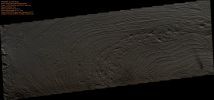
Lycus_Sulci-PIA13878-PCF-LXTT.jpgFeatures of Lycus Sulci (Absolute Natural Colors; credits for the additional process. and color.: Dr Paolo C. Fienga - Lunexit Team)110 visitenessun commentoMareKromium
|
|

Craters-Gale_Crater-PIA16289-PCF-LXTT-IPF.jpgGale Crater (Absolute Natural Colors; credits for the additional process. and color.: Dr Paolo C. Fienga/Lunar Explorer Italia/Italian Planetary Foundation)109 visiteDuring the month of April, of the AD 2013, Mars will be in a so-called "Conjunction" relative to the Planet Earth. This means that the Sun is exactly in the line-of-(direct) sight between the two aforementioned Celestial Bodies, such as our Home Planet Earth and the Red Planet. In this Spatial Configuration, as you can easily understand, the communications between the two Planets are - in fact - almost impossible; however, during the Conjunction Period, the Rovers operating on the Surface of Mars and the Spacecrafts orbiting around it, will continue to operate, but without sending all the collected data to Earth. This data, which are all recorded and stored, will be sent to Earth when the Conjunction is over, Mars shall have moved away from behind the Sun (of course, only from our Terrestrial point of view) and therefore the line-of-(direct) sight between Earth and Mars is re-established.
During the Conjunction Period, the "NASA - THEMIS Image of the Day" will be a visual tour of Gale Crater, such as the location of the newest Mars Exploration Rover (and Laboratory) Curiosity. The first image of Gale Crater that we propose you on today's APOD (image that was taken more than 6 years ago, by the NASA - Mars Odyssey Orbiter, during its 23.897th orbit around the Red Planet) shows, among other Features, the Landing Site of the Mars Exploration Rover (and Laboratory) Curiosity (which is located approximately near the center of the image). On the other hand, the Dark Material that is visible towards the South (the lower portion of the frame), is just (Basaltic, most likely) Sand that is set on the Floor of Gale Crater in the form of Dunes; Dunes that the Curiosity Rover, in a way or another, will have to navigate through in order to get to the Layered Central Deposit (also partially visible in the frame), whose official name, as you should know by now, is "Mount Sharp".
Latitude (centered): 4,47891° South
Longitude (centered): 137,46500° East
Instrument: VIS
Captured: April, 5th, 2007
This frame (which is an Original Mars Odyssey Orbiter b/w frame published on the NASA - Planetary Photojournal with the ID n. PIA 16289) has been additionally processed and then colorized in Absolute Natural Colors (such as the colors that a human eye would actually perceive if someone were onboard the NASA - Mars Odyssey Orbiter and then looked down, towards the Surface of Mars), by using an original technique created - and, in time, dramatically improved - by the Lunar Explorer Italia Team.MareKromium
|
|
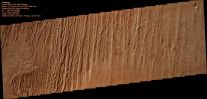
Yardangs-PIA13131.jpgYardangs (possible Natural Colors; credits for the additional process. and color.: Dr Paolo C. Fienga - Lunexit Team)108 visitenessun commentoMareKromium
|
|
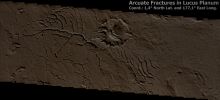
LucusPlanum.jpgArcuate Fractures in Lucus Planum (Natural Colors; credits for the additional process. and color.: Dr Paolo C. Fienga - Lunexit Team)108 visitenessun commentoMareKromium
|
|

Channel-Nanedi_Valles-PIA13645-PCF-LXTT.jpgSinuous Channel in Nanedi Valles (Absolute Natural Colors; credits for the additional process. and color.: Dr Paolo C. Fienga - Lunexit Team)108 visitenessun commentoMareKromium
|
|
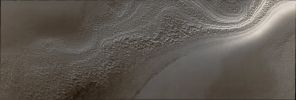
South_Pole-PIA13773.jpgSouth Polar Spring (Absolute Natural Colors; credits: Dr Paolo C. Fienga - Lunexit Team)108 visiteMareKromium
|
|

Craters-Unnamed_Craters_in_Mareotis_Fossae-PCF-LXTT.jpgPossible Evidence of Cometary Impact in Mareotis Fossae (Absolute Natural Colors; credits for the additional process. and color.: Dr Paolo C. Fienga - Lunexit Team)108 visitenessun commentoMareKromium
|
|

Yardangs-Zephyria_Planum-PIA13349.jpgZephyria Planum (Natural Colors; credits for the additional process. and color.: Dr Paolo C. Fienga - Lunexit Team)106 visitenessun commentoMareKromium
|
|

Landslides-OC-20080108a.jpgPeri-Equatorial Landslides (Darkened Absolute Natural Colors; credits for the additional process. and color.: Dr Paolo C. Fienga - Lunexit Team)106 visitenessun commentoMareKromium
|
|
| 1003 immagini su 84 pagina(e) |
 |
|
|
|
|
32 | |
|
|
|
|





