| Piú viste - Mars from Orbit (from July 2009) |
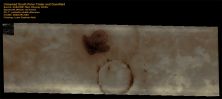
Crater-Unnamed_Buried_South_Polar_Crater.jpgUnnamed (and Buried) South Polar Crater (Absolute Natural Colors; credits for the additional process. and color.: Dr Paolo C. Fienga - Lunexit Team)117 visitenessun commentoMareKromium
|
|
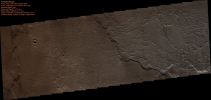
Daedalia_Planum-PIA13741.jpgFeatures of Daedalia Planum (Absolute Natural Colors; credits for the additional process. and color.: Dr Paolo C. Fienga - Lunexit Team)117 visitenessun commentoMareKromium
|
|

South_Polar_Regions-Chasma_Australe-PIA14368-PCF-LXTT.jpgFeatures of Chasma Australe (Absolute Natural Colors; credits for the additional process. and color.: Dr Paolo C. Fienga - Lunexit Team)117 visiteOrbit Number: 41990
Latitude: 85,1588° South
Longitude: 97,1401° East
Instrument: VIS
Captured: June, 2nd, 2011
Mars Local Time (M.L.T.): 17:48 (Late Afternoon)
MareKromium
|
|

Dunes-Syrtis_Major_Region-PIA08597-2.jpgFeatures of Syrtis Major Planum, proximities of Meroe Patera (Absolute Natural Colors; credits for the additional process. and color.: Dr Paolo C. Fienga - Lunexit Team)117 visiteImage information: VIS instrument;
Latitude: 6,3° North;
Longitude 68,3° East;
Resolution: 18 meter/pixel.
MareKromium
|
|
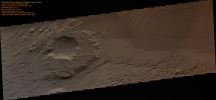
Craters-Unnamed_Crater_and_Yardangs-PIA13876-PCF-LXTT.jpgExtremely Old and Eroded Unnamed Impact Crater (Natural Colors; credits for the additional process. and color.: Dr Paolo C. Fienga - Lunexit Team)116 visitenessun commentoMareKromium
|
|
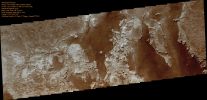
Meridiani_Planum-PIA13378.jpgMeridiani Planum (Saturated Natural Colors; credits for the additonal process. and color.: Dr Paolo C. Fienga - Lunexit Team)115 visiteCaption NASA:"Parts of Meridiani Planum have a Surface that appears to be composed of different layers of material. In this VIS image the contrast of bright and dark materials indicates the different layers".MareKromium
|
|

Craters-Cerulli_Crater-20080627a-PCF-LXTT-1.jpgDrainage Channels inside Cerulli Crater (Absolute Natural Colors; credits for the additional process. and color.: Dr Paolo C. Fienga - Lunexit Team)115 visitenessun commentoMareKromium
|
|
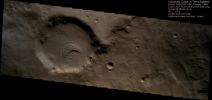
Terra_Sabaea-UC-20080701a-PCF-LXTT.jpgUnnamed Crater with "Fossilized" Dunefield in Terra Sabaea (Absolute Natural Colors; credits for the additional process. and color.: Dr Paolo C. Fienga - Lunexit Team)115 visitenessun commentoMareKromium
|
|
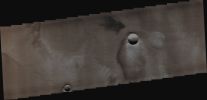
Aeolian_Features-Windstreaks-Daedalia_Planum-PIA14526-PCF-LXTT.jpgWindstreaks in Daedalia Planum (Absolute Natural Colors; credits for the additional process. and color.: Dr Paolo C. Fienga - Lunar Explorer Italia)115 visiteOrbit Number: 42636
Latitude: 13,471° South
Longitude: 224,856 East
Instrument: VIS
Captured: July, 25th, 2011MareKromium
|
|

Cerberus_Fossae-PIA15474-PCF-LXTT.jpgFeatures of Cerberus Fossae (Absolute Natural Colors; credits for the additional process. and color.: Dr Paolo C. Fienga - Lunexit Team)115 visiteOrbit Number: 45159
Latitude: 9,351° North
Longitude: 159,905° East
Instrument: VIS
Captured: February, 18th, 2012
Mars Local Solar Time: 15:48 (Middle Afternoon)MareKromium
|
|

North_Polar_Regions-Aspledon_Undae-PIA18237-PCF-LXTT-IPF.jpgAspledon Undae (Absolute Natural Colors; credits for the additional process. and color.: Dr Paolo C. Fienga/Lunar Explorer Italia/Italian Planetary Foundation)115 visiteIn this VIS image, taken by the NASA - Mars Odyssey Orbiter on February, 27th, 2014, and during its 54.150th orbit around the Red Planet, we can see a small portion of a Martian Region known as Aspledon Undae: one of the several large Dunefields located near the North Pole of Mars. The term Undae, as you can easily understand, comes from the Latin word "Unda" (---> Wave; plural Undae ---> Waves) and, in this specific case, as the image suggests quite clearly, means Dunes (better yet: Wave-shaped Dunes).
Latitude (centered): 72,4562° North
Longitude (centered): 307,9130° East
Instrument: VIS
This image (which is a crop taken from an Original Mars Odyssey Orbiter b/w and Map-Projected frame published on the NASA - Planetary Photojournal with the ID n. PIA 18237) has been additionally processed, magnified to aid the visibility of the details, contrast enhanced, Gamma corrected and then colorized in Absolute Natural Colors (such as the colors that a human eye would actually perceive if someone were onboard the NASA - Mars Odyssey Orbiter and then looked down, towards the Surface of Mars), by using an original technique created - and, in time, dramatically improved - by the Lunar Explorer Italia Team.MareKromium
|
|
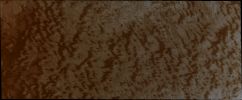
Dunes-North_Polar_Erg-PIA13377.jpgDunes of the North Polar Erg (Natural Colors; credits for the additional process. and color.: Dr Paolo C. Fienga - Lunexit Team)114 visiteAs the Sun warms the Martian Surface and more Frost is removed, the Dunes and other features near the North Pole of Mars are revealed. This VIS image shows how complex the inter-dune areas are.
Orbit Number: 38296
Latitude: 79,184°
Longitude: 143,729°
Instrument: VIS
Captured: August, 8th, 2010
M.L.T.: 14:58 (Early Afternoon)MareKromium
|
|
| 1003 immagini su 84 pagina(e) |
 |
|
|
|
|
30 | |
|
|
|
|





