| Piú viste - Mars, Deimos and Phobos: Maps |

Mars-015-Water_Map-2.pngMartian "Water-rich" Minerals188 visitesi veda il commento al frame che precedeMareKromium
|
|

002-Mars_Map.jpgMars Global Map (Mariner 9): Main Regions and Landing Sites186 visitenessun commento
|
|

011-Mars_North_Pole.jpgThe North Polar Region of Mars158 visitenessun commento
|
|
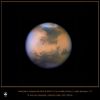
MARS-008.jpgGreen Patches on Mars (Earth View, from Pic-du-Midi)145 visiteLa NASA può, giustamente, sostenere quello che vuole (o, come ha fatto oggi, nella caption dedicata a questo frame, può non dire assolutamente nulla), ma le "macchie di verde" che si vedono con estrema chiarezza sulla Superficie di Marte in questa recentissima immagine ottenuta dall'Osservatorio Astronomico Francese "Midi-Pyrénées" NON SONO, a nostro modo di vedere e di interpretare, il prodotto di una semplice - ancorchè curiosa - aberrazione cromatica.
Anche nei nostri (certo non "fantascientifici", ma sicuramente accurati e professionali) color-processing il "verde" appare, su Marte, sempre più spesso: sia nei frames superficiali, sia nei frames orbitali.
Forse sarebbe il caso di fare, ai livelli di competenza più opportuni, qualche seria riflessione sulla Natura ed, eventualmente, la portata di questo fenomeno...
Caption NASA:"It's Spring for the Northern Hemisphere of Mars and Spring on Mars usually means Dust Storms. So the dramatic brown swath of dust (top) marking the otherwise white North Polar Cap in this picture of the Red Planet is not really surprising.
Taking advantage of the good views of Mars currently possible near opposition and its closest approach to planet Earth in 2010, this sharp image shows the evolving Dust Storm extending from the large dark region known as Mare Acidalium below the Polar Cap. It was recorded on February 2nd, 2010, with the 1 meter telescope at Pic Du Midi, a mountain top observatory in the French Pyrenees".
Nota Lunexit: BIZZARRO! Gli Amici di Pasadena hanno visto la "Striscia Marrone" che taglia la Calotta Nord Polare (marrone che poi è, secondo noi, un bel color arancione vivace...), ma non vedono il Verde che si stende, dalla Pianura di Acidalia, sino alla Regione di Vastitas Borealis e poi "scende", attraversando le Regioni Equatoriali (con una parte di Meridiani Planum), per quindi giungere sino alle porte della Terra di Noachis, nelle profondità dell'Emisfero Australe di Marte.
Certo, è possibile che il Verde che vediamo sia il prodotto - comunque - di un'aberrazione di un qualche tipo: noi ne siamo PERFETTAMENTE consapevoli. Ma, alle volte, quello che ci lascia perplessi, è il silenzio da parte di Coloro che sanno (o che dovrebbero sapere), anche davanti a fenomenologie di indubbia curiosità, se non di "interesse scientifico" in senso stretto.
Insomma: il brown (marrone) è una cosa, il green (che si vede qui), un'altra.
Perchè si sceglie DELIBERATAMENTE di ignorare SEMPRE l'eventualità che "qualcosa di nuovo e di inatteso", su Marte, come forse su Plutone o - chissà - su Titano ed Encelado, stia realmente accadendo?
Ma di che cosa hanno paura "Coloro che sanno"? Forse di dover riscrivere qualche libro?
O forse di dover pubblicamente riconoscere la loro COLOSSALE ignoranza ed arroganza intellettuale?
... Pensateci sopra...MareKromium
|
|

033-Mars_Rotation.jpgMars' Rotation and Orbit Dynamics142 visiteMars rotation around its pole causes a signature in the data with a daily minimum, when the Lander is closest to the Earth. Changes in such a daily signature may reveal information about the interior of Mars, through its effect on Mars' precession and nutation.
The signature is also sensitive to variations in Mars' Rotation Rate, as the mass of the atmosphere increases and decreases along with the Polar Caps increase and decrease (obviously the Polar Caps increase during the Martian Fall and Winter and then, due to the higher heating of the Planet - and subsequent evaporation phoenomena - they decrease in Spring and Summer).
Long term signatures in the range to the Lander are caused by asteroids perturbing Mars' orbit; an analysis of these perturbations may allow us to also determinate the masses of these asteroids.
|
|

004-Mars_Nomenclature.jpgMars Global Map: Main Albedo Features and Nomenclature141 visitenessun commento
|
|

010-Mars_North_West.jpgThe North-Western Region of Mars130 visitenessun commento
|
|

Q-viking_1_gallery.pngMoments of Phobos and Deimos125 visitenessun commentoMareKromium
|
|

008-Mars_South_West.jpgThe South-Western Region of Mars120 visitenessun commento
|
|

008-Mars_South_East.jpgThe South-Eastern Region of Mars116 visitenessun commento
|
|
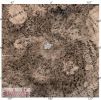
007-Mars_South_Pole.jpgThe South Polar Region of Mars115 visitenessun commento
|
|

006-Mars_Topography.jpgMars Global Map: Topography112 visitenessun commento
|
|
| 54 immagini su 5 pagina(e) |
2 |  |
|
|








