| Piú viste - From Ashes to Eternity: the Phoenix Mars Mission |
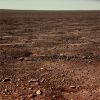
PHOE-SOL082-lg22856-22857-22858.jpgVastitas' Panorama - Sol 82 (Superdefinition and natural colors; credits: Dr G. Barca)67 visitenessun commentoMareKromium
|
|

PHOE-SOL088-lg24834-24838-24839-2.jpgVastitas' Panorama - Sol 88 (Superdefinition and natural colors; credits: Dr G. Barca)67 visitenessun commentoMareKromium
|
|
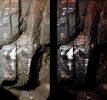
PHOE-SOL094-MF.jpgThe "Trench" - Sol 94 (True Colors; credits: Dr M. Faccin)67 visitenessun commentoMareKromium
|
|
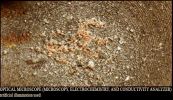
PHOE-SOL095-MF1.jpgMicroscopic Vastitas - Sol 95 (True Colors; credits: Dr M. Faccin)67 visitenessun commentoMareKromium
|
|
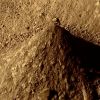
PHOE-SOL088-PIA11058.jpgMartian "Caterpillar" - Sol 88 (natural colors; credits: Lunexit)67 visiteAs NASA's Phoenix Mars Lander excavates trenches, it also builds piles with most of the material scooped from the holes. The piles, like this one called "Caterpillar", provide researchers some information about the soil.
On Aug. 24, 2008, during the late afternoon of the 88th Martian day after landing, Phoenix's Surface Stereo Imager took separate exposures through red, green and blue filters that have been combined into this approximately true-color image. This conical pile of soil is about 10 cm (4") tall.
The sources of material that the Robotic Arm has dropped onto the Caterpillar pile have included the "Dodo" and ""Upper Cupboard" trenches and, more recently, the deeper "Stone Soup" trench.
Observations of the pile provide information, such as the slope of the cone and the textures of the soil, that helps scientists understand properties of material excavated from the trenches.
For the Stone Soup trench in particular, which is about 18 cm (7") deep, the bottom of the trench is in shadow and more difficult to observe than other trenches that Phoenix has dug. The Phoenix team obtained spectral clues about the composition of material from the bottom of Stone Soup by photographing Caterpillar through 15 different filters of the Surface Stereo Imager when the pile was covered in freshly excavated material from the trench.
The spectral observation did not produce any sign of water-ice, just typical soil for the site. However, the bigger clumps do show a platy texture that could be consistent with elevated concentration of salts in the soil from deep in Stone Soup. The team chose that location as the source for a soil sample to be analyzed in the lander's wet chemistry laboratory, which can identify soluble salts in the soil.MareKromium
|
|

PHOE-SOL097-PIA11074.jpgDOES "NASA" READ US? - Sol 9767 visite...O forse siamo soltanto "bravi"?!? I "granuli" che il Dr Faccin per primo - e praticamente da subito - aveva notato essere presenti su una delle zampe del Lander, adesso - e SOLO dopo 97 Soles... - sono stati notati anche dalla NASA la quale, pochi giorni dopo una delle nostre usuali pubblicazioni che esprimono dubbi e curiosità, interviene pesantemente su queste features dedicandogli un frame e qualche parola sul Planetary Photojournal.
Coincidenza (l'ennesima)? Causualità (l'ennesima)? Fortuna (si, certo, come no...)? La risposta è ardua. O forse no.
La risposta è semplicissima e, a parere ci chi scrive, potrebbe essere "nascosta" nella nostra stessa "Lista Utenti".
E comunque sia, c'è di che essere fieri!
Caption NASA:"The Robotic Arm Camera on NASA's Phoenix Mars Lander took this image on Sept. 1, 2008, at about 04:00 M.L.T., during the 97th Martian Day, or Sol, since landing.
The view underneath the Lander shows growth of the clumps adhering to leg strut (upper left) compared with what was present when a similar image was taken about three months earlier (see PIA10759).
The view in this Sol 97 image is southward. Illumination is from the early morning Sun above the North-Eastern horizon. This is quite different from the illumination in the Sol 8 image, which was taken in mid-afternoon.
The science team has discussed various possible explanations for these clumps.
One suggestion is that they may have started from a splash of mud if Phoenix's descent engines melted icy soil during the landing.
Another is that specks of salt may have landed on the strut and began attracting atmospheric moisture that freezes and accumulates.
The clumps are concentrated on the north side of the strut, usually in the shade, so their accumulation could be a consequence of the fact that condensation favors colder surfaces.
In this image, compared with the one from three months earlier, the flat, smooth patches of ice exposed underneath the lander seem to be partly covered by darker material left behind as ice vaporizes away.
The flat patch in the center of the image has the informal name "Holy Cow", based on researchers' reaction when they saw the initial image of it".
Nota Lunexit: "Holy Cow", tradotto in Italiano, significa "Caspita!!!"MareKromium
|
|

PHOE-SOL108-lg31337-31338-31339-2.jpgDetails of the Phoenix Lander - Sol 108 (Superdefinition and natural colors; credits: Dr G. Barca)67 visitenessun commentoMareKromium
|
|
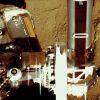
PHOE-SOL108-lg31415-31424-31425-2.jpgPhoenix "Overexposed"! - Sol 108 (Superdefinition and natural colors; credits: Dr G. Barca)67 visitenessun commentoMareKromium
|
|
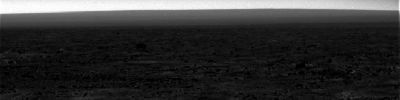
PHOE-SOL108-lg_31544-lg_31569.gifDistant Runner(s)... - Sol 108 (GIF-Movie; credits: Dr G. Barca)67 visiteTutti i frames impiegati per la realizzazione di questo GIF-Movie usano lo stesso filtro/colore e la conseguenza "visibile" di questa circostanza - come potete vedere - è in una sostanziale (e pesante, poichè orientata su toni scuri) uniformità cromatica del paesaggio ripreso. Ma se osservate il filmato con attenzione, allora riuscirete a scorgere due Dust Devils (o forse è sempre lo stesso, in due suoi momenti?) che sfrecciano (sfreccia) ad una distanza approssimativa di 6/700 metri dal Lander.
Un nuovo e bellissimo Lavoro, sempre MOLTO accurato e suggestivo, creato dal nostro Dr Barca, che ringraziamo.MareKromium
|
|
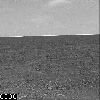
PHOE-SOL113-PIA11184.gifClouds over Vastitas Borealis - Sol 113 (GIF-Movie; credits: NASA)67 visiteCaption NASA:"This sequence combines 32 images of clouds moving Eastward across a Martian Horizon. The Surface Stereo Imager on NASA's Phoenix Mars Lander took this set of images on Sept. 18, 2008, during early afternoon hours of the 113th Martian Day of the Mission.
The view is toward the north. The actual elapsed time between the first image and the last image is nearly half an hour. The numbers inset at lower left are the elapsed time, in seconds, after the first image of the sequence. The particles in the clouds are water-ice, as in cirrus clouds on Earth".MareKromium
|
|

PHOE-SOL114-lg33801-33802-33803-2.jpgMore "Ice" in the "Trench"? - Sol 114 (Superdefinition and natural colors; credits: Dr G. Barca)67 visitenessun commentoMareKromium
|
|

PHOE-SOL114-lg33637-33638-33639-2.jpgMore "Ice" in the "Trench"? - Sol 114 (Superdefinition and natural colors; credits: Dr G. Barca)67 visitenessun commentoMareKromium
|
|
| 399 immagini su 34 pagina(e) |
 |
|
|
|
|
23 | |
|
|
|
|








