| Piú viste - From Ashes to Eternity: the Phoenix Mars Mission |

PHOE-SOL006-lg_1084.jpgObjects near the Sun? - Sol 668 visiteStiamo osservando degli (inusuali) image-artifacts accanto al "pallido" Sole che splende sulla Pianura di Vastitas orealis, oppure, oltre a (probabilmente) una delle due Lune Marziane, c'è qualcosa d'altro nel Cielo di Marte? Qualcosa che è stata "catturata" da questi frames?
Voi che dite?...
M.L.S.T.: 15:27:40
Camera elevation: 36,6626°
Azimuth: 243,862°MareKromium
|
|

PHOE-SOL007-PIA10742~0.jpgICE!!!!! - Sol 7 (True Colors + MULTISPECTRUM; credits: Dr Marco Faccin & Lunexit)68 visitenessun commentoMareKromium
|
|

PHOE-SOL007-lg_1698.jpgUnbelievable!!!! - Sol 768 visiteAbbiamo notificato quest'oggi, alle ore 17:43 ed alle ore 17:45 CET, rispettivamente, le elaborazioni del Dr Faccin ai seguenti indirizzi NASA:
1) phxepo@lpl.arizona.edu <phxepo@lpl.arizona.edu> e
2) phx-webmaster@lpl.arizona.edu <phx-webmaster@lpl.arizona.edu>
Nessuna risposta a noi, come ovvio, ma pubblicazione, alle ore 20:20 CET (un caso più unico che raro di "solerzia") sul Sito Ufficiale Phoenix (http://phoenix.lpl.arizona.edu/), di questa elaborazione "NASA" del medesimo frame processato dal Dr Faccin, ma con un evidente shift cromatico.
Morale: non solo gli Amici di Pasadena sono arrivati "tardi", ma hanno pure copiato e cromaticamente "taroccato" la nostra elaborazione - che comunque era e rimane la PRIMA ELABORAZIONE A COLORI pubblicata sul WWW la quale rappresenta il ghiaccio di Vastitas Borealis.
Un nostro commento "al volo" ed "onesto" sul comportamento della NASA e del Max Planck Institute c/o University of Arizona? RIVOLTANTE!!!!
p.s.: esiste (ED E' VISIBILE!) una prova INCONFUTABILE che questa elaborazione è stata fatta sul frame colorizzato dal Dr Faccin. Sapreste individuarla?... Piccolo aiuto: "look up"!...MareKromium
|
|

PHOE-SOL006-234593main_SS005ESF896648917_10F20R2M1-2-3.jpgThe soil of Vastitas Borealis - Sol 6 (Natural Colors; credits: Dr Gianluigi Barca)68 visiteUna splendida immagine (sembra insignificante, ma NON lo è...) ed una meravigliosa interpretazione in Colori Naturali del suolo di Vastitas Borealis, realizzata dall'eccezionale Dr Gianluigi Barca.
MareKromium
|
|

PHOE-SOL009-lg_2945-2947-2949.jpgFlat White-Rock - Sol 9 (True Colors; credits: Dr Gianluigi Barca)68 visitenessun commentoMareKromium
|
|

PHOE-SOL025-lg_7048.jpgCheck the "Sand"! - Sol 25 (Superdefinition; credits: Dr M. Faccin)68 visitenessun commentoMareKromium
|
|
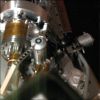
PHOE-SOL035-lg8733-8734-8735.jpgMechanical Components - Sol 35 (natural colors; credits: Dr G. Barca)68 visitenessun commentoMareKromium
|
|
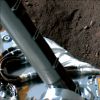
PHOE-SOL034-lg8588-8589-8595.jpgThe "Color Wheel" and the ground - Sol 34 (natural colors + MULTISPECTRUM; credits: Dr G. Barca & Lunexit)68 visitenessun commentoMareKromium
|
|
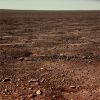
PHOE-SOL082-lg22856-22857-22858.jpgVastitas' Panorama - Sol 82 (Superdefinition and natural colors; credits: Dr G. Barca)68 visitenessun commentoMareKromium
|
|
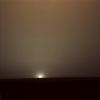
PHOE-SOL090-PIA11054-2.jpgIce Cold Sunrise on Mars - Sol 90 (natural colors; credits: Lunexit)68 visiteFrom the location of NASA's Phoenix Mars Lander, above the Martian Arctic Circle, the Sun does not set during the peak of the Martian Summer.
This period of maximum solar energy is past — on Sol 86, the 86th Martian Day after the Phoenix landing, the Sun fully set behind a slight rise to the North for about half an hour.
This red-filter image taken by the lander's Surface Stereo Imager, shows the Sun rising on the morning of Sol 90, Aug. 25, 2008, the last day of the Phoenix nominal mission.
The image was taken at 51 minutes past Midnight (Local Solar Time) during the slow sunrise that followed a 75 minute "night". The skylight in the image is light scattered off atmospheric dust particles and ice crystals.
The setting Sun does not mean the end of the Mission. In late July, the Phoenix Mission was extended through September, rather than the 90-Sol duration originally planned as the Prime Mission.MareKromium
|
|
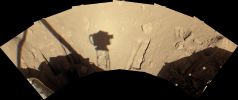
PHOE-SOL090-PIA11055.jpgVastitas' Surface, according to NASA - Sol 90 (natural colors; credits: NASA)68 visiteDuring the first 90 Martian Days, or Soles, after its May 25, 2008, landing on an Arctic Plain of Mars, NASA's Phoenix Mars Lander dug several trenches in the workspace reachable with the Lander's Robotic Arm (LRA).
The Lander's Surface Stereo Imager camera recorded this view of the workspace on Sol 90, early afternoon Local Mars time (overnight Aug. 25 to Aug. 26, 2008). The shadow of the the camera itself, atop its mast, is just left of the center of the image and roughly a third of a meter (one foot) wide.
The workspace is on the north side of the lander. The trench just to the right of center is called "Neverland".MareKromium
|
|
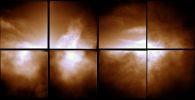
PHOE-SOL095-MF.jpgThrough the Clouds... - Sol 95 (natural colors; credits: Dr M. Faccin)68 visitenessun commentoMareKromium
|
|
| 399 immagini su 34 pagina(e) |
 |
|
|
|
|
18 | |
|
|
|
|








