| Piú viste - From Ashes to Eternity: the Phoenix Mars Mission |

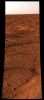
PHOE-SOL035-lg8733-8734-8735.jpgMechanical Components - Sol 35 (natural colors; credits: Dr G. Barca)66 visitenessun commentoMareKromium
|
|

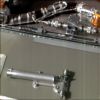
PHOE-SOL026-PIA10918.jpgFrom "Bad" to "Worse"... - Sol 2666 visiteIncommentabile: questo frame è stata aggiunto nella Galleria del Planetary Photojournal dedicata a Marte nella notte fra il 1mo ed il 2 Luglio 2008.
E', come ben vedete, il singolo dettaglio del terriccio depositato sullo "scoop" di Phoenix che, per fattura e posizionamento (nel contesto di un altro frame), ci aveva fatto gridare (pubblicamente) al "furto". Ebbene, i nostri Amici di Pasadena (e del Max Planck Institute) che ti fanno? Inseriscono, retrodatandola, la porzione di frame che aveva isolato e colorizzato il Dr Faccin, così da conferirle una (presumiamo) "Autonoma Dignità" e per mostrare che il loro lavoro non era stato una scopiazzatura del nostro.
Ok, allora ci permettiamo di fare due puntualizzazioni:
1) noi controlliamo il Planetary Photojournal ogni giorno e questo frame, sino a ieri sera (h. 23:45 CET - data della nostra ultima lettura del Planetary Photojournal), non c'era (mentre adesso c'è e porta, come data di inserimento, il 26 Giugno u.s. - sic!);
2) questo frame dovrebbe essere parte di un filmatino "Quickmovie" il quale, al momento (h. 12:10 CET), NON E' ancora disponibile sul Planetary Photojournal (e meno male che lo avevano inserito dal 26 di Giugno u.s. (sic, again!).
Morale: i nostri (comunque) Amici di Pasadena, per "salvarsi" da una prima magrissima figura, ne hanno collezionata una seconda... Che tristezza.
Caption NASA:"This pan and zoom animation shows a microscopic view of fine-grained material at the tip of the Robotic Arm scoop as seen by the Robotic Arm Camera (RAC) aboard NASA's Phoenix Mars Lander on June 20, 2008, the 26th Martian Day, or Sol, of the mission.
RAC scientists took this image at a resolution of 30 microns by rotating the scoop to within 11 mm of the camera's front lens and refocusing the camera to macro focus.
The image shows small clumps of fine, fluffy, red soil particles collected in a sample called 'Rosy Red.'.
The sample was dug from the trench named 'Snow White' in the area called 'Wonderland'. Some of the Rosy Red sample was delivered to Phoenix's Optical Microscope and Wet Chemistry Laboratory for analysis.
The RAC provides its own illumination, so the color seen in RAC images is color as seen on Earth, not color as it would appear on Mars.
The image behind the RAC animation, taken by Phoenix's Surface Stereo Imager also on Sol 26, provides context. (See also PIA10921)".MareKromium
|
|

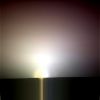
PHOE-SOL116-PIA11225.jpgLights ON - Sol 116 (extra-saturated colors; credits: NASA)66 visiteCaption NASA:"This image is a composite view of NASA's Phoenix Mars Lander's Robotic Arm Camera (RAC) with its lights on, as seen by the Lander's Surface Stereo Imager (SSI). This image combines images taken on the afternoon of Phoenix's 116th Martian day, or Sol (such as September 22, 2008). The RAC is about 8 cm (3" - inches) tall.
The SSI took images of the RAC to test both the light-emitting diodes (LEDs) and cover function. Individual images were taken in three SSI filters that correspond to the red, green, and blue LEDs one at a time. When combined, it appears that all three sets of LEDs are on at the same time.
This composite image is not true color. The streaks of color extending from the LEDs are an artifact from saturated exposure".MareKromium
|
|

PHOE-SOL116-PIA11224.jpgLights OFF - Sol 116 (approximate colors; credits: NASA)66 visiteCAption NASA:"This approximate color image is a view of NASA's Phoenix Mars Lander's Robotic Arm Camera (RAC) as seen by the Lander's Surface Stereo Imager (SSI). This image was taken on the afternoon of the 116th Martian day, or Sol, of the mission (such as September 22, 2008). The RAC is about 8 cm (3" - inches) tall.
The SSI took images of the RAC to test both the light-emitting diodes (LEDs) and cover function. Individual images were taken in three SSI filters that correspond to the red, green, and blue LEDs one at a time.
This yields proper coloring when imaging Phoenix's surrounding Martian Environment".MareKromium
|
|

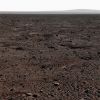
PHOE-SOL132-lg38673-38674-38675-2.jpgThe "Trench" - Sol 132 (Superdefinition and possible True Colors; credits: Dr G. Barca)66 visitenessun commentoMareKromium
|
|

PHOE-SOL150-PIA12107.jpgComposite View of Phoenix Trenches (approx. True Colors; credits: NASA)66 visitenessun commentoMareKromium
|
|

A-Phoenix-006.jpgLooking at the Twilights...65 visitenessun commentoMareKromium
|
|

B-PIA09944.jpgFar-Northern Destination for Phoenix Mars Lander65 visiteCaption NASA:"The planned Landing Site for NASA's Phoenix Mars Lander lies at a latitude on Mars equivalent to Northern Alaska on Earth. It is within the region designated "D" on this global image.
This is an orthographic projection with color-coded elevation contours and shaded relief based on data from the Mars Orbiter Laser Altimeter on NASA's Mars Global Surveyor Orbiter. Total vertical relief is about 28 Km (about 17 miles) from the top of the highest volcano (red) to the Northern Lowlands (blue).
North Pole is where the longitude lines converge".MareKromium
|
|

E-PIA10633.jpgDust Devils and Frozen Craters at Phoenix Landing Site (MULTISPECTRUM; credits: Lunexit)65 visiteNASA's Phoenix Mars Lander is scheduled to land on the Martian Northern Plains near 68° North Lat. and 127° West Long. on May 25, 2008. In preparation for the landing, NASA's Mars Reconnaissance Orbiter has been monitoring weather in the Region around the Landing Site.
On April 20, 2008, the orbiter's Context Camera captured this view showing two active DD within the Phoenix Landing Ellipse.
This is a subframe covering an area about 26 Km (approx. 16 miles) on each side (...). It shows two Dust Devils and their shadows. Based on measurement of the shadows cast by the DD, one of the vortices towered about 590 meters (about 1930 feet) with a dust plume extending 920 meters (about 3020 feet) above the surface. The other reached about 390 meters (1280 feet) high, with a dust plume extending to 790 meters (2590 feet). The resolution here is 6 meters (19,7 feet) per pixel.
When the Context Camera acquired this image, the season in Mars' Northern Hemisphere was late Spring. A few weeks earlier, the Phoenix Landing Site was still covered with seasonal frost left over from the previous Winter. White patches in small craters near the center of the picture are areas where the Winter frost remained, even as late as April 20, 2008.
As Spring gives way to Summer, DD are likely to occur more frequently, as local temperatures rise. These two DD observed in late April are among the first of the season. The cameras on the Phoenix Lander might be able to spot additional Dust Devils after the spacecraft arrives, as the Mars Exploration Rover Spirit has been able to do at its Southern Hemisphere Landing Site.
Dust Devils are whirling vortices that have picked up dust from the ground. Such vortices can occur even when no dust is present, but then they are not visible to the cameras onboard the Mars Reconnaissance Orbiter. Such vortices commonly form as hot air rises from the surface on an otherwise generally calm day with little or no breeze. Dust Devils will travel across the surface on the gentle breezes that do occur. Sometimes, DD have been observed by cameras orbiting Mars to create streaks on the ground as they disrupt and pick up dust, though no streaks are observed in this image.
The Mars Orbiter Camera onboard NASA's Mars Global Surveyor orbiter observed Dust Devils — and streaks created by them — throughout its 1997 to 2006 mission. During that time, scientists at Malin Space Science Systems observed more than 12.000 active Dust Devils. They were seen over the full range of elevations and nearly all latitudes on Mars. Dust Devil Streaks were found in Mars Orbiter Camera images as far North as the edge of the North Polar Residual Cap and the dune fields that surround the Region.
However, the northernmost active DD captured by that camera was at 62,2° North Latitude, which is further South than the Phoenix Landing Site.
Another camera on the Mars Reconnaissance Orbiter, the Mars Color Imager, captured a simultaneous, wider-field, color view of the area included in this Context Camera image. That view can be seen at PIA10634.MareKromium
|
|

PHOE-SOL001-lg_398-003.jpgGood-Evening Phoenix! - Sol 1 (Natural Colors and MULTISPECTRUM; credits: Lunexit)65 visitenessun commentoMareKromium
|
|

PHOE-SOL001-P-lg_431.jpgOne "Leg" and "Landing Pad" of Phoenix - Sol 1 (Natural Colors + MULTISPECTRUM; credits: Dr M. Faccin & Lunexit)65 visitenessun commentoMareKromium
|
|

PHOE-SOL007-PIA10742~0.jpgICE!!!!! - Sol 7 (True Colors + MULTISPECTRUM; credits: Dr Marco Faccin & Lunexit)65 visitenessun commentoMareKromium
|
|
| 403 immagini su 34 pagina(e) |
 |
 |
 |
 |
 |
14 |  |
 |
 |
 |
|