| Piú viste - Mars through Mars Express (ESA - Original Raw Frames & Orbital Panoramas) |

Volcanoes-Arsia_Mons_and_the_Tharsis_Montes-December_2012-PCF-LXTT-IPF-2.jpgOnce again...371 visiteE' divertente. Sempre lo stesso tipo di "nuvola", sempre lo stesso tipo di conformazione ed orientazione della stessa, sempre "in partenza" dal fianco superiore Sx del gigantesco Vulcano Arsia Mons e sempre interpretata come il frutto di semplici ed ovvi eventi atmosferici. Dalle immagini NASA - Viking - ottenute poco prima dell'inserzione orbitale, negli Anni '80 - ad un'altra serie di immagini ottenute ancora dalla Sonda ESA Mars Express nel 2008.
Questo il commentino ufficiale: "It's not a plume of smoke, but rather water ice clouds condensing out over the Summit of the Arsia Mons Volcano. We see them quite often over this particular volcano" - nota: la Scienziata è una tale Tanya Harrison - Planetary Scientist - NASA - Opportunity Rover Team).
Vi suggerisco, in un Mondo che va sempre più verso il "Pensiero Unico", di guardare questa immagine in correlazione agli altri (citati) eventi similari ed eclatanti occorsi, negli anni, sempre allo stesso posto. Non dubito (o forse si...) della competenza della Dott.ssa Harrison. Dubito della Sua (e non solo) perenne esternazione di certezze. Ecco. E questo atteggiamento, oltre ad irritarmi non poco, mi fa anche paura. Pensateci su. Magari guardando gli altri frames che possediamo e ragionando.
Nota: se doveste chiederVi come mai, di questo evento, parla una Scienziata Planetaria dell'Opportunity Rover Team e non chi se ne intende (davvero) di Vulcanologia e di Scienze Atmosferiche mentre l'ESA - come sempre o quasi fa - non ha detto un tubo, apprezzerei il quesito. Ma Vi dico subito che non saprei rispondere. O meglio: potrei! Ma rischierei la querela...MareKromium
|
|
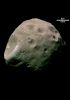
Phobos-405-N-High_Res-ME_full-00.jpgPhobos from Mars Express (Original ESA HR-RAW Frame)367 visitenessun commento
|
|

A-h0751_0000_bl2-01.jpgFrame h0751_0000_bl2 - The South Pole of Mars (Absolute Natural Colors; credits for the additional process. and color.: Dr Paolo C. Fienga - Lunexit Team)281 visitenessun commentoMareKromium
|
|

Craters-Pollack_Crater-H1201_0001_ND3_crop_wide-PCF-LXTT-3.jpgPollack Crater and "White Rock" (Absolute Natural Colors; credits for the additional process. and color.: Dr Paolo C. Fienga - Lunexit Team)262 visitePollack Crater is located in the "Sinus Sabaeus Quadrangle! of Mars, at approx. 7,9° South Lat. and 334,8° West Long. Pollack Crater is about 96 Km in diameter and it was named after Dr James B. Pollack, an American physicist (1938 –1994).
Pollack Crater contains a large Light-toned Deposit (known as "White Rock" or "Pollack's White Fingers") that was once thought to be a Salt Deposit. Truth is that nobody knows, so far, the real nature of White Rock and the reason of its bright color - even though some people - Scientists and Professional Researchers - say that White Rock "only APPEARS white, but it is not", and the reason why of this appearence is in the fact that its surroundings are exceptionally dark.
On the other hand, we believe, as Lunar Explorer Italia Team, that such a "theory" is incredibly lame and does not deserve to ba called and known as a "theory" at all.
MareKromium
|
|

A-h0061_0000_re2-00.jpgFrame h0061_0000_re2 - South Polar Vision (Absolute Natural Colors; credits for the additional process. and color.: Dr Paolo C. Fienga - Lunexit Team)255 visitenessun commentoMareKromium
|
|

Hesperia_Planum-224co01_H-PCF-LXTT.jpgHuge Massif in Hesperia Planum249 visiteCaption ESA:"The HRSC on ESA's Mars Express obtained this image on June, 13th, 2004, during orbit 506 with a ground resolution of approx. 37,6 mt per pixel.
This view shows a portion of the Hesperia Planum Region, containing the Massif, and located at approx. 30,3° South Lat. and 97,8° East Long.".MareKromium
|
|

Volcanoes-Olympus_Mons_Caldera-2-015-090204_1-0037_01-6v-PCF-LXTT.jpgOlympus Mons' Caldera (Absolute Natural Colors; credits for the additional process. and color: Dr Paolo C. Fienga - Lunexit Team)244 visitenessun commentoMareKromium
|
|
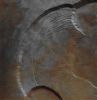
Volcanoes-Olympus_Mons_Caldera-3-015-090204_1-0037_01-6v-PCF-LXTT.jpgOlympus Mons' Caldera (Absolute Natural Colors; credits for the additional process. and color: Dr Paolo C. Fienga - Lunexit Team)243 visitenessun commentoMareKromium
|
|
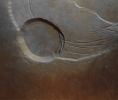
Volcanoes-Olympus_Mons_Caldera-4-015-090204_1-0037_01-6v-PCF-LXTT.jpgOlympus Mons' Caldera (Absolute Natural Colors; credits for the additional process. and color: Dr Paolo C. Fienga - Lunexit Team)239 visitenessun commentoMareKromium
|
|

CR-h0550_0000_nd3-01-PCF-LXTT.jpgFrame h0550_0000_nd3-01 - Rayed Crater and Collapse Features (Natural Colors; credits for the additional process. and color.: Dr Paolo C. Fienga - Lunexit Team)237 visitenessun commentoMareKromium
|
|

Volcanoes-Olympus_Mons_Caldera-1-015-090204_1-0037_01-6v-PCF-LXTT.jpgOlympus Mons' Caldera (Absolute Natural Colors; credits for the additional process. and color: Dr Paolo C. Fienga - Lunexit Team)236 visitenessun commentoMareKromium
|
|

Aeolian_features-Yardangs-2-s_015_050504_0143_4_3d_01_Yardangs_FAZ-PCF-LXTT.jpgWind-Lanes (Absolute Natural Colors; credits for the additional process. and color.: Dr Paolo C. Fienga - Lunexit Team)232 visiteCaption ESA originale:"Loose sand fragments were transported by wind, and impacted on the Bedrock, slowly removing parts of the Surface, like a sand-blaster. If the winds blow in the same direction for a long enough period, ‘Wind-Lanes’, as shown in the picture, can occur. On Earth, the remnants of these features which have not been eroded away are called ‘Yardangs’. Where the Surface consists of more resistant material, the force of the wind may not be strong enough to cause this sand-blasting. This might be the reason for the three flat regions (the first in the foreground on the left, and the other two on the top right), which measure about 17 by 9 Km".MareKromium
|
|
| 106 immagini su 9 pagina(e) |
1 |
 |
|
|
|
|
|
|








