| Piú viste - After One-Thousand Soles... |

OPP-SOL2536-48797463527_3a7965f6a3.jpgSol 2536 - Front View (Natural Colors - Credits for the additional process. and color.: E. Bonora & Marco Faccin)192 visitenessun commentoMareKromium
|
|

OPP-SOL2597-1P358738747EFFB900P2420L2M1-PCF-LXTT.jpgThe Sandy Waves of Meridiani Planum - Sol 2597 (Absolute Natural Colors; credits for the additional process. and color.: Dr Paolo C. Fienga - Lunexit Team)191 visitenessun commentoMareKromium
|
|

SOL1083-2P222482431EFFASCGP2749R7M1.jpgJust like a long time ago...190 visiteOsservate l'inset in b/n e quindi provate a rispondere a questa domanda: è mai possibile che, a distanza di tre anni dalla prima "Anomalìa", se ne sia verificata una seconda la quale è quasi del tutto identica a quella che la NASA stessa fece fatica a spiegare? Per rinfrescarVi la memoria, ecco che cosa dissero gli Amici di Pasadena della prima Stella Cadente Marziana:"Observing the sky with the green filter of it panoramic camera, the Mars Exploration Rover Spirit came across a surprise: a streak across the sky. The streak, seen in the middle of this mosaic of images taken by the navigation and panoramic cameras, was probably the brightest object in the sky at the time. Scientists theorize that the mystery line could be either a meteorite or one of seven out-of-commission spacecraft still orbiting Mars. Because the object appeared to move 4° of an arc in 15" it is probably not the Russian probes Mars 2, Mars 3, Mars 5 or Phobos 2; or the American probes Mariner 9 or Viking 1. That leaves Viking 2, which has a polar orbit that would fit with the North-South orientation of the streak. In addition, only Viking 1 and 2 were left in orbits that could produce motion as fast as that seen by Spirit. Said Mark Lemmon, a rover team member from Texas A&M University, Texas - "Is this the first image of a meteor on Mars, or an image of a spacecraft sent from another world during the dawn of our robotic space exploration program? We may never know, but we are still looking for clues".
Purtroppo, i "clues" (elementi probatori) di cui Mark Lemmon parlava non sono stati mai trovati. Almeno sino ad oggi...MareKromium
|
|

OPP-SOL1129-1P228318055EFF8100P2588R1M1.jpgThe Texture of Meridiani Planum - Sol 1129 (Natural Colors; credits for the additional process. and color.: Dr Paolo C. Fienga - Lunexit Team)190 visitenessun commentoMareKromium
|
|

OPP-SOL2747-1N372047880EFFBP00P1595L0M1-PCF-LXTT.jpgTAU Monitoring: Martian Sky - Sol 2747 (Absolute Natural Colors; credits for the additional process. and color.: Dr Paolo C. Fienga - Lunexit Team)190 visitenessun commentoMareKromium
|
|

OPP-SOL2541-1P353756018EFFB1I5P2263L2M1-PCF-LXTT.jpgOn the Edge of Santa Maria - Sol 2541 (Natural Colors; credits: Dr Paolo C. Fienga - Lunexit Team)189 visitenessun commentoMareKromium
|
|

OPP-SOL2678-PIA14507-PCF-LXTT.jpgThe West Rim of Endeavour Crater - Sol 2678 (Natural Colors; credits for the additional process. and color.: Dr Paolo C. Fienga - Lunexit Team)188 visitenessun commentoMareKromium
|
|
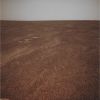
OPP-SOL2674-1N365574522EFFBLKRP0703L0M1-PCF-LXTT.jpgHorizon - Sol 2674 (Natural Colors; credits for the additional process. and color.: Dr Paolo C. Fienga - Lunexit Team)188 visitenessun commentoMareKromium
|
|
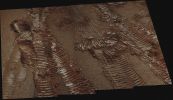
OPP-SOL1643-MF-PCF-LXTT.jpgRover tracks - Sol 1643 (Absolute Natural Colors; credits for the additional process. and color: Drr Marco Faccin and Paolo C. Fienga - Lunexit Team)188 visitenessun commentoMareKromium
|
|
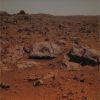
OPP-SOL2736-3-PCF-LXTT.jpgProximities of Endeavour's Crater Inner Rim - Sol 2736 (Enhanced Absolute Natural Colors; credits for the additional process. and color.: Dr Gianluigi Barca - Lunexit Team)188 visitenessun commentoMareKromium
|
|

OPP-SOL2756-1P372856580EFFBPV5P2420R2M1-PCF-LXTT.jpgHorizon - Sol 2756 (Absolute Natural Colors; credits for the additional process. and color.: Dr Paolo C. Fienga - Lunexit Team)188 visitenessun commentoMareKromium
|
|

OPP-SOL2363-PIA13395.jpgAnother Martian Meteorite?187 visiteCaption NASA:"NASA's Mars Exploration Rover Opportunity used its PanCam to capture this view of a dark rock that may be another Iron Meteorite. Part of the rim of Endeavour Crater is on the horizon (Nota Lunexit: nella caption NASA originale c'è scritto "Endurance Crater"! Una conferma ulteriore che i nostri Amici di Pasadena scrivono senza pensare e poi non rileggono quello che hanno scritto...).
The rock, about 45 cm (18") wide from this angle, was about 31 meters (102 feet) away from Opportunity when the Rover took this picture immediately after an 81-meter (266-foot) drive during the 2363rd Martian Day, or Sol, of the Rover's Mission on Mars.
The Rover Science Team has decided to approach the rock for a closer look, to determine whether it is an iron meteorite as suggested by the dark color, rounded texture and the way it is perched on the Surface.
The rock has been given the informal name "Oileán Ruaidh" (pronounced ay-lan ruah), which is the Gaelic name for an island off the coast of North-Western Ireland.
The Rim of Endeavor Crater, still several miles away, has been a long-term destination for Opportunity for about two years now. Opportunity landed on Mars in January 2004 for what was planned as a three-month mission". MareKromium
|
|
| 2388 immagini su 199 pagina(e) |
 |
|
|
|
|
20 | |
|
|
|
|





