| Ultimi arrivi - SOLAR SYSTEM |

Japetus - artistic vision.jpgA Night on Japetus154 visiteGiapeto, la "luna a due facce" - una chiara ed una scura - in una visione di David Seal. Bellissima immagine, senza dubbi!Lug 06, 2004
|
|

Himalia from 4,4MKM.jpgHimalia from 4,4 MKM79 visiteCassini spacecraft captured images of Himalia, the brightest of Jupiter's outer moons, on Dec. 19, 2000, from a distance of 4,4 MKM.
This near-infrared image, with a resolution of about 27 Km (such as roughly 17 miles) per pixel, indicates that the side of Himalia facing the spacecraft is ,ore or less 160 Km (about 100 miles) in the up-down direction. Himalia probably has a non-spherical shape. Scientists believe it is a body captured into orbit around Jupiter, most likely an irregularly shaped asteroid. In the main frame, an arrow indicates Himalia. North is up. The inset shows the little moon magnified by a factor of 10, plus a graphic indicating Himalia's size and the direction of lighting (with sunlight coming from the left). Cassini's pictures of Himalia were taken during a brief period when Cassini's attitude was stabilized by thrusters instead of by a steadier reaction-wheel system. No spacecraft or telescope had previously shown any of Jupiter's outer moons as more than a "star-like" single dot.Lug 06, 2004
|
|

Hyperion - artistic vision.jpgHyperion's ice Crevasses185 visitenessun commentoLug 06, 2004
|
|

Enceladus - artistic vision.jpgA Frozen and yet active volcano on Enceladus205 visiteUn vulcano (o magari un "geyser"?) ancora attivo sul corpo celeste più brillante dell'intero Sistema Solare: Encelado.
Un'intuizione, una 'licenza artistica' o magari un'imbeccata da parte di chi sa?!?Lug 06, 2004
|
|

Saturn and His Moons.jpgSaturn66 visitenessun commentoLug 06, 2004
|
|

JUPITER from 84,1 MKM.jpgJupiter from 84,1 MKM64 visitenessun commentoLug 06, 2004
|
|

JUPITER from 81,3 MKM.jpgJupiter from 81,3 MKM67 visitenessun commentoLug 06, 2004
|
|

JUPITER from 77,6 MKM.jpgJupiter from 77,6 MKM68 visiteDid you know that the "Planet With The Shortest Day" is Jupiter?
The planet Jupiter has the shortest day of all the nine major planets in the Solar System: it spins around on its axis once every 9 hrs 55 mins and 29,69 secs. Jupiter is about five times further from the Sun than the Earth and so it's years are much longer than Earth years: Jupiter completes one "year" in 4.332,6 Earth days. Jupiter is also one of the brightest objects in the night sky (jointly with the star Syrius and planet Venus in our Northern Hemisphere and with the Alpha and Beta Centauri star system in the Southern Hemisphere).
Lug 06, 2004
|
|
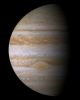
JUPITER from 10,1 MKM.jpgJupiter from 10,1 MKM96 visitePadre degli Dei e Signore incontrastato del Sistema Solare; troppo grande per essere solo un pianeta, ma troppo piccolo per diventare una stella. Con la sua luce giallo-arancio illumina i nostri cieli durante la notte ed è, assieme a Venere, uno dei primi astri ad essere visibile verso l'imbrunire ed è l'unico corpo celeste che può essere visto ad occhio nudo (sapendo dove guardare...) anche durante il giorno.
Questo è Giove.Lug 06, 2004
|
|

Jupiter, Europa & Callisto.jpgJupiter, Europa and Callistus67 visitenessun commentoLug 06, 2004
|
|

TITAN-N00006532.jpgTitan from app.x 340.000 Km away - Lightnings on Titan or a scratch in the picture?77 visitenessun commentoLug 05, 2004
|
|

TITAN-N00006531.jpgTitan from Cassini-Huygens - app.x 340.000 Km away68 visitenessun commentoLug 05, 2004
|
|
| 4548 immagini su 379 pagina(e) |
 |
|
|
|
|
|
|
376 | |
|
|





