| Ultimi arrivi - MARS |

SOL-0003-ZRF_0003_0667217530_000FDR_N0010052AUT_04096_034085J01.pngSol 3 - Panorama89 visitenessun commentoMareKromiumFeb 26, 2021
|
|

SOL-0003-ZRF_0003_0667217624_000FDR_N0010052AUT_04096_034085J01.pngSol 3 - Panorama109 visitenessun commentoMareKromiumFeb 26, 2021
|
|

SOL-0003-ZRF_0003_0667217648_000FDR_N0010052AUT_04096_034085J01.pngSol 3 - Panorama96 visitenessun commentoMareKromiumFeb 26, 2021
|
|

SOL-0000-EAF_0002_0667110419_240ECV_N0010052EDLC00002_0010LUJ01.pngSenza Parole (o forse troppe)166 visite...MareKromiumFeb 24, 2021
|
|

SOL-0002-ZRF_0002_0667132063_000FDR_N0010052AUT_04096_0260LUJ02.pngSol 2 - The Ground138 visiteCaption NASA:"NASA's Mars Perseverance Rover acquired this image using its Right MastCam-Z camera. MastCam-Z is a pair of cameras located high on the Rover's Mast. This image was acquired on Feb. 23, 2021 (Sol 2) at the local mean solar time of 16:20:52".
Non cambia mai nulla. A qualsiasi latitudine o Longitudine, la Superficie di Marte "appare" SEMPRE la stessa. Stesso colore e stessa texture. Magari avranno ragione "Loro"...Ma a me, qualche dubbio, resta.MareKromiumFeb 24, 2021
|
|

SOL-0001-25622_1_-_PIA24422_-_Navcam_360_-_Maki_7_Navcam_360_08_N_LRGB_0002_RAS_0010052_CYL_S_UNCORCLJ01-stretched-v2.pngSol 1 - Panorama133 visiteCaption NASA:"This panorama, taken on Feb. 20, 2021, by the Navigation Cameras, or NavCams, aboard NASA’s Perseverance Mars Rover, was stitched together from six individual images after they were sent back to Earth.
A key objective for Perseverance’s Mission on Mars is Astrobiology, including the search for signs of ancient microbial life.
The Rover will characterize the planet’s geology and past climate, pave the way for human exploration of the Red Planet, and be the first mission to collect and cache Martian rock and regolith.
Subsequent missions, currently under consideration by NASA in cooperation with ESA (European Space Agency), would send spacecraft to Mars to collect these cached samples from the surface and return them to Earth for in-depth analysis.
The Mars 2020 Perseverance mission is part of NASA’s Moon to Mars exploration approach, which includes Artemis missions to the Moon that will help prepare for human exploration of the Red Planet".MareKromiumFeb 24, 2021
|
|

SOL-0004-NLM_0004_0667310972_991ECM_N0010052AUT_04096_00_2LLJ01.pngSol 4 - Setting Sun over Jazero Crater107 visiteCaption NASA Original:"NASA's Mars Perseverance Rover acquired this image using its onboard Left Navigation Camera (NavCam).
The camera is located high on the Rover's Mast (Master Antenna) and aids in driving. This image was acquired on Feb. 23, 2021 (Sol 4) at the local mean solar time of 16:40:58".MareKromiumFeb 24, 2021
|
|

SOL-0001-FLR_0000_0666952977_663ECM_T0010044AUT_04096_00_2I3J01_1200.jpgSol 1 - First look at Jazero Crater123 visiteNASA's Mars Perseverance Rover acquired this image of the area in front of it using its onboard Front Left Hazard Avoidance Camera A.
This image was acquired on Feb. 18, 2021 (Sol 0) at the Local Mean Solar Time of 15:53:58.MareKromiumFeb 20, 2021
|
|

SOL-0000-MPR-25610_PIA24270-HiRISE-touchdown-annotated-1200.jpgSol 0 - Perseverance's Landing inside Jazero Crater122 visite"Welcome to Jezero Crater". The crater was once home to a lake and will allow the rover to look for signs of ancient microbial life on the currently inhospitable planet.
"Inhospitable"? Are we sure?!?...MareKromiumFeb 20, 2021
|
|
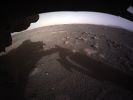
SOL-0001-MPR-25612_PIA24430-panorama-1200.jpgSol 1 - Pale Blue Sky over Perseverance?155 visiteImmagine NON ritoccata. Il Cielo di Marte non mi sembra di quel solito "giallo-ocra" uniforme e piatto...MareKromiumFeb 20, 2021
|
|

Kunowsky_Crater_-_Sand_Dunes-StripedDunes_HiRISE_1182.jpgStriped Sand Dunes133 visiteCaption NASA:"Why are these sand dunes on Mars striped?
No one is sure.
The featured image shows striped dunes in Kunowsky Crater on Mars, photographed recently with the Mars Reconnaissance Orbiter’s HiRISE Camera.
Many Martian dunes are known to be covered unevenly with carbon dioxide (dry ice) frost, creating patterns of light and dark areas. Carbon dioxide doesn’t melt, but sublimates, turning directly into a gas. Carbon dioxide is also a greenhouse material even as a solid, so it can trap heat under the ice and sublimate from the bottom up, causing geyser-like eruptions. During Martian spring, these eruptions can cause a pattern of dark defrosting spots, where the darker sand is exposed.
The featured image, though, was taken during Martian Autumn, when the weather is getting colder – making these stripes particularly puzzling. One hypothesis is that they are caused by cracks in the ice that form from weaker eruptions or thermal stress as part of the day-night cycle, but research continues.
Watching these dunes and others through more Martian seasons may give us more clues to solve this mystery".MareKromiumGen 08, 2021
|
|

ESP_022578_2030_and_ESP_014007_2030.jpgSand-Lakes (3D - Credits for the additional process.: Marco Faccin and Elisabetta Bonora)102 visitenessun commentoMareKromiumNov 06, 2020
|
|
| 13513 immagini su 1127 pagina(e) |
 |
|
|
|
|
15 | |
|
|
|
|





