| |

| Ultimi arrivi - 1-Ceres and 4-Vesta |

016-1-Ceres-Occator-Black_Shadow-01.jpgDark "Spot" inside Occator Crater (CTX Frame)118 visiteMareKromiumFeb 09, 2020
|
|

017-1-Ceres-Occator-Black_Shadow-02.jpgDark "Spot" inside Occator Crater (EDM)135 visiteMareKromiumFeb 09, 2020
|
|

018-1-Ceres-PIA22764.jpgOccator Crater on the Limb...125 visitenessun commentoMareKromiumFeb 09, 2020
|
|

020-1-Ceres-PIA22641.jpgUnusually-looking Surface Feature on 1-Ceres108 visiteCaption NASA Originale:"This image was obtained by NASA's Dawn Spacecraft on July 17, 2018 from an altitude of about 25 miles (such as approx. 40,23 Km).
The center of this picture is located at about 31,0° South Latitude and 248,9° East Longitude".MareKromiumFeb 09, 2020
|
|
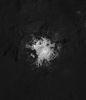
021-1-Ceres-Cerealia_Facula-Occator_Crater-PIA21924.jpgCerealia Facula111 visiteCaption NASA Originale"This mosaic of Cerealia Facula is based on images obtained by NASA's Dawn Spacecraft in its second extended mission, from an altitude as low as about 21 miles (such as approx. 33,79 Km). The contrast in resolution obtained by the two phases is visible here, reflected by a few gaps in the high-resolution coverage. This image is superposed to a similar scene acquired in the low-altitude mapping orbit of the mission from an altitude of about 240 miles (i.e. approx. 386,24 km).
The increased resolution afforded by the low altitude is revealing intimate details about the relationships between bright and dark materials across the Facula (---> Bright Spot), which will help resolve the mystery of its origin.
Cerealia Facula is located at about 19,7° North Latitude and 239,6° East Longitude".MareKromiumFeb 09, 2020
|
|

011-1-Ceres-Full_Rotation.gif1-Ceres: Full Rotation (GIF-Movie - Credits: NASA/JPL)103 visitenessun commentoMareKromiumFeb 09, 2020
|
|

012-1-Ceres-PIA19620-PCF-LXTT-IPF.jpgHuge Mountain on 1-Ceres (Absolute Natural Colors; credits for the additional process. and color.: Dr Paolo C. Fienga/Lunar Explorer Italia/Italian Planetary Foundation)66 visiteLocated just on the Limb (obviously, only from our point of view) of the so-called "Dwarf Planet" 1-Ceres, at about 7 o'clock of 1-Ceres' (highly uneven) disk, we can see - once again - the large Flat-Topped Mountain - about 3 miles (such as approx. 4,82802 Km) high, surrounded by (relatively) smooth Terrain - that we have already shown you in yesterday's APOD. Probably it is useless to say - but it is a good thing, in our opinion, as IPF, to underline this specific circumstance - the so-called Emission Angle here is very high. The "new" White Spot, as well as the white Material that we have noticed still in yesterday's APOD, are also clearly visible here, in this picture.
As we have already said in the past, also this specific frame is just one among the first snapshots coming from Dawn's second Mapping Orbit of 1-Ceres, which is carried out from an altitude of approx. 2700 miles (such as about 4345,218 Km). Even in this case, the Resolution is roughly 1400 feet (such as approx. 426,72 meters) per pixel.
The image (which is an Original NASA - Dawn Spacecraft's b/w and NON Map-Projected frame published on the NASA - Planetary Photojournal with the ID n. PIA 19587 - Dawn Survey Orbit Image 19) has been additionally processed, magnified to aid the visibility of the details, contrast enhanced and sharpened, Gamma corrected and then colorized (according to an educated guess carried out by Dr Paolo C. Fienga-LXTT-IPF) in Absolute Natural Colors (such as the colors that a normal human eye would actually perceive if someone were onboard the NASA - Dawn Spacecraft and then looked ahead, towards the Limb and Surface of 1-Ceres), by using an original technique created - and, in time, dramatically improved - by the Lunar Explorer Italia Team.MareKromiumSet 24, 2015
|
|

009-1-Ceres-PIA19884-PCF-LXTT-IPF-1.jpgWhite Unnamed Crater on 1-Ceres (Absolute Natural Colors; credits for the additional process. and color.: Dr Paolo C. Fienga/Lunar Explorer Italia/Italian Planetary Foundation)61 visiteToday's APOD is an Extra Detail Magnification (or "EDM", for short) of yesterday's Contextual (or "CTX", for short) Frame, taken by the NASA - Dawn Spacecraft that shows us a small White Crater (---> also informally known as "White Spot") that is located in the Northern Hemisphere of the Dwarf Planet named 1-Ceres.
Now, we ask you one (extremely complicated, in fact) question that you, however, should try to answer: why, on 1-Ceres, the huge and deep Impact Craters do not show "White Material" inside them, while, on the other hand, the small and shallow ones (Impact Craters) do? Probably because, but we, as IPF, cannot be sure of this (just like everyone else), the White Material, in the end, does not belong to/comes from the Sub-Surface of 1-Ceres (as we thought, at the beginning), but it belongs to/comes from the Impactors. And you, what do you think?...If you want to share your opinion, please, write us at alphacentauri@intercom.it
The picture was taken from an altitude of approx. 915 miles (such as about 1472,5461 Km) from the Surface, with a resolution of roughly 450 feet (such as about 137,16 meters) per pixel, was taken on August 21, 2015.
This image (which is a crop taken from an Original NASA - Dawn Spacecraft's b/w and NON Map-Projected frame published on the NASA - Planetary Photojournal with the ID n. PIA 19884 - Dawn HAMO Image 8) has been additionally processed, extra-magnified to aid the visibility of the details, contrast enhanced and sharpened, Gamma corrected and then colorized (according to an educated guess carried out by Dr Paolo C. Fienga-LXTT-IPF) in Absolute Natural Colors (such as the colors that a normal human eye would actually perceive if someone were onboard the NASA - Dawn Spacecraft and then looked ahead, towards the Surface of 1-Ceres), by using an original technique created - and, in time, dramatically improved - by the Lunar Explorer Italia Team.MareKromiumSet 24, 2015
|
|

010-1-Ceres-PIA19898-PCF-LXTT-IPF.jpgUnnamed Crater on the Terminator of 1-Ceres (Absolute Natural Colors; credits for the additional process. and color.: Dr Paolo C. Fienga/Lunar Explorer Italia/Italian Planetary Foundation)61 visiteThis simply beautiful Contextual (or "CTX", for short) Frame, taken by the NASA - Dawn Spacecraft on August, 26, 2015, shows us, among other interesting things, an Ancient and extremely Complex Unnamed Impact Crater (which seems to be characterized by the presence of an unusually-looking - we would say, as IPF, "columnarly-shaped", maybe? - Central Peak) that is located near the Terminator Line of the Dwarf Planet named 1-Ceres.
If you will pay attention to the frame, you might agree on the fact that the long shadows - which are very well visible all over the picture - make the whole scene - with its deeply complex Surface Details - even more suggestive.
The picture was taken from an altitude of approx. 915 miles (such as about 1472,5461 Km) from the Surface, with a resolution of roughly 450 feet (such as about 137,16 meters) per pixel, was taken on August 21, 2015.
This image (which is an Original NASA - Dawn Spacecraft's b/w and NON Map-Projected frame published on the NASA - Planetary Photojournal with the ID n. PIA 19898 - Dawn HAMO Image 20) has been additionally processed, extra-magnified to aid the visibility of the details, contrast enhanced and sharpened, Gamma corrected and then colorized (according to an educated guess carried out by Dr Paolo C. Fienga-LXTT-IPF) in Absolute Natural Colors (such as the colors that a normal human eye would actually perceive if someone were onboard the NASA - Dawn Spacecraft and then looked ahead, towards the Surface of 1-Ceres), by using an original technique created - and, in time, dramatically improved - by the Lunar Explorer Italia Team.MareKromiumSet 24, 2015
|
|

090-Craters-Cornelia_Crater-PIA16489-PCF-LXTT-IPF.jpgCornelia Crater (Absolute Natural Colors; credits for the additional process. and color.: Dr Paolo C. Fienga/Lunar Explorer Italia/Italian Planetary Foundation)108 visiteThis frame shows us a consistent number of examples of long, narrow and sinuous Gullies that scientists on NASA's Dawn Mission have found on the Giant Asteroid 4-Vesta. The Impact Crater shown here is called Cornelia and the Gullies inside it - called "Type-B" Gullies - are different substantially from the straighter, wider, shorter Gullies that Planetary Scientists have found on different Celestial Bodies (like the ones located on the Rims of many Martian Impact Craters, for instance) and which are designated as "Type-A" Gullies (and the reason of such a distinction is found in the circumstance that these two Gully-types have different formation mechanisms). This picture was obtained by the NASA - Dawn Spacecraft Framing Camera on January 11, 2012; North is up.
This frame (which is an Original NASA - Dawn Spacecraft b/w image published on the NASA - Planetary Photojournal with the ID n. PIA 16489) has been additionally processed and then colorized, according to an informed speculation carried out by Dr Paolo C. Fienga (LXTT-IPF), in Absolute Natural Colors (such as the colors that a human eye would actually perceive if someone were onboard the NASA - Dawn Spacecraft and then looked outside, towards the Surface of the Giant Asteroid 4-Vesta), by using an original technique created - and, in time, dramatically improved - by the Lunar Explorer Italia Team. Different colors, as well as different shades of the same color, mean, among others, the existence of different Elements present on the Surface of 4-Vesta, each having a different Albedo (---> Reflectivity) and Chemical Composition.MareKromiumApr 20, 2013
|
|

089-Craters-Licinia_Crater-PIA16050-PCF-LXTT-IPF.jpgLicinia Crater (Absolute Natural Colors; credits for the additional process. and color.: Dr Paolo C. Fienga/Lunar Explorer Italia/Italian Planetary Foundation)68 visiteThis NASA - Dawn Spacecraft Framing Camera (FC) image of 4-Vesta shows Licinia Crater, which is the large Impact Crater positioned in the center of the picture. Licinia Crater has a fresh, sharp Rim that is scalloped in shape; all around the Inner Walls of Licinia Crater there are many Streaks of Dark and Bright Dusty Material cascading towards the Crater's center. There are also many hummocky Slumps of Material around the Crater's Walls and Base. A large Mound of Material (most likely made of small Rocks and Dust) is well visible in the Crater's center, and the Mound itself is surrounded by more smooth and dark unidentified Material. The possibility that such (as of yet, we repeat, unidentified) smooth Material visible on 4-Vesta's Surface might be the so-called "Impact Melt" is currently under investigation. Licinia Crater is one of the freshest Impact Craters that can be seen in this image.
This area visible here is located in the "Floronia Quadrangle" of 4-Vesta, in the Northern Hemisphere of the Giant Asteroid. The NASA - Dawn Spacecraft obtained this image with its Framing Camera (FC) on October 11, 2011. The image was taken through the Camera's Clear Filter and the distance of the Spacecraft from the Surface of 4-Vesta was, at the time that the picture was taken, of approx. 700 Km (such as a little less than 435 miles); the image has a resolution of about 63 meters (207 feet) per pixel. This picture of Licinia Crater was acquired during the HAMO (---> High-Altitude Mapping Orbit) phase of the mission.
This frame (which is an Original NASA - Dawn Spacecraft b/w image published on the NASA - Planetary Photojournal with the ID n. PIA 16050) has been additionally processed and then colorized, according to an informed speculation carried out by Dr Paolo C. Fienga (LXTT-IPF), in Absolute Natural Colors (such as the colors that a human eye would actually perceive if someone were onboard the NASA - Dawn Spacecraft and then looked outside, towards the Giant Asteroid 4-Vesta), by using an original technique created - and, in time, dramatically improved - by the Lunar Explorer Italia Team. Different colors, as well as different shades of the same color, mean, among others, the existence of different Elements present on the Surface of 4-Vesta, each having a different Albedo (---> Reflectivity) and Chemical Composition.MareKromiumApr 07, 2013
|
|

086-Craters-Fabia_Crater-PIA15900-PCF-LXTT-IPF-2.jpgFabia Crater and Surroundings (Absolute Natural Colors; credits for the additional process. and color.: Dr Paolo C. Fienga - Lunar Explorer Italia - Italian Planetary Foundation)60 visiteThis Dawn framing camera (FC) image of Vesta shows Fabia crater, which is the large crater offset to the bottom right of the center of the image. Fabia crater is very distinctive because the two sides of its rim have very different states of freshness. In this image the bottom part of the rim is distinct and fresh but the top part of the rim is much more rounded and degraded. This dichotomy between the rims is possibly due to material slumping over the top part of Fabia's rim, which caused the rim to become obscured and look more degraded. There are linear features visible on the illuminated part of Fabia crater, which were probably created by material cascading towards the center of the crater. There is also a distinguishing band of bright material along the bottom rim of the crater.
This image is located in Vesta's Numisia quadrangle, in Vesta's northern hemisphere. NASA's Dawn spacecraft obtained this image with its framing camera on Oct. 19, 2011. This image was taken through the camera's clear filter. The distance to the surface of Vesta is 700 kilometers (435 miles) and the image has a resolution of about 63 meters (207 feet) per pixel. This image was acquired during the HAMO (high-altitude mapping orbit) phase of the mission.
MareKromiumAgo 16, 2012
|
|
| 55 immagini su 5 pagina(e) |
1 |
|
|
|
|
|





