| Ultimi arrivi - The Best Frames from Viking Orbiter 1 and 2 |

MarsColors02-Viking.jpgThe Colors of Mars (2)56 visiteTo see the color differences, they must be artificially enhanced through computer processing at the same time, differences in brightness must be suppressed.
Two color maps are shown here, one that approximates the natural color (frame 3) and another in which the color differences arc artificially emphasized (frames 2 and 4).Nov 25, 2006
|
|

MarsColors04-Viking.jpgThe Colors of Mars (4)57 visiteAtmospheric phenomena and surface frost affect the Planet's appearance. South of approximately 40° Lat., the scene is dominated by the annual South Polar CO2 fee cap. Near-surface condensate clouds arc abundant in this Region, especially in Hellas. Because some of the data in the bright areas were saturated, the color balance is distorted; no attempt was made to correct this problem. North of about 20° Lat., condensate clouds are especially noticeable along the northernmost edge where emission angles were extreme. Other clouds are scattered locally throughout the Equatorial Region South and South-West of Valles Marineris.
This image dramatically enhances subtle color variations The violet/green ratio is used as the blue component of the final image, the albedo at the are en wavelength as the green component, and the red/green n ratio as the red component. Hence, the amount of red or blue is controlled primarily by the slope of the spectral reflectance curve: areas with high albedo are also green. Thus, high albedo blue areas (ice, fog, clouds) are blue-green in color, and high albedo red areas are orange and yellow; bright areas of average color are green. Green is absent in dark areas, so the colors represent the slope from violet to red; red areas have a steeper slope, increasing from violet to blue; blue areas have a shallower slope.
Nov 25, 2006
|
|

vo1_Olympus_mons_caldera.jpgMars, according to Viking 1: Olympus' Caldera81 visitenessun commentoLug 12, 2006
|
|
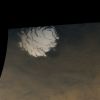
vo2_mg90s000.jpgMars, according to Viking 2 Orbiter75 visitenessun commentoLug 12, 2006
|
|

vo2_479b71.jpgMars, according to Viking 2 Orbiter57 visitenessun commentoLug 12, 2006
|
|

vo2_428b61.jpgDeimos, from Viking 256 visitenessun commentoLug 12, 2006
|
|

vo2_428b60.jpgDeimos, from Viking 257 visitenessun commentoLug 12, 2006
|
|

vo2_413b83.jpgDeimos, from Viking 254 visitenessun commentoLug 12, 2006
|
|

vo2_423b63.jpgDeimos, from Viking 255 visitenessun commentoLug 12, 2006
|
|
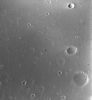
vo2_423b62.jpgDeimos, from Viking 254 visitenessun commentoLug 12, 2006
|
|

vo2_423b61.jpgDeimos, from Viking 254 visitenessun commentoLug 12, 2006
|
|

vo2_421b64.jpgMars, according to Viking 2 Orbiter: "Inca City"54 visitenessun commentoLug 12, 2006
|
|
| 78 immagini su 7 pagina(e) |
2 |  |
|
|
|
|





