| Ultimi arrivi - Mars Reconnaissance Orbiter (MRO) |

PSP_001970_1655_RED_abrowse.jpgLandslide in Coprates Chasma (Natural Colors; credits for the additional process. and color.: Dr Paolo C. Fienga - Lunexit Team)59 visiteThis observation shows a Landslide in the Coprates Chasma Region of Valles Marineris that occurred when a large unstable area of rock broke away from the Cliffs that can be seen on the right side of the frame. This mass of falling rock broke into many small pieces as it slid downhill and came to rest at the base of the Cliff, forming the Lobate (curved) Mound visible on the left part of the image.
The smooth textured Ripples that can be seen in the central part of the frame are Sand Dunes. Sand Dunes form as wind-blown particles roll across the Surface and accumulate. Since the air on Mars is very thin, Sand Dunes take much longer to form on Mars than they do on Earth.
The presence of large Sand Dunes - along with many small Impact Craters - on top of this Landslide indicates that movement of the slide occurred a very long time ago; perhaps hundreds of millions of years.
This Landslide was probably caused by a strong Marsquake, but a nearby (significant) impact could have generated a deep shock-wave that was sufficiently strong to cause it. Alternatively, movement along nearby Faults may have triggered the Landslide.
The Valles Marineris Region is cut by many Faults and in fact contains many more Landslides such as this one. Some scientists believe that these Landslides represent a record of seismic activity in this area.
It is obvious that a better understanding of the history of seismic activity in this specific Region may help scientists to predict the likelihood that Marsquakes still occur on the Planet.MareKromiumLug 23, 2010
|
|

PSP_002917_2175_RED_abrowse-00.jpgDissected Mantled Terrain (CTX Frame - Natural Colors; credits: Dr Paolo C. Fienga - Lunexit Team) 56 visiteA Northern Mid-Latitude scene consisting of Craters, Intercrater Plains and Mantled Material is visible in this HiRISE image.
The Mantled Material seen here covers much of the Middle Latitudes in both Hemispheres of Mars and it has been visibly removed in some locations.
This Terrain is called "Mantled" because it looks as if it's just draped over (meaning that it is "mantling") the topography underneath it.
The Mantled Material is what causes the Craters to have a muted, softened appearance. It's thought to be ice-rich material deposited in a climate different from that of today.
The Mantled Unit is dissected here, meaning that is not pristine and has likely undergone modification since it was originally laid down. The Intercrater Plains have a pitted texture that it is thought to be caused by water ice sublimating and leaving depressions behind.
Unlike that of Earth, the Obliquity (such as "tilt" of the Red Planet's Rotation Axis) of Mars changes wildly. Earth has the Moon to keep its Axis stable, but Mars' satellites, Phobos and Deimos, are not massive enough to do the same.
Today Mars' Obliquity (25,19°) is similar to that of Earth's (23.45°), but this has not always been the case. As the Obliquity changes, the portions of Mars that receive the most sunlight shift. During periods of high Obliquity, Polar Regions receive the most sunlight.
This causes Polar Ices, including water ice and CO2 ice, to sublimate into the Atmosphere. They would then potentially be re-deposited in the Mid-Latitudes, similar to where this image is located.
It is believed that this process is responsible for the existence of the Mid-Latitude Mantled Units.MareKromiumLug 20, 2010
|
|

PSP_002917_2175_RED_abrowse-01.jpgDissected Mantled Terrain (EDM - Natural Colors; credits: Dr Paolo C. Fienga - Lunexit Team) 57 visitenessun commentoMareKromiumLug 20, 2010
|
|

PSP_002922_1725_RED_abrowse-01.jpgGlacier-like Flow on Arsia Mons (EDM - Natural Colors; credits for the additional process. and color.: Dr Paolo C. Fienga - Lunexit Team)56 visiteIt is possible that the Flow Features that we can see in this image are "Relict Glaciers". The Flow Lobes and Surface Lineations are similar to those found on Glaciers on Earth. The merging of the Lobes seen in the bottom of the CTX Frame as well as in the EDM might imply that multiple walls are shedding material.
It is likely also that the Flanks of Arsia Mons contain ice-rich material - possibly deposited during a different Obliquity (Obliquity ----> Tilt of Mars' Spin Axis) or Climate Regime.MareKromiumLug 19, 2010
|
|

PSP_002922_1725_RED_abrowse-00.jpgGlacier-like Flow on Arsia Mons (CTX frame - Natural Colors; credits for the additional process. and color.: Dr Paolo C. Fienga - Lunexit Team)59 visiteThis observation shows a "Glacier-like Flow" in a Depression located on the flanks of Arsia Mons.
Arsia Mons is one of the large Martian Volcanoes that sits near the Equator on the Tharsis Rise. Downslope is towards the upper right of CTX frame, and the Flow is in this direction. It is interesting to note that the Depression is not directly radial from the Volcano's Peak, but rather oriented approximately 45° away, along the Flanks of the Volcano.
The pitted texture of the material suggests that sublimation is occurring or has occurred. The Surface Temperature and Pressure on Mars are such that water in ice-rich material can easily sublimate leaving behind a depression where the volatiles were removed.MareKromiumLug 19, 2010
|
|

Psp_001490_2505_red.jpgThe Northern Plains (Natural Colors; credits for the additional process. and color.: Dr Paolo C. Fienga - Lunexit Team)59 visiteM.L.T.: 15:06 (early afternoon)
Latitude (centered): 70,5° North
Longitude: 70,6° East
Range to target site: 314 Km (about 194,8 miles)
Original image scale range: 31,4 cm/pixel (with 1 x 1 binning) so objects ~94 cm across are resolved
Map Projected Scale: 25 cm/pixel
Map Projection: POLAR STEREOGRAPHIC
Emission Angle: 5,1°
Phase Angle (Sun-Mars-MRO): 56,5 °
Solar Incidence Angle: 61° (meaning that the Sun is about 29° above the Local Horizon)
Solar Longitude: 138,3° (Northern Summer)MareKromiumLug 18, 2010
|
|
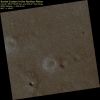
Psp_001484_2455_red.jpgThe Northern Plains (Natural Colors; credits for the additional process. and color.: Dr Paolo C. Fienga - Lunexit Team)81 visiteM.L.T.: 15:07 (early afternoon)
Latitude (centered): 65,5° North
Longitude: 235,1° East
Range to target site: 310,3 Km (about 194,8 miles)
Original image scale range: 31 cm/pixel (with 1 x 1 binning) so objects ~93 cm across are resolved
Map Projected Scale: 25 cm/pixel
Map Projection: POLAR STEREOGRAPHIC
Emission Angle: 0,3°
Phase Angle (Sun-Mars-MRO): 58,1 °
Solar Incidence Angle: 58° (meaning that the Sun is about 32° above the Local Horizon)
Solar Longitude: 138,0° (Northern Summer)MareKromiumLug 18, 2010
|
|
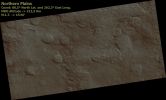
Psp_001483_2465_red.jpgThe Northern Plains (Natural Colors; credits for the additional process. and color.: Dr Paolo C. Fienga - Lunexit Team)58 visiteM.L.T.: 15:07 (early afternoon)
Latitude (centered): 66,5° North
Longitude: 262,2° East
Range to target site: 311,6 Km (about 194,8 miles)
Original image scale range: 31,2 cm/pixel (with 1 x 1 binning) so objects ~94 cm across are resolved
Map Projected Scale: 25 cm/pixel
Map Projection: POLAR STEREOGRAPHIC
Emission Angle: 1,4°
Phase Angle (Sun-Mars-MRO): 57,3 °
Solar Incidence Angle: 59° (meaning that the Sun is about 31° above the Local Horizon)
Solar Longitude: 138,0° (Northern Summer)MareKromiumLug 18, 2010
|
|

PSP_002946_1765_RED_abrowse-00.jpgInterior Layered Deposits (ILD) in Juventae Chasma (CTX Frame - Natural Colors; credits for the additonal process. and color.: Dr Paolo C. Fienga - Lunexit Team)59 visiteThis observation shows a portion of some Interior Layered Deposits (ILD) in Juventae Chasma.
Juventae Chasma is a large depression near the Equatorial Canyon System known as Valles Marineris. The scene is along the top of a Mound of Layered Deposits on the Floor of Juventae Chasma.
Dunes are seen in the low-lying, darker regions. Very fine Layers are also visible. Understanding what kinds of materials formed the Layers, how they were set in place, and how they have evolved will provide insight into Martian Geologic History.
Many of the Martian Chasmata (----> plural of Chasma) contain ILD like these. The ILD were deposited a long time ago, but the actual method is unknown. It has been suggested that sedimentary layers in standing bodies of water or volcanic ash deposits comprise the ILD. The alternating layers could indicate regular, repeating cycles of deposition. It is also possible that these layers once covered the entire chasma floor.
The IDL shown here have been modified by wind erosion.
The Yardangs visible near the top right of the full image are evidence for wind sculpting of the Deposits. It is interesting to note that there are very few craters in this scene, especially in the areas with visible Layers.
One crater can be found about half-way down the left side of the image amidst Layers and several craters are seen in the dark material on the right side of the image. This suggests that the ILD are eroding here fast enough to erase small craters before large numbers of them can accumulate.MareKromiumLug 18, 2010
|
|

PSP_002946_1765_RED_abrowse-01.jpgInterior Layered Deposits (ILD) in Juventae Chasma (EDM - Natural Colors; credits for the additonal process. and color.: Dr Paolo C. Fienga - Lunexit Team)58 visitenessun commentoMareKromiumLug 18, 2010
|
|
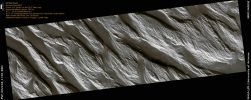
PSP_002244_1720_RED_abrowse.jpgWhite Rock (Saturated Natural Colors; credits for the additional process. and color.: Dr Paolo C. Fienga - Lunexit Team)58 visiteThis image shows a portion of a relatively bright landform named "White Rock" on the Floor of Pollack Crater, in the Sinus Sabaeus Region of Mars.
Data from the Mars Global Surveyor Thermal Emission Spectrometer (TES) indicates that this landform is not anomalously bright, relative to other bright Martian Regions. Further, the apparent brightness seen here is due to contrast with other materials on the Crater Floor.
Dunes and Ripples are visible in the dark material between the bright ridges. Their orientations appear to be influenced by wind directionally channeled by the ridges.
Material appears to have been shed from the white landform and deposited on the darker bedforms indicating that the light-toned outcrops break down into fine materials.
Its high albedo and location in a topographic basin have led to suggestions that White Rock is an erosional remnant of an ancient lacustrine evaporate deposit. Other interpretations include an eroded accumulation of compacted or weakly cemented aeolian sediment.MareKromiumLug 18, 2010
|
|

PSP_002840_1855_RED_abrowse-00.jpgMeanders in Nanedi Valles (Natural Colors; credits for the additional process. and color.: Dr Paolo C. Fienga - Lunexit Team)59 visiteThis observation shows a portion of Nanedi Valles, an equatorial Martian valley network.
Valley networks are thought to have formed by groundwater sapping either in conjunction with an ice layer to cover the running water or during a past warmer, wetter climate regime on Mars. Glacial activity has also been proposed to form the valley networks.
Groundwater sapping is the leading theory because of the morphology of the valleys. They commonly have approximately constant width along their reaches, as seen here, as well as theater shaped heads, as seen in the tributary valley in the bottom right of the scene. The meandering nature of valleys suggests persistent or repeated flow as required to form meanders in streams on Earth.
The subimage shows a potential remnant channel seen on the floor of Nanedi Valles just below the center of the image. If this is a remnant channel, it suggests that there was either repeated or waning flows in this valley. Winding dunes and abundant impact craters are found throughout the valley, as well as within this putative channel.
Dunes are thought to be transient features on Mars, although no movement has been detected to date. It is interesting to note that some of the dunes are superposed by craters indicating that the dunes were stable long enough for craters to form and not be erased.
It is possible that the craters on top of the dunes are secondary craters that formed as a product of a larger impact. Secondary craters from a single impact are clustered in space and form almost simultaneously, implying that the dunes were stable for a time period—long enough for a single crater, rather than multiple craters, to form.
MareKromiumLug 18, 2010
|
|
| 2237 immagini su 187 pagina(e) |
 |
|
|
|
|
86 | |
|
|
|
|





