| Ultimi arrivi - Mars Reconnaissance Orbiter (MRO) |

ESP_018522_2270-7-MF-PCF-LXTT~0.jpgBull's Eye Impact Crater (Absolute Natural Colors; credits for the additional process. and color.: Dr Paolo C. Fienga - Lunexit Team)64 visiteWhat caused the Central Pit within this Impact Crater: unusual Subsurface Layering or a lucky second impact? Impacts into layers of alternately strong and weak material – for example, ice rich versus non-ice-rich – produce terracing such as that seen between the Inner Pit and the Outer Rim. Scientists have used Terraced Craters to estimate the thickness of Lava Flows on the Moon and elsewhere. Uneven Sublimation and Periglacial Erosion of exposed ice-rich material in the interior of the Crater may explain why the small Central Pit is slightly offset from center relative to the Terrace and Rim of the larger Crater.
The Pit in the center of the main feature could also be from a later Impact Crater striking inside and slightly off-center from the original. It has a Raised Rim, which is characteristic of impact craters and is difficult to explain with a layered target. While no ejecta from this later impact can be seen, the ejecta could have been removed by extensive periglacial modification.
Additionally the Floor Fill around the Inner Crater resembles impact ejects elsewhere at this latitude, and some of the "Landslides" to the East could be flow-back of ejecta off the Walls of the larger crater.MareKromiumLug 31, 2010
|
|

PSP_003180_0945_RED_abrowse-00.jpgSouth Polar Dust Fans (CTX Frame - Natural Colors; credits for the additional process. and color.: Dr Paolo C. Fienga - Lunexit Team)61 visiteDuring the long and dark night of Martian Winter at the South Pole, CO2 in its solid form ("dry ice") accumulates and forms the so-called "Seasonal South Polar Cap". Afterwards, as the Sun comes up in the Spring, the ice evaporates in a complex way.
This observation shows Dark Dust being blown across the Seasonal South Polar Cap. The dust comes from the Surface beneath the ice: it either starts at spots bare of ice, or it's possible that it's lofted from below the ice in geyser-like plumes.
Local winds blow the dust from its source, forming a long Fan. When the wind changes direction, a new Fan is formed pointing in the new direction In this image we can see that the wind has blown in a number of directions.
These data will be used to study - among other things - the Weather Patterns near the South Pole.MareKromiumLug 31, 2010
|
|
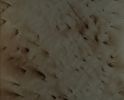
PSP_003180_0945_RED_abrowse-01.jpgSouth Polar Dust Fans (EDM n.1 - Natural Colors; credits for the additional process. and color.: Dr Paolo C. Fienga - Lunexit Team)66 visitenessun commentoMareKromiumLug 31, 2010
|
|

PSP_003180_0945_RED_abrowse-02.jpgSouth Polar Dust Fans (EDM n.2 - Natural Colors; credits for the additional process. and color.: Dr Paolo C. Fienga - Lunexit Team)60 visitenessun commentoMareKromiumLug 31, 2010
|
|
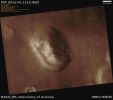
PSP_003234_2210_RED_abrowse.jpgDo You Remember Me? (Absolute Natural Colors; credits for the additional process. and color.: Dr Paolo C. Fienga - Lunexit Team)92 visiteCaption NASA:"HiRISE captured this image (in 2007) of an eroded mesa made famous by its similarity to a human face in a Viking Orbiter image with much lower spatial resolution and a different lighting geometry.
Compared to the original Viking image (dated 1976), HiRISE shows incredible detail, even from about 300 Km above the surface".
Nota Lunexit: una domanda che rivolgiamo, simpaticamente ed ironicamente, al Prof. Richard Hoagland ed ai suoi accoliti: ma la "Faccia" di Marte - e cioè "l'Evidenza Finale - parole di Hoagland - di una pregressa Civiltà Marziana", dov'è andata a finire???...MareKromiumLug 29, 2010
|
|
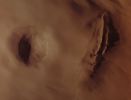
PSP_002922_1725_RED_abrowse-03.jpgPossible Volcanic "Mouth", on Arsia Mons' Flank (EDM - Natural Colors - credits for the additional process.: Dr Paolo C. Fienga)96 visitenessun commentoMareKromiumLug 27, 2010
|
|
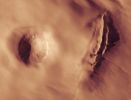
PSP_002922_1725_RED_abrowse-02.jpgPossible Volcanic "Mouth", on Arsia Mons' Flank (EDM - RAW Natural Colors - credits for the additional process.: Dr Marco Faccin)62 visitenessun commentoMareKromiumLug 27, 2010
|
|
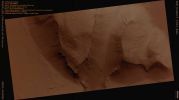
ESP_018075_1955_RED_abrowse-00.jpgAn Hill cut by Cerberus Fossae (Natural Colors; credits for the additional process. and color.: Dr Paolo C. Fienga - Lunexit Team)58 visitenessun commentoMareKromiumLug 25, 2010
|
|
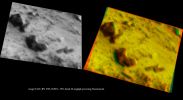
ESP_018075_1955_RED_abrowse-01.jpgUnusually-looking Surface Feature in Cerberus Fossae (credits for the additional process.: Dr Marco Faccin - Lunexit Team)76 visitenessun commentoMareKromiumLug 25, 2010
|
|
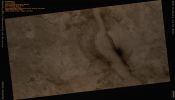
ESP_018161_2270_RED_abrowse-1.jpgFuture Mars Landing Site in Acidalia Mensa (Natural Colors; credits for the additional process. and color.: Dr Paolo C. Fienga - Lunexit Team)62 visitenessun commentoMareKromiumLug 23, 2010
|
|
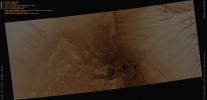
ESP_014287_1685_RED_abrowse-00.jpgNoctis Labyrinthus (Natural Colors; credits for the additional process. and color.: Dr Paolo C. Fienga - Lunexit Team)60 visiteThis image spans the floor and two walls of a pit in Noctis Labyrinthus, a System of deep, steep-walled Valleys on the Western Edge of Valles Marineris.
The Valleys themselves are tectonic features known as "Graben" (---> trench-like features that form in response to extension (or stretching) of the Crust). In the case of Noctis Labyrinthus, volcanic activity in the Tharsis Region may have formed a bulge, which then stretched and fractured the Crust above it.MareKromiumLug 23, 2010
|
|

PSP_001910_2215_RED_abrowse-00.jpgUnnamed Crater in Utopia Planitia (Natural Colors; credits for the additional process. and color.: Dr Paolo C. Fienga - Lunexit Team)59 visiteThis observation shows an Unnamed Impact Crater located in Utopia Planitia; this Crater is more than 10 Km (6,25 miles) in diameter and approx. 700 meters (765 yards) deep. Different features in and around this Crater may indicate the presence of fluid beneath the Surface.
Linear features radiating outward from the Crater's Rim are evident. Closer examination shows these features are formed by rocks and finer soils that are located along a straight line; technically, they are "Spokes" produced immediately after the impact by very fast outward-moving materials ejected from the contact-zone. Because these Ejecta came from deep under the Crater, their composition will tell us what type of rocks are under the Surface.
A MOC context image of this Crater shows its Ejecta Materials form an elevated "Pedestal," shaped like a pancake. The Pedestal is approx. 20 Km (about 12,5 miles) in diameter. "Pedestal craters" such as this may have formed because ice beneath the Surface melted when the impact occurred.MareKromiumLug 23, 2010
|
|
| 2237 immagini su 187 pagina(e) |
 |
|
|
|
|
85 | |
|
|
|
|





