| Ultimi arrivi - Mars Reconnaissance Orbiter (MRO) |
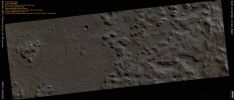
ESP_018496_1510_RED_abrowse.jpgColumbus Crater (Natural Colors; credits for the additional process. and color.: Dr Paolo C. Fienga - Lunexit Team)85 visitenessun commentoMareKromiumAgo 08, 2010
|
|

ESP_018482_2790_RED_abrowse-00.jpgNorth Polar Layered Deposits (CTX Frame - Natural Colors; credits for the additional process. and color.: Dr Paolo C. Fienga - Lunexit Team)62 visiteThe North Polar Layered Deposits (NPLD) are layers of dusty ice up to 3 Km (a little less than 2 miles) thick and approx. 1000 Km (about 620 miles) in diameter. We can see the Layers exposed on the Walls of Troughs and Scarps cut into the Deposits, such as the Trough Wall imaged here.
The bright region at the top is the flat surface above the Trough Wall; it is higher than the Terrain underneath. The wall exposing these Layers has a vertical relief of about 600 meters (1970 feet).
It is thought that the NPLD likely formed recently (however millions of years ago...) as rhythmic variations in Mars' orbit changed the distribution of Water Ice around the Planet. As ice moved to and from the Polar Region in response to a changing climate, Layers of Ice and Dust built up at the Poles. By studying the history of these Deposits, we hope to understand how the Martian climate has changed. This is similar to terrestrial scientists studying ice cores from Antarctica and Greenland to understand how Earth's climate has changed in the last tens of thousands of years.
Three things are immediately apparent about the Layers exposed on this Trough Face. First, individual Layers have different Surface Textures. Some scientists think that changing Surface Textures reflect changing physical properties (such as dust content or ice grain size) of the underlying Layer, and looking for patterns in the sequence of Layer Textures can tell us about patterns in the climate in which a Layer formed.
Second, there are several Unconformities, or places where one Layer is interrupted and overlain by another Layer. These Unconformities are due to periods where Layers were eroded or removed, followed by times when new Layers were deposited. Mapping the locations of Unconformities can tell us how the Deposit shrank and grew over time, and tell us where large changes in climate occurred, causing water ice to be removed from the Polar Regions.
Finally, the dark and bright Streaks are due to recent Winds blowing Surface Frost around, and can tell us about wind patterns in the current polar climate.MareKromiumAgo 06, 2010
|
|

ESP_018482_2790_RED_abrowse-01.jpgNorth Polar Layered Deposits (EDM - Natural Colors; credits for the additional process. and color.: Dr Paolo C. Fienga - Lunexit Team)77 visiteMareKromiumAgo 06, 2010
|
|

ESP_018273_2245_RED_abrowse-00.jpgPossible Water-Ice in a "fresh" Crater (CTX Frame - Natural Colors; credits for the additional process. and color.: Dr Paolo C. Fienga - Lunexit Team)61 visitePrevious HiRISE images of Fresh Craters in the Middle to High Northern Latitudes show exposed Water Ice on the Poleward-facing slopes. Here is another example.
The EDM shows an approx. 6 meters (20 feet) diameter Crater. Based on before and after images acquired by the Odyssey THEMIS and MRO CTX cameras, respectively, this Crater formed some time between April 2004 and January 2010.
The Crater is at a latitude of 44° North and is itself located on the ejecta of a larger crater. The image was acquired in early Summer, when frost at this latitude is not expected.
It is therefore believed that the bright blueish material that can be seen in the EDM is Subsurface Ice that was exposed by the impact.
This ice is probably at the same depth and has a similar origin to that excavated by the Phoenix Lander back in 2008. The area of exposed ice based on the HiRISE images is about 1-2 square meters (such as 10-20 square feet).MareKromiumAgo 06, 2010
|
|
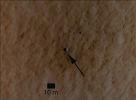
ESP_018273_2245_RED_abrowse-01.jpgPossible Water-Ice in a "fresh" Crater (EDM - Natural Colors; credits for the additional process. and color.: Dr Paolo C. Fienga - Lunexit Team)59 visitenessun commentoMareKromiumAgo 06, 2010
|
|
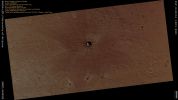
ESP_018352_1805_RED_abrowse1.jpgRayed Crater in Elysium Planitia (Natural Colors; credits for the additional process. and color.: Dr Paolo C. Fienga - Lunexit Team)58 visiteMareKromiumAgo 06, 2010
|
|

ESP_018301_2505_RED_abrowse-00.jpgLouth Crater (CTX Frame- Natural Colors; credits for the additional process. and color.: Dr Paolo C. Fienga - Lunexit Team)68 visiteThis HiRISE image shows a large Ice Mound located in Louth Crater. At 70° North (in the Region of Vastitas Borealis), this is the lowest latitude permanent deposit of water ice on Mars.
The HiRISE image, taken in early Summer, shows details of the Mound and non-ice portions of the Crater Floor.
The Mound is characterized by rough textures and layering similar to features seen on the North Polar Layered Deposits near the Martian North Pole. Zooming in to an area in the South-Eastern part of the Mound (see the following EDMs), dark Sinuous Ridges appear.
These may be the crests of partially defrosted Dark Sand Dunes or perhaps some other feature that we do not understand.
This is the only area on Louth where these enigmatic Ridges are found.MareKromiumAgo 06, 2010
|
|
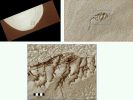
ESP_018301_2505_RED_abrowse-01.jpgLouth Crater (CTX Frame + EDMs - Natural Colors; credits for the additional process. and color.: Dr Paolo C. Fienga - Lunexit Team)62 visitenessun commentoMareKromiumAgo 06, 2010
|
|
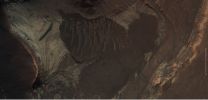
ESP_014287_1685_RED_abrowse-MF-LXTT.jpgNoctis Labyrinthus (EDM - possible True Colors; credits for the additional process. and color.: Dr Marco Faccin - Lunexit Team)76 visitenessun commentoMareKromiumLug 31, 2010
|
|
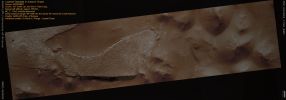
PSP_002892_1760_RED_abrowse-00.jpgLayered Deposits in Aureum Chaos (CTX Frame - Absolute Natural Colors; credits: Dr Paolo C. Fienga - Lunexit Team)58 visiteThis observation shows an Outcrop of a large slab of Layered Deposits in Aureum Chaos.
Chaotic Terrains on Mars are disorganized regions of Blocks and Large Mounds which appear to have been produced by the collapse of pre-existing terrain. They are often associated with giant Outflow Channels, and they may have been the source of the water that carved the Channels.
This link is an important part of understanding the history of water on Mars. One way to address this is to study the rocks left behind in the Chaotic Terrains.
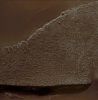
The Outcrop shown in the following EDM is several kilometers across and light-toned. It has a slab-like appearance, with relatively steep edges and a flat top, although the top has many small Knobs and Spires. In places, particularly along the West edge of the main slab, it is clear that the light material is composed of many fine layers, which are eroding in a stepped fashion due to the variable resistance of the layers. The flat surface of the Outcrop is partially coated with Dark Dust, obscuring its light tone.
Along the edges, the Outcrop is breaking into boulders and eroding away, but it is strong enough that it preserves steep Slopes, particularly on the Eastern Edge.
Away from the large slab, the image consists of Hills and Mounds characteristic of Chaotic Terrain. Little detail is visible on the Mounds. The low areas have been partially covered by wind-blown Sand or Dust, forming the pervasive Ripples seen in the image. Light material can be seen under the Ripples in a few places, indicating that the light layered deposits extend farther than just the slab.MareKromiumLug 31, 2010
|
|
PSP_002892_1760_RED_abrowse-01.jpgLayered Deposits in Aureum Chaos (EDM - Absolute Natural Colors; credits: Dr Paolo C. Fienga - Lunexit Team)60 visitenessun commentoMareKromiumLug 31, 2010
|
|

ESP_018522_2270-7-EB-LXTT.jpgBull's Eye Impact Crater (RAW Natural Colors; credits for the additional process. and color.: Elisabetta Bonora - Lunexit Team)57 visiteWhat caused the Central Pit within this Impact Crater: unusual Subsurface Layering or a lucky second impact? Impacts into layers of alternately strong and weak material – for example, ice rich versus non-ice-rich – produce terracing such as that seen between the Inner Pit and the Outer Rim. Scientists have used Terraced Craters to estimate the thickness of Lava Flows on the Moon and elsewhere. Uneven Sublimation and Periglacial Erosion of exposed ice-rich material in the interior of the Crater may explain why the small Central Pit is slightly offset from center relative to the Terrace and Rim of the larger Crater.
The Pit in the center of the main feature could also be from a later Impact Crater striking inside and slightly off-center from the original. It has a Raised Rim, which is characteristic of impact craters and is difficult to explain with a layered target. While no ejecta from this later impact can be seen, the ejecta could have been removed by extensive periglacial modification.
Additionally the Floor Fill around the Inner Crater resembles impact ejects elsewhere at this latitude, and some of the "Landslides" to the East could be flow-back of ejecta off the Walls of the larger crater.
MareKromiumLug 31, 2010
|
|
| 2237 immagini su 187 pagina(e) |
 |
|
|
|
|
84 | |
|
|
|
|





