| Ultimi arrivi - Mars Reconnaissance Orbiter (MRO) |

ESP_019186_1955_RED_abrowse-PCF-LXTT.jpgTrough in Syris Major (Natural Colors; credits for the additional process. and color.: Dr Paolo C. Fienga - Lunexit Team)94 visitenessun commentoMareKromiumOtt 29, 2010
|
|
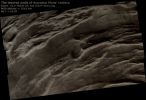
PSP_001444_1915_red.jpgThe Layered Walls of Ascraeus Caldera (Absolute Natural Colors; credits for the additional process. and color.: Dr Paolo C. Fienga - Lunexit Team)70 visitenessun commentoMareKromiumOtt 25, 2010
|
|
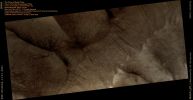
PSP_004038_1255_RED_abrowse.jpgDunes inside Russel Crater (Absolute Natural Colors; credits for the additional process. and color.: Dr Paolo C. Fienga - Lunexit Team)62 visiteThe Russell Crater Dunefield is covered seasonally by Carbon Dioxide (CO2) Frost, and this image shows the Dunefield after the Frost has sublimated (evaporated directly from solid to gas). There are just a few patches left of the bright seasonal frost.
Numerous dark DD Tracks can be seen meandering across the Dunes. The face of the largest dune is lined with Gullies. The source of the Gullies is unclear but could involve erosion by the seasonal CO2 Ice. MareKromiumOtt 24, 2010
|
|
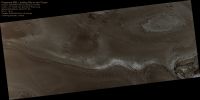
PSP_003907_1780_RED_browse-1.jpgProposed MSL Site in Iani Chaos (Natural Colors; credits for the additional process. and color.: Dr Paolo C. Fienga - Lunexit Team)64 visitenessun commentoMareKromiumOtt 24, 2010
|
|

ESP_019256_1530_RED_abrowse-01.jpgThe "White Cliffs" of Holden Crater (EDM - Natural Colors; credits for the additional process. and color.: Dr Paolo C. Fienga - Lunexit Team)62 visitenessun commentoMareKromiumOtt 24, 2010
|
|

PSP_003618_1725_RED_abrowse-PCF-LXTT.jpgGanges Chasma (Absolute Natural Colors; credits for the additional process. and color.: Dr Paolo C. Fienga - Lunexit Team)62 visitenessun commentoMareKromiumOtt 24, 2010
|
|

ESP_019256_1530_RED_abrowse-00.jpgThe "White Cliffs" of Holden Crater (CTX Frame - Natural Colors; credits for the additional process. and color.: Dr Paolo C. Fienga - Lunexit Team)67 visitenessun commentoMareKromiumOtt 24, 2010
|
|

PSP_003695_1250_RED_abrowse-00.jpgUnnamed Southern Crater with Large Dunefield and DD Streaks (CTX Frame - Natural Colors; credits for the additional process. and color.: Dr Paolo C. Fienga - Lunexit Team)65 visitePSP_003695_1250 shows a Southern Hemisphere crater with gullies, dunes, periglacial modification, bright rock deposits and Dust Devil Tracks.
Although these features are all common on Mars, there are not many places that have all of them together as viewed here.
The gullies seen at the top of the image are likely caused by wet debris flows. They have deposits of multiple ages. The gully on the left has bright deposits that have been modified by periglacial processes overlain by slightly darker deposits that have not been modified. Periglacial processes, such as seasonal freezing and thawing, are responsible for the polygonal fractures seen near the gullies and around the image.
The dark material in the center of the image is a dune field.
There are several different sizes and orientations of dunes — these different orientations indicate that the dominant winds in the area have changed throughout time.
The dark streaks that criss-cross on the outskirts of the dune field are DDT.
DDs are spinning cells of dust that travel across the Martian Surface. As they move, they pick up and redeposit particles, as well as disturbing dust on the surface.
They are responsible elsewhere on Mars for removing dust from the solar panels of the Mars Exploration Rovers Spirit and Opportunity, which has helped to extend their missions way beyond the 90-day primary mission.
Note that the black rectangular feature near the top right of the image is a data gap resulting from data transmission problems; it is not a real feature. MareKromiumOtt 24, 2010
|
|

PSP_003695_1250_RED_abrowse-01.jpgUnnamed Southern Crater with Large Dunefield and DD Streaks (EDM - Natural Colors; credits for the additional process. and color.: Dr Paolo C. Fienga - Lunexit Team)67 visiteThis EDM, approx. 750 mt across, shows Dust Devil Tracks near the South-West edge of the Dunefield. The bright protruding rocks on the lower side of the image are either being exposed or being buried, as the Dunes migrate. MareKromiumOtt 24, 2010
|
|
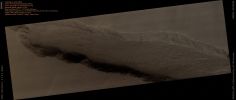
PSP_004412_1715_RED_abrowse-PCF-LXTT.jpgArsia "Dusty" Layers (Absolute Natural Colors; credits for the additional process. and color.: Dr Paolo C. Fienga - Lunexit Team)72 visiteThis image covers a Pit in the lower West Flank of Arsia Mons, one of the 4 giant Volcanos of the Tharsis Region.
Many Layers are exposed in the Pit, probably marking individual Lava Flows that overlapped (meaning: ONE Layer - ONE Flow), and provide information about the nature of the volcanic eruptions. This image was acquired in the middle of large regional Dust Storms on Mars, but the Atmosphere over this image is only moderately dusty because the altitude is 6,5 Km higher than the Planetary Mean (-----> media altitudine planetaria), so the air is quite thin and cannot hold as much Dust.
Although the Atmosphere is not too dusty, the Surface is buried by a Dust Layer that might be meters thick. These high-altitude locations on Mars have thick Dust Deposits because the thin air cannot blow away the Dust, or at least not as fast as it accumulates. On Earth the Oceans serve as "Dust Traps", while on Mars such Traps are the highest Volcanoes. MareKromiumOtt 22, 2010
|
|
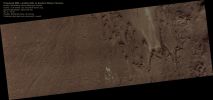
PSP_003843_1680_RED_abrowse.jpgPossible MSL Landing Side in Eastern Melas Chasma (Natural Colors; credits for the additional process. and color.: Dr Paolo C. Fienga - Lunexit Team)68 visitenessun commentoMareKromiumOtt 22, 2010
|
|

ESP_019213_2210_RED_abrowse.jpgPossible Alpine-like Glacier (Natural Colors; credits for the additional process. and color.: Dr Paolo C. Fienga - Lunexit Team)94 visitenessun commentoMareKromiumOtt 20, 2010
|
|
| 2237 immagini su 187 pagina(e) |
 |
|
|
|
|
76 | |
|
|
|
|





