| |

| Ultimi arrivi - Mars Reconnaissance Orbiter (MRO) |

ESP_026378_1730-PCF-LXTT-01.jpgFeatures of West Candor Chasma (EDM - Absolute Natural Colors; credits for the additional process. and color.: Dr Paolo C. Fienga - Lunexit Team)132 visiteMars Local Time: 15:13 (early afternoon)
Coord. (centered): 6,733° South Lat. and 284,485° East Long.
Spacecraft altitude: 266,6 Km (such as about 166,6 miles)
Original image scale range: 26,7 cm/pixel (with 1 x 1 binning) so objects ~ 80 cm across are resolved (with 4 x 4 binning)
Map projected scale: 25 cm/pixel
Map projection: EQUIRECTANGULAR
Emission Angle: 9,8°
Sun - Mars - MRO (or "Phase") Angle: 50,0°
Solar Incidence Angle: 57° (meaning that the Sun is about 33° above the Local Horizon)
Solar Longitude: 82,4° (Northern Spring)
Credits: NASA/JPL/University of Arizona
Additional process. and coloring: Lunar Explorer ItaliaMareKromiumMag 21, 2012
|
|

ESP_026061_1435-PCF-LXTT-002.jpgLayering on an Unnamed Southern Crater Rim (EDM - Absolute Natural Craters; credits for the additional process. and color.: Dr Paolo C. Fienga - Lunexit Team)82 visiteMars Local Time: 15:13 (early afternoon)
Coord. (centered): 36,4° South Lat. and 302,3° East Long.
Spacecraft altitude: 251,9 Km (such as about 157,4 miles)
Original image scale range: 50,4 cm/pixel (with 2 x 2 binning) so objects ~ 1 mt and 51 cm across are resolved (with 4 x 4 binning)
Map projected scale: 50 cm/pixel
Map projection: EQUIRECTANGULAR
Emission Angle: 1,2°
Sun - Mars - MRO (or "Phase") Angle: 75,0°
Solar Incidence Angle: 76° (meaning that the Sun is about 14° above the Local Horizon)
Solar Longitude: 71,6° (Northern Spring)
Credits: NASA/JPL/University of Arizona
Additional process. and coloring: Lunar Explorer ItaliaMareKromiumApr 15, 2012
|
|
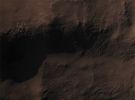
ESP_026061_1435-PCF-LXTT-000.jpgLong Shadows... (CTX Frame "A" - Absolute Natural Colors; credits for the additional process. and color.: Dr Paolo C. Fienga - Lunexit Team)86 visiteMars Local Time: 15:13 (early afternoon)
Coord. (centered): 36,4° South Lat. and 302,3° East Long.
Spacecraft altitude: 251,9 Km (such as about 157,4 miles)
Original image scale range: 50,4 cm/pixel (with 2 x 2 binning) so objects ~ 1 mt and 51 cm across are resolved (with 4 x 4 binning)
Map projected scale: 50 cm/pixel
Map projection: EQUIRECTANGULAR
Emission Angle: 1,2°
Sun - Mars - MRO (or "Phase") Angle: 75,0°
Solar Incidence Angle: 76° (meaning that the Sun is about 14° above the Local Horizon)
Solar Longitude: 71,6° (Northern Spring)
Credits: NASA/JPL/University of Arizona
Additional process. and coloring: Lunar Explorer ItaliaMareKromiumApr 15, 2012
|
|
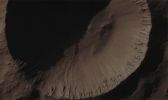
ESP_026061_1435-PCF-LXTT-001.jpgLong Shadows... (CTX Frame "B" - Absolute Natural Colors; credits for the additional process. and color.: Dr Paolo C. Fienga - Lunexit Team)75 visiteMars Local Time: 15:13 (early afternoon)
Coord. (centered): 36,4° South Lat. and 302,3° East Long.
Spacecraft altitude: 251,9 Km (such as about 157,4 miles)
Original image scale range: 50,4 cm/pixel (with 2 x 2 binning) so objects ~ 1 mt and 51 cm across are resolved (with 4 x 4 binning)
Map projected scale: 50 cm/pixel
Map projection: EQUIRECTANGULAR
Emission Angle: 1,2°
Sun - Mars - MRO (or "Phase") Angle: 75,0°
Solar Incidence Angle: 76° (meaning that the Sun is about 14° above the Local Horizon)
Solar Longitude: 71,6° (Northern Spring)
Credits: NASA/JPL/University of Arizona
Additional process. and coloring: Lunar Explorer ItaliaMareKromiumApr 15, 2012
|
|
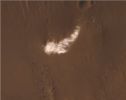
ESP_025387_1555-PCF-LXTT-001.jpgUnnamed Crater and a "patch" of bright Bedrock (EDM - Absolute Natural Colors; credits for the additional process. and color.: Dr Paolo C. Fienga - Lunexit Team)107 visiteMars Local Time: 14:58 (early afternoon)
Coord. (centered): 24,4° South Lat. and 341,2° East Long.
Spacecraft altitude: 260,1 Km (such as about 162,5 miles)
Original image scale range: 26,9 cm/pixel (with 1 x 1 binning) so objects ~ 78 cm across are resolved
Map projected scale: 25 cm/pixel
Map projection: EQUIRECTANGULAR
Emission Angle: 6,5°
Sun - Mars - MRO (or "Phase") Angle: 57,1°
Solar Incidence Angle: 61° (meaning that the Sun is about 29° above the Local Horizon)
Solar Longitude: 48,6° (Northern Spring)
Credits: NASA/JPL/University of Arizona
Additional process. and coloring: Lunar Explorer Italia MareKromiumApr 15, 2012
|
|

ESP_025387_1555-PCF-LXTT-000.jpgUnnamed Crater and a "patch" of bright Bedrock (CTX Frame - Absolute Natural Colors; credits for the additional process. and color.: Dr Paolo C. Fienga - Lunexit Team)74 visiteMars Local Time: 14:58 (early afternoon)
Coord. (centered): 24,4° South Lat. and 341,2° East Long.
Spacecraft altitude: 260,1 Km (such as about 162,5 miles)
Original image scale range: 26,9 cm/pixel (with 1 x 1 binning) so objects ~ 78 cm across are resolved
Map projected scale: 25 cm/pixel
Map projection: EQUIRECTANGULAR
Emission Angle: 6,5°
Sun - Mars - MRO (or "Phase") Angle: 57,1°
Solar Incidence Angle: 61° (meaning that the Sun is about 29° above the Local Horizon)
Solar Longitude: 48,6° (Northern Spring)
Credits: NASA/JPL/University of Arizona
Additional process. and coloring: Lunar Explorer ItaliaMareKromiumApr 15, 2012
|
|

ESP_026394_2160-PCF-LXTT-00.jpgHuge Dust Devil in Amazonis Planitia (CTX Frame - Absolute Natural Colors; credits for the additional process. and color.: Dr Paolo C. Fienga - Lunexit Team) 93 visiteMars Local Time: 15:02 (early afternoon)
Coord. (centered): 35,5° North Lat. and 201,5° East Long.
Spacecraft altitude: 295,8 Km (such as about 184,9 miles)
Original image scale range: 31,9 cm/pixel (with 2 x 2 binning) so objects ~ 1 mt and 18 cm across are resolved (with 4 x 4 binning)
Map projected scale: 50 cm/pixel
Map projection: EQUIRECTANGULAR
Emission Angle: 0,3°
Sun - Mars - MRO (or "Phase") Angle: 40,4°
Solar Incidence Angle: 40° (meaning that the Sun is about 50° above the Local Horizon)
Solar Longitude: 83,0° (Northern Spring)
Credits: NASA/JPL/University of Arizona
Additional process. and coloring: Lunar Explorer ItaliaMareKromiumApr 15, 2012
|
|

ESP_026394_2160-PCF-LXTT-01.jpgHuge Dust Devil in Amazonis Planitia (EDM - Absolute Natural Colors; credits for the additional process. and color.: Dr Paolo C. Fienga - Lunexit Team) 90 visiteMars Local Time: 15:02 (early afternoon)
Coord. (centered): 35,5° North Lat. and 201,5° East Long.
Spacecraft altitude: 295,8 Km (such as about 184,9 miles)
Original image scale range: 31,9 cm/pixel (with 2 x 2 binning) so objects ~ 1 mt and 18 cm across are resolved (with 4 x 4 binning)
Map projected scale: 50 cm/pixel
Map projection: EQUIRECTANGULAR
Emission Angle: 0,3°
Sun - Mars - MRO (or "Phase") Angle: 40,4°
Solar Incidence Angle: 40° (meaning that the Sun is about 50° above the Local Horizon)
Solar Longitude: 83,0° (Northern Spring)
Credits: NASA/JPL/University of Arizona
Additional process. and coloring: Lunar Explorer ItaliaMareKromiumApr 15, 2012
|
|

ESP_025914_2540_RED-PCF-LXTT-00.jpgClouds over Vastitas Borealis (CTX Frame - Absolute Natural Colors; credits for the additional process. and color.: Dr Paolo C. Fienga - Lunexit Team)96 visiteMars Local Time: 14:20 (early afternoon)
Coord. (centered): 73,9° North Lat. and 334,7° East Long.
Spacecraft altitude: 318,4 Km (such as about 199,0 miles)
Original image scale range: 31,9 cm/pixel (with 1 x 1 binning) so objects ~ 96 cm across are resolved
Map projected scale: 25 cm/pixel
Map projection: POLAR STEREOGRAPHIC
Emission Angle: 4,6°
Sun - Mars - MRO (or "Phase") Angle: 58,0°
Solar Incidence Angle: 54° (meaning that the Sun is about 36° above the Local Horizon)
Solar Longitude: 66,6° (Northern Spring)
Credits: NASA/JPL/University of Arizona
Additional process. and coloring: Lunar Explorer ItaliaMareKromiumMar 30, 2012
|
|
ESP_025914_2540_RED-PCF-LXTT-01.jpgClouds over Vastitas Borealis (EDM - Absolute Natural Colors; credits for the additional process. and color.: Dr Paolo C. Fienga - Lunexit Team)117 visiteMars Local Time: 14:20 (early afternoon)
Coord. (centered): 73,9° North Lat. and 334,7° East Long.
Spacecraft altitude: 318,4 Km (such as about 199,0 miles)
Original image scale range: 31,9 cm/pixel (with 1 x 1 binning) so objects ~ 96 cm across are resolved
Map projected scale: 25 cm/pixel
Map projection: POLAR STEREOGRAPHIC
Emission Angle: 4,6°
Sun - Mars - MRO (or "Phase") Angle: 58,0°
Solar Incidence Angle: 54° (meaning that the Sun is about 36° above the Local Horizon)
Solar Longitude: 66,6° (Northern Spring)
Credits: NASA/JPL/University of Arizona
Additional process. and coloring: Lunar Explorer ItaliaMareKromiumMar 30, 2012
|
|
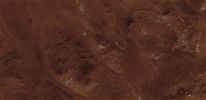
PSP_004277_1530_RED-PCF-LXTT-01.jpgFeatures of Holden Crater's Rim (CTX Frame "B" - Absolute Natural Colors; credits for the additional process. and color.: Dr Paolo C. Fienga - Lunexit Team)75 visiteHiRISE image PSP_004277_1530 covers a portion of the rim of Holden Crater, revealing breaches created when water over-topped the Rim and incised a series of Channels as it flowed down the Crater Wall.
The water responsible for the Channels was impounded outside of the rim of Holden in Uzboi Vallis (Holden Crater itself is approx. 150 Km in diameter).
Uzboi Vallis was interrupted when Holden Crater formed and the Rim formed an effective, temporary damn to flow farther to the North. Once the Uzboi Basin filled, water began flowing into Holden again, creating a series of low fan-shaped Deltas, alluvial deposits and a shallow, but relatively short-lived lake.
The Channels in this image were only active for a short time, as a Channel just to the East cut quickly into the Rim and became responsible for most of the drainage into the Crater.
The fact that most of the fan-shaped Deltas radiate from the Dominant Channel to the East rather than those in this image supports this scenario. MareKromiumMar 30, 2012
|
|
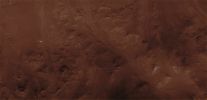
PSP_004277_1530_RED-PCF-LXTT-00.jpgFeatures of Holden Crater's Rim (CTX Frame "A" - Absolute Natural Colors; credits for the additional process. and color.: Dr Paolo C. Fienga - Lunexit Team)64 visiteHiRISE image PSP_004277_1530 covers a portion of the rim of Holden Crater, revealing breaches created when water over-topped the Rim and incised a series of Channels as it flowed down the Crater Wall.
The water responsible for the Channels was impounded outside of the rim of Holden in Uzboi Vallis (Holden Crater itself is approx. 150 Km in diameter).
Uzboi Vallis was interrupted when Holden Crater formed and the Rim formed an effective, temporary damn to flow farther to the North. Once the Uzboi Basin filled, water began flowing into Holden again, creating a series of low fan-shaped Deltas, alluvial deposits and a shallow, but relatively short-lived lake.
The Channels in this image were only active for a short time, as a Channel just to the East cut quickly into the Rim and became responsible for most of the drainage into the Crater.
The fact that most of the fan-shaped Deltas radiate from the Dominant Channel to the East rather than those in this image supports this scenario. MareKromiumMar 30, 2012
|
|
| 2237 immagini su 187 pagina(e) |
|
|
|
|
6 | |
|
|
|
|
|
|
|





