| Ultimi arrivi - Mars Reconnaissance Orbiter (MRO) |

ESP_020922_1635_RED_abrowse.jpgProximities of Gratteri Crater (Absolute Natural Colors; credits: Dr Paolo C. Fienga - Lunexit Team)271 visiteCaption NASA:"Gratteri Crater, located about 150 Km to the South-East, ejected rocks that created millions of Secondary Craters over a Region at least 500 Km wide.
Many of these Secondary Craters are concentrated in "Rays", or lines extending radially from the Primary Impact Area (such as the "Gratteri Crater" Area).
Crater Rays on the Moon are typically bright at visible wavelengths, but on Mars they are often best seen in the Thermal InfraRed wavelengths, from temperature contrasts. This image confirms that this Ray contains many Secondary Craters (they are the small, sharp-rimmed Craters). Since millions of Secondary Craters form at once, they all have the same age and same degree of modification over time. Understanding the distribution of secondary craters provides information about impact processes, including escape of rocks that could become Martian meteorites on Earth".MareKromiumFeb 27, 2011
|
|

ESP_020924_1455_RED_abrowse.jpgTriple (Simultaneous) Impact (Absolute Natural Colors; credits for the additional process. and color.: Dr Paolo C. Fienga - Lunexit Team)590 visitenessun commentoMareKromiumFeb 27, 2011
|
|

ESP_020793_1935_RED_abrowse-PCF-LXTT.jpgElliptical Impact Crater or Crater Chain? (Natural Colors; credits for the additional process. and color.: Dr Paolo C. Fienga - Lunexit Team)318 visiteCaption NASA:"This image shows what appears to be a highly Elliptical Crater, which would be unusual. Closer examination reveals that it is probably two overlapping Craters that formed concurrently, plus several smaller Craters aligned with the Long Axis of the elliptical depression.
This type of "Crater Chain" can form from a highly oblique impact, in which the Impactor (Bolide) trajectory is almost parallel to the Surface".MareKromiumFeb 27, 2011
|
|

ESP_020918_1400_RED_abrowse.jpgOutcrops in the Southern Latitudes (Natural Colors; credits for the additional process. and color.: Dr Paolo C. Fienga - Lunexit Team)321 visitenessun commentoMareKromiumFeb 27, 2011
|
|

ESP_020801_1825_RED_abrowse.jpgPeri-Equatorial Volcanic Vent (Natural Colors; credits for the additional process. and color.: Dr Paolo C. Fienga - Lunexit Team)404 visitenessun commentoMareKromiumFeb 26, 2011
|
|
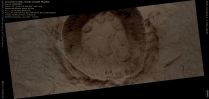
ESP_014412_1780_RED_abrowse.jpgUnnamed Crater with Deep Gullies (Absolute Natural Colors; credits for the additional process. and color.: Dr Paolo C. Fienga - Lunexit Team)251 visitenessun commentoMareKromiumFeb 26, 2011
|
|
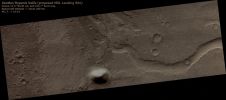
PSP_002919_1915_red-abrowse-PCF-LXTT.jpgPossible MSL Landing Site between Xanthe Terra and Hypanis Vallis (Absolute Natural Colors; credits for the additional process. and coloring: Dr Paolo C. Fienga - Lunexit Team)204 visitenessun commentoMareKromiumFeb 25, 2011
|
|
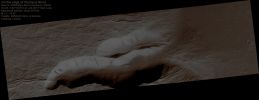
PSP_003476_1940_RED_abrowse-PCF-LXTT.jpgCollapse Feature at the Base of Olympus Mons (Absolute Natural Colors; credits for the additional process. and color.: Dr Paolo C. Fienga - Lunexit Team) 124 visitenessun commentoMareKromiumFeb 25, 2011
|
|
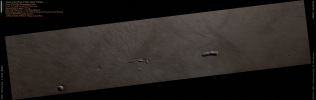
PSP_009343_1700_RED-abrowse-PCF-LXTT.jpgVents on the Floor of Arsia Mons' Caldera (Absolute Natural Colors; credits for the additional process. and color.: Dr Paolo C. Fienga - Lunexit Team)134 visitenessun commentoMareKromiumFeb 25, 2011
|
|
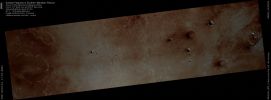
PSP_009352_1770_red_abrowse-PCF-LXTT.jpgSouthern Meridiani Planum (Absolute Natural Colors; credits for the additional process. and color.: Dr Paolo C. Fienga - Lunexit Team)138 visitenessun commentoMareKromiumFeb 24, 2011
|
|
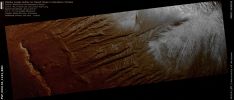
PSP_009156_1335_red_abrowse-PCF-LXTT.jpgGullies on a Massif Slope in Nereidum Montes (Absolute Natural Colors; credits for the additional process. and color.: Dr Paolo C. Fienga - Lunexit) 120 visitenessun commentoMareKromiumFeb 24, 2011
|
|

ESP_020812_1530_RED_abrowse-PCF-LXTT-2.jpgThe "Dragon" of Holden Crater138 visitenessun commentoMareKromiumFeb 19, 2011
|
|
| 2237 immagini su 187 pagina(e) |
 |
|
|
|
|
58 | |
|
|
|
|





