| Ultimi arrivi - Mars Reconnaissance Orbiter (MRO) |

ESP_020873_1005_RED_abrowse.jpgDusty "Cryptic Terrain" (Absolute Natural Colors; credits for the additional process. and color.: Dr Paolo C. Fienga - Lunexit Team)272 visitenessun commentoMareKromiumMar 13, 2011
|
|

ESP_020875_0980_RED_abrowse-PCF-LXTT.jpgSouth Polar "Pseudo-Trees" (Absolute Natural Colors; credits for the additional process. and color.: Dr Paolo C. Fienga - Lunexit Team)318 visitenessun commentoMareKromiumMar 11, 2011
|
|

ESP_021536_1780_00-PCF-LXTT.jpgSanta Maria Crater and "Oppy" (Absolute Natural Colors; credits: Dr Paolo C. Fienga - Lunexit Team)251 visitenessun commentoMareKromiumMar 11, 2011
|
|

ESP_020867_1320_RED_abrowse-PCF-LXTT.jpgSouthern Mid-Latitudes Rocky Terrain (Absolute Natural Colors; credits for the additional process. and color.: Dr Paolo C. Fienga - Lunexit Team)237 visitenessun commentoMareKromiumMar 11, 2011
|
|

ESP_020871_2055_RED_abrowse-PCF-LXTT.jpgElysium Montes (Absolute Natural Colors; credits: Dr Paolo C. Fienga - Lunexit Team)244 visitenessun commentoMareKromiumMar 11, 2011
|
|

ESP_020862_1430_RED_abrowse-PCF-LXTT.jpgRipples (Absolute Natural Colors; credits for the additional process. and color.: Dr Paolo C. Fienga - Lunexit Team)236 visitenessun commentoMareKromiumMar 11, 2011
|
|
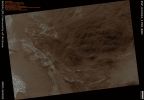
ESP_020932_1700_RED_abrowse-PCF-LXTT.jpgFeatures of Melas Chasma (Absolute Natural Colors; credits for the additional process. and coloring: Dr Paolo C. Fienga - Lunexit Team)247 visitenessun commentoMareKromiumMar 09, 2011
|
|

ESP_020891_1560_RED_abrowse-PCF-LXTT.jpgCandidate MSL Landing Site: the Floor of Eberswalde Crater (Absolute Natural Colors; credits for the additional process. and color.: Dr Paolo C. Fienga - Lunexit Team)248 visitenessun commentoMareKromiumMar 09, 2011
|
|

ESP_020946_1450_RED_abrowse-PCF-LXTT.jpgFeatures of the Southern Desert (Natural Colors; credits for the additional process. and color.: Dr Paolo C. Fienga)270 visitenessun commentoMareKromiumMar 09, 2011
|
|

Craters-Huygens_Crater-PIA13800-PCF-LXTT.jpgFractures and Layers in Carbonate-bearing Rocks at Mars' Huygens Basin (Absolute Natural Colors; credits: Dr Paolo C. Fienga - Lunexit Team)278 visiteCaption NASA:This image from orbit covers an area about 460 meters (approx. 1500 feet) across, in which Carbonate Minerals have been identified from spectrometer observations. Fractures and possible Layers are visible in the light-toned Rock exposure containing the Carbonates.
The location is inside an Unnamed Crater about 35 Km (approx. 21,73 miles) in diameter that lays on the Uplifted Rim of the extremely wide Huygens Crater, which is about 467 Km (approx. 290 miles) in diameter. The excavations by the impacts that dug first Huygens and then the smaller crater have exposed material in this image that had been buried an estimated 5 Km (3,1 miles) deep.
The Carbonates may be from part of an extensive Buried Layer that could hold much of the Carbon that was once in a thick Martian Atmosphere of Carbon Dioxide, some researchers propose.
Mars now has a thin Atmosphere that is mostly Carbon Dioxide, but evidence that liquid water was once widespread on the Surface suggests the Atmosphere was much thicker billions of years ago. The High Resolution Imaging Science Experiment (HiRISE) camera on NASA's Mars Reconnaissance Orbiter provided this image.
Identification of Iron or Calcium Carbonates at this site, and also of Clay Minerals indicating a formerly wet environment, comes from an observation by the Compact Reconnaissance Imaging Spectrometer for Mars (CRISM) on the same Orbiter.
The point is that in the presence of water and other (favourable) conditions, the CO2 (Carbon Dioxide) that is present in the Martian Atmosphere can be captured into Carbonate Minerals.
The image is from HiRISE observation ESP_012897_168, made on April 27, 2009, and centered at 11,6° South Lat. and 51,9° East Long.".MareKromiumMar 09, 2011
|
|
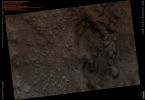
ESP_020930_1870_RED_abrowse-PCF-LXTT.jpgPossible Olivine-rich Terrain in Terra Margaritifer (Absolute Natural Colors; credits for the additional process. and coloring: Dr Paolo C. Fienga - Lunexit Team)241 visitenessun commentoMareKromiumMar 09, 2011
|
|
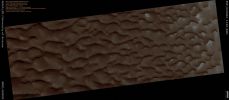
ESP_020942_1330_RED_abrowse-PCF-LXTT.jpgThe Large Dunefield of Kaiser Crater (Absolute Natural Colors; credits for the additional process. and color.: Dr Paolo C. Fienga - Lunexit Team)214 visitenessun commentoMareKromiumMar 08, 2011
|
|
| 2237 immagini su 187 pagina(e) |
 |
|
|
|
|
54 | |
|
|
|
|





