| Ultimi arrivi - Mars Reconnaissance Orbiter (MRO) |
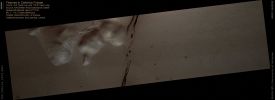
PSP_006234_1870_RED_abrowse-PCF-LXTT.jpgFeatures of Cerberus Fossae (Absolute Natural Colors; credits for the additional process. and color.: Dr Paolo C. Fienga)213 visitenessun commentoMareKromiumMar 20, 2011
|
|
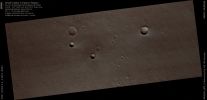
PSP_008213_1965_red-abrowse-PCF-LXTT.jpgSmall Craters in Elysium Planitia (Absolute Natural Colors; credits for the additional process. and color.: Dr Paolo C. Fienga - Lunexit Team)142 visitenessun commentoMareKromiumMar 20, 2011
|
|

PSP_002291_1335_red-PCF-LXTT.jpgGullies in Terra Sirenum (Absolute Natural Colors; credits for the additional process. and color.: Dr Paolo C. Fienga - Lunexit) 163 visitenessun commentoMareKromiumMar 20, 2011
|
|

PSP_002574_1865_red-PCF-LXTT.jpgLayered Rocks in Arabia Terra (Natural Colors; credits for the additional process. and color.: Dr Paolo C. Fienga - Lunexit Team)163 visitenessun commentoMareKromiumMar 20, 2011
|
|
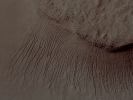
Gullies-Hellas_Planitia-PIA13802.jpgGullies in Hellas Planitia (Absolute Natural Colors; credits for the additional process. and color.: Dr Paolo C. Fienga - Lunexit) 220 visiteImages like this from the High Resolution Imaging Science Experiment (HiRISE) camera on NASA's Mars Reconnaissance Orbiter show portions of the Martian surface in unprecedented detail. This one shows many channels from 1 meter to 10 meters (approximately 3 feet to 33 feet) wide on a scarp in the Hellas impact basin. On Earth we would call these Gullies. Some larger channels on Mars that are sometimes called Gullies are big enough to be called ravines on Earth.
This view is an excerpt from a HiRISE observation taken on Jan. 14, 2011, nearly five years after the March 10, 2006, arrival of the Mars Reconnaissance Orbiter at Mars. North is up. The image was taken at 15:44 Local Mars Time. The observation is centered at 48,4° South Latitude, 73,5° East Longitude.MareKromiumMar 16, 2011
|
|

PSP_004980_1035_RED_browse-01-PCF-LXTT.jpgUnnamed "Ghost" Crater near the South Pole (EDM - Absolute Natural Colors; credits for the additional process. and color.: Dr Paolo C. Fienga - Lunexit) 236 visiteCreep of the Crater Wall Material may have also played a role in erasing the Crater. This far South, the Surface Material is likely to be ice-rich and will slowly flow downhill. Additional evidence for near-surface ice is provided by the pervasive Polygons in the image, forming due to stresses caused by temperature variations in ice-rich ground.
Regardless of the mechanism, the Crater remains faintly expressed in the surface morphology. Note that the Surface has a similar texture away from the Crater, but not organized into concentric arcs. The residual structure of the Crater provides some control on stresses, producing the ringed pattern. MareKromiumMar 16, 2011
|
|
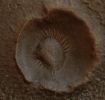
PSP_006250_2200_RED_abrowse-PCF-LXTT-1.jpgUnnamed Crater in Nilosyrtis Region (Absolute Natural Colors; credits for the additional process. and color.: Dr Paolo C. Fienga - Lunexit Team)232 visitenessun commentoMareKromiumMar 16, 2011
|
|

ESP_020959_0985_RED_abrowse.jpgEarly Spring in Inca City (Absolute Natural Colors; credits for the additional process. and color.: Dr Paolo C. Fienga - Lunexit Team)310 visitenessun commentoMareKromiumMar 13, 2011
|
|

ESP_020888_0935_RED_abrowse.jpgSouth Polar Fans (Absolute Natural Colors; credits for the additional process. and color.: Dr Paolo C. Fienga - Lunexit Team)280 visitenessun commentoMareKromiumMar 13, 2011
|
|

ESP_020876_1330_RED_abrowse-PCF-LXTT.jpgDune-Gullies in Kaiser Crater (Absolute Natural Colors; credits for the additional process. and color.: Dr Paolo C. Fienga - Lunexit Team)297 visitenessun commentoMareKromiumMar 13, 2011
|
|

ESP_020873_1640_RED_abrowse.jpgLayered Bedrock in Central Uplift (Absolute Natural Colors; credits: Dr Paolo C. Fienga - Lunexit Team)287 visitenessun commentoMareKromiumMar 13, 2011
|
|
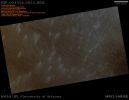
ESP_021454_0925_RED_abrowse-00-PCF-LXTT.jpgPolar Streaks (Absolute Natural Colors; credits: Dr Paolo C. Fienga - Lunexit Team)304 visiteThis is the first HiRISE image taken after Solar Conjunction (2010), when Mars passes behind the Sun as seen from Earth. The Solar Corona interferes with radio communication with MRO for a few weeks during conjunction, so no HiRISE imaging was planned until reliable communication resumed.
This image is one of a set of images taken to monitor the evolution of the South Polar Seasonal Cap. The Seasonal Caps on Mars are mostly composed of Carbon Dioxide, the major component of the Martian Atmosphere. It is currently Spring in the Southern Hemisphere of Mars, so the Cap is warming and evaporating into the Atmosphere by way of Sublimation.
The Dark Streaks visible in this image are thought to be sand ejected onto the Surface of the Cap by "Jets" of CO2. It is thought that Sunlight penetrates to the base of the Seasonal Cap, warming the soil at its base. This in turn warms the Cap from below, causing Carbon Dioxide to evaporate and build pressure until the gas escapes through Vents to the Surface. Sand grains are apparently entrained in this flow and deposited in Fans on the Surface.
The White Streaks may be formed by recondensation of ice on the Surface of the Cap.MareKromiumMar 13, 2011
|
|
| 2237 immagini su 187 pagina(e) |
 |
|
|
|
|
53 | |
|
|
|
|





