| Ultimi arrivi - Mars Reconnaissance Orbiter (MRO) |

ESP_021915_1005-PCF-LXTT-2.jpgPromethei Planum (CTX Frame n.2 - Absolute Natural Colors; credits for the additional process. and color.: Dr Paolo C. Fienga - Lunexit Team)209 visiteAcquisition Date: March, 31st, 2011
Mars Local Time (M.L.T.): 15:55 (Middle Afternoon)
Latitude (centered): 79,5° South
Longitude (East): 109,4°
Range to target site: 249,2 Km
Original image Scale Range: 49,9 cm/pixel (with 2 x 2 binning) so objects ~150 cm across are resolved
Map Projected Scale: 50 cm/pixel
Map projection: POLAR STEREOGRAPHIC
Emission Angle: 3,5°
Phase Angle: 57,4°
Solar Incidence Angle (S.I.A.): 60°, with the Sun about 30° above the Local Horizon
Solar Longitude: 264,8° - Northern AutumnMareKromiumMag 14, 2011
|
|
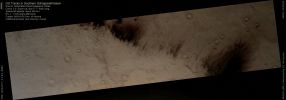
PSP_006477_1745_RED_abrowse-PCF-LXTT.jpgDD Tracks in Southern Schiaparelli Basin (CTX Frame - Natural Colors; credits for the additional process. and color.: Dr Paolo C. Fienga - Lunexit Team) 152 visitenessun commentoMareKromiumMag 12, 2011
|
|
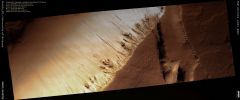
PSP_003545_2025_RED_abrowse-PCF-LXTT-00.jpgIntersection between Hyblaeus and Elysium Chasmata (CTX Frame - Natural Colors; credits for the additional process. and color.: Dr Paolo C. Fienga - Lunexit Team)161 visitenessun commentoMareKromiumMag 12, 2011
|
|
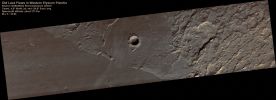
PSP_003532_1845_RED_abrowse-PCF-LXTT.jpgLava Flows in Western Elysium Planitia (Absolute Natural Colors; credits for the additional process. and color.: Dr Paolo C. Fienga - Lunexit Team)174 visitenessun commentoMareKromiumMag 12, 2011
|
|

PSP_002922_1725_RED_abrowse-04-PCF-LXTT.jpgPossible Volcanic "Mouth", on Arsia Mons' Flank (EDM - Absolute Natural Colors - credits for the additional process. and color.: Dr Paolo C. Fienga - Lunexit Team)1262 visitenessun commentoMareKromiumMag 09, 2011
|
|
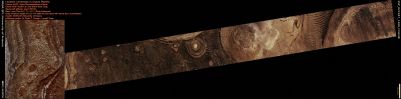
ESP_021947_1300_abrowse-PCF-LXTT-00.jpgLayered Landscape in Argyre Planitia (an Image-Mosaic in Absolute Natural Colors; credits for the additional process. and color.: Dr Paolo C. Fienga - Lunexit Team)265 visitenessun commentoMareKromiumMag 09, 2011
|
|
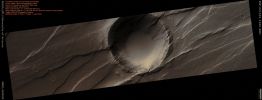
ESP_021593_1920_RED_abrowse-PCF-LXTT.jpgUnnamed Crater cut by Faults and Graben (Absolute Natural Colors; credits for the additional process. and color.: Dr Paolo C. Fienga - Lunexit Team)153 visitenessun commentoMareKromiumMag 06, 2011
|
|
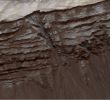
ESP_021942_1520_abrowse-PCF-LXTT.jpgGully-like Feature inside Terby Crater (Absolute Natural Colors; credits for the additional process. and color.: Dr Paolo C. Fienga - Lunexit Team)304 visitenessun commentoMareKromiumApr 30, 2011
|
|
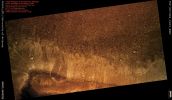
PSP_007492_2265_RED_abrowse-PCF-LXTT.jpgPolygons in Deuteronilus Mensae (Enhanced Absolute Natural Colors; credits for the additional process. and color.: Dr Paolo C. Fienga - Lunexit Team)318 visiteThis image reveals hexagonal and polygonal patterns formed by networks of soil troughs on the floor of a valley in the Deuteronilus Mensae Region, located on the Northern edge of Arabia Terra and borders the Martian Southern Highlands and Northern Lowlands.
The polygonal patterns indicate that the surface has undergone stress, potentially caused by subsidence (sinking), desiccation (drying out), or thermal contraction. These polygon features are similar to permafrost thermal-contraction polygons that form in Polar and High Alpine Regions on Earth by seasonal-to-annual contraction of the subsoil. On Earth, such polygon features are indicative of the presence of ground ice and are commonly referred to as “patterned ground”. The patterns are the result of thermal contraction in ice-cemented soil or permafrost that forms a honeycomb network of small fractures below the surface.
The network of fractures is eventually manifested as shallow troughs at the surface, forming the hexagonal and polygonal patterns visible in this image.
The polygons in this scene average approx. 100 meters (110 yards) in size and appear to be higher in elevation in the center than in the surrounding troughs. Boulders are accumulated in the center of the polygons and dunes are visible in several of the troughs.
The landforms we observe here most likely indicate that ice-rich permafrost is present or has been present in the past.MareKromiumApr 30, 2011
|
|

PSP_002291_1335_red-PCF-LXTT~0.jpgGullies in Terra Sirenum (Natural Colors; credits for the additional process. and color.: Dr Paolo C. Fienga - Lunexit Team)251 visitenessun commentoMareKromiumApr 30, 2011
|
|
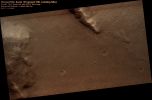
PSP_002193_1670_red-PCF-LXTT.jpgFeatures of Margaritifer Terra (Natural Colors; credits for the additional process. and color.: Dr Paolo C. Fienga - Lunexit Team)317 visitenessun commentoMareKromiumApr 30, 2011
|
|

PSP_002345_1095_red-PCF-LXTT.jpgSouthern Dunes (Absolute Natural Colors; credits for the additional process. and color.: Dr Paolo C. Fienga - Lunexit Team)317 visitenessun commentoMareKromiumApr 30, 2011
|
|
| 2237 immagini su 187 pagina(e) |
 |
|
|
|
|
48 | |
|
|
|
|





