| Ultimi arrivi - Mars Reconnaissance Orbiter (MRO) |

ESP_022691_1145_RED_abrowse-PCF-LXTT.jpgSouthern Dunefield and DD Tracks (Absolute Natural Colors; credits for the additional process. and color.: Dr Paolo C. Fienga - Lunexit Team)134 visitenessun commentoMareKromiumLug 14, 2011
|
|
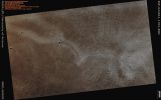
ESP_022661_1705_RED_abrowse-PCF-LXTT.jpgFeatures of Arsia Mons: Reticulate Bedform Monitoring (Natural Colors; credits for the additional process. and color: Dr Paolo C. Fienga - Lunexit Team)153 visitenessun commentoMareKromiumLug 14, 2011
|
|

ESP_022658_0945_RED_abrowse-PCF-LXTT.jpgSouth Polar Features' Monitoring (Natural Colors; credits for the additional process. and color.: Dr Paolo C. Fienga - Lunexit Team)139 visitenessun commentoMareKromiumLug 14, 2011
|
|

PSP_008842_1705_red-PCF-LXTT.jpgSmall Shield-Volcano and Caldera (Enhanced Natural Colors; credits for the additional process. and color.: Dr Paolo C. Fienga - Lunar Explorer Italia)207 visiteThis image is centered on the vent area of a small shield volcano located within the Summit Caldera of Arsia Mons, the southernmost of the large three Tharsis Montes Volcanoes.
Since the first details of the volcano were revealed by the Viking orbiters 30 years ago, the presence of a string of several small Shield Volcanoes across the Floor of the Caldera has been known. The resolution of the Viking images was insufficient to show more than the mere presence of small Shield Volcanoes and the fact that they appeared to line up along a linear trend across the Floor. And, it was suspected that the small Shield Volcanoes were the source of the lava flows that appeared to cover the floor of the Caldera, but details have been elusive.
This HiRISE image of the central small Shield Volcano on the Caldera Floor shows that there are numerous lava flows radiating from a small summit crater. To the North and South, the lavas have accumulated in lobes, some of which radiate smaller channels and lobes. About midway from the crater, to both left and right of the image, the surface appears very smooth and there are few details visible. Until detailed geologic mapping is done, it is difficult to conclude whether these smooth areas represent distal ponding of lavas that erupted from the summit crater of the small Shield Volcano, lava flows that have invaded from outside the image area at a time later than the formation of the small Shield Volcano, or later deposits of dust and ash that have simply covered the surface.
Whatever the relationships, it is clear that the Floor of the Largest Caldera on Mars is far from a bland surface of old lava flows. Numerous flows and multiple vents have all interacted to create a complex series of surfaces that record the geologic development of the Caldera Floor. MareKromiumLug 11, 2011
|
|

PSP_008710_1710_red-PCF-LXTT.jpgLava Flows in Tharsis Region (Enhanced Absolute Natural Colors; credits for the additional process. and color.: Dr Paolo C. Fienga - Lunexit Team)214 visiteThis image shows a relatively dark Lava Flow on the Tharsis Volcanic Plains, East of Arsia Mons.
The entire Region is composed of a thick stack of volcanic flows. The Lava Flow in the Northern part of the image (Sx) is distinctly darker than its surroundings, which are buried under a layer of dust.
Most of the image has a fluffy, blurry texture. This is the mantle of dust or volcanic ash that commonly coats Volcanic Regions on Mars. The Dark Flow is buried by this material along its South-Eastern boundary; it appears that the mantle is being stripped off of the flow surface. Perhaps this flow is somewhat smooth at a fine scale and traps relatively little dust.
This flow is probably young. The Western Edge of the "Dark Region" does appear to be the edge of the Lava flow, indicating that this flow is relatively high-standing. This could make it more exposed to the wind and allow the mantle to be stripped. MareKromiumLug 11, 2011
|
|
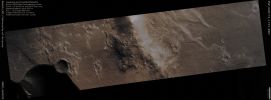
PSP_008774_1755_RED_abrowse-PCF-LXTT.jpgLayers and more Inverted Topography (Absolute Natural Colors; credits for the additional process. and color.: Dr Paolo C. Fienga - Lunexit Team)196 visitenessun commentoMareKromiumLug 06, 2011
|
|
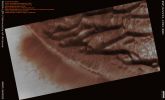
ESP_022255_1095_RED_abrowse-PCF-LXTT.jpgSouthern Dunefield (Enhanced Natural Colors; credits for the additional process. and color.: Dr Paolo C. Fienga - Lunexit Team)88 visitenessun commentoMareKromiumLug 03, 2011
|
|
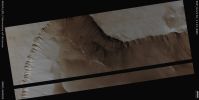
ESP_022156_1115_RED_abrowse-00-PCF-LXTT.jpgSouth Polar "Pit Gullies" (CTX Frame - Absolute Natural Colors; credits for the additional process. and color.: Dr Paolo C. Fienga - Lunexit Team)99 visiteAcquisition date: April, 18th, 2011
Mars Local Time: 15:11 (Early Afternoon)
Latitude (centered): 68,5° South
Longitude (East): 1,3°
Spacecraft Altitude (such as Range to Target Site): 253,2 Km
Original Image Scale Range: 25,3 cm/pixel (with 1 x 1 binning) so objects ~76 cm across are resolved
Map Projected Scale: 25 cm/pixel
Map projection: POLAR STEREOGRAPHIC
Emission Angle: 8,0°
Sun-Target-Spacecraft (such as "Phase") Angle: 46,3°
Solar Incidence Angle: 52° (with the Sun about 38° above the Local Horizon)
Solar Longitude: 276,6° (Northern Winter)MareKromiumLug 03, 2011
|
|
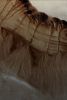
ESP_022156_1115_RED_abrowse-01-PCF-LXTT.jpgSouth Polar "Pit Gullies" (EDM - Absolute Natural Colors; credits for the additional process. and color.: Dr Paolo C. Fienga - Lunexit Team)115 visiteNumerous Gullies that have formed along the S/W Wall of an elongated shaped Pit are visible in this image. This Pit is located within a degraded approx. 100 Km Impact Crater located in the Southern Presso-Polar Regions of Mars.
Gullies originate along the rubbly, bouldery upper Wall Region and have eroded into the numerous Layered Wall Units before terminating in Fan Deposits on the Pit Floor (here, in the EDM). A previous HiRISE image (ESP_020956_1115) of this location taken during the Spring, showed Frost and interesting dark-toned Flows within the Gully Channels. Neither Frost nor Dark Flows are apparent in this Summer-time image. One goal of HiRISE is to repeat observations at locations such as this to detect changes that may lead to understanding how these Gullies form.MareKromiumLug 03, 2011
|
|

Craters-Holden_Crater-PCF-LXTT.jpgFeatures of Holden Crater (Absolute Natural Colors; credits for the additional process. and color.: Dr Paolo C. Fienga - Lunexit Team)131 visitenessun commentoMareKromiumLug 01, 2011
|
|

ESP_022494_1385_RED_abrowse-PCF-LXTT.jpgLobate "Flow Feature" in Eastern Hellas Planitia (Absolute Natural Colors; credits for the additional process. and color.: Dr Paolo C. Fienga - Lunexit Team)113 visitenessun commentoMareKromiumGiu 30, 2011
|
|
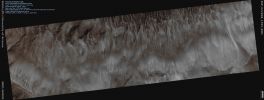
ESP_022848_1595_RED_abrowse-PCF-LXTT-00.jpgLike Waterfalls... (CTX Frame - Absolute Natural Colors; credits for the additional process. and color.: Dr Paolo C. Fienga - Lunexit Team)101 visitenessun commentoMareKromiumGiu 30, 2011
|
|
| 2237 immagini su 187 pagina(e) |
 |
|
|
|
|
40 | |
|
|
|
|





