| Ultimi arrivi - Mars Reconnaissance Orbiter (MRO) |

ESP_020551_1545_RED_abrowse.jpgMass Wasting near Claritas Fossae (Absolute Natural Colors; credits for the additional process. and color.: Dr Gianluigi Barca - Lunexit Team)200 visitenessun commentoMareKromiumAgo 09, 2011
|
|
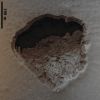
PSP_005414_1735_RED_abrowse-PCF-LXTT-01.jpgPit Chain on Arsia Mons - "Annie" (EDM - Absolute Natural Colors; credits for the additional process. and color.: Dr Paolo C. Fienga - Lunexit Team)194 visiteCaption NASA:"This small Pit located in the middle of the Chain was discovered by a team of scientists from the U.S. Geological Survey and Arizona State University using data from the THEMIS camera onboard the Mars Odyssey Spacecraft during a search for possible Cave Entrances. They informally named this pit "Annie".
A section of the HiRISE image over "Annie" has been specially processed to enhance the contrast in the shadowed areas. This shows that the Pit is is largely filled with wind blown materials. Shadow measurements indicate that the Floor is about 112 meters (367 feet) below the Rim".MareKromiumAgo 09, 2011
|
|
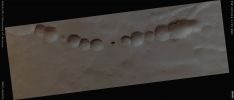
PSP_005414_1735_RED_abrowse-PCF-LXTT-00.jpgPit Chain on Arsia Mons (CTX Frame - Absolute Natural Colors; credits for the additional process. and color.: Dr Paolo C. Fienga - Lunexit Team)152 visiteCaption NASA:"The Chain of Collapse Pits visible in this image formed by collapse as the giant Shield Volcano, Arsia Mons, was pulled apart. While Magma intruding into the Volcano might have pushed the rocks aside, it is also possible that the collapse is caused by the volcano falling apart underneath its own weight.
Acquisition date: September, 22nd, 2007
M.L.T.: 14:14 (Early Afternoon)
Latitude (centered): 6,5° South
Longitude (East): 240,0°
Spacecraft Altitude: 252,4 Km
Original Image Scale Range: 25,3 cm/pixel (with 1 x 1 binning) so objects ~76 cm across are resolved
Map Projected Scale: 25 cm/pixel and North is up
Map Projection: EQUIRECTANGULAR
Emission Angle: 3,9°
Sun-Mars-Spacecraft (Phase) Angle: 38,1°
S.I.A.: 34°, with the Sun about 56° above the Local Horizon
Solar Longitude: 318,2° (Northern Winter)MareKromiumAgo 09, 2011
|
|

ESP_020470_1755_RED_abrowse.jpgLayered Mound in Juventae Chasma (Natural Colors; credits for the additional process. and color.: Dr Paolo C. Fienga - Lunexit Team)206 visitenessun commentoMareKromiumAgo 08, 2011
|
|

ESP_023076_1890_RED_abrowse-PCF-LXTT.jpgDunefield on the Floor of Nili Patera (Absolute Natural Colors; credits for the additional process. and color.: Dr Paolo C. Fienga - Lunexit Team)236 visitenessun commentoMareKromiumAgo 08, 2011
|
|
ESP_023080_0945_RED_abrowse-PCF-LXTT.jpgSouth Polar "Swiss-Cheese Surface Features" (Natural Colors; credits for the additional process. and color.: Dr Paolo C. Fienga - Lunar Explorer Italia)191 visitenessun commentoMareKromiumAgo 08, 2011
|
|

ESP_023094_1640_RED_abrowse.jpgThe Wall of Coprates Chasma (Enhanced and Darkened Absolute Natural Colors; credits for the additional process. and color: Dr Paolo C. Fienga/Lunar Explorer Italia/Italian Planetary Foundation)238 visitenessun commentoMareKromiumAgo 08, 2011
|
|

ESP_022999_1335_RED_abrowse-PCF-LXTT-00.jpgUnnamed Crater with Gullies (CTX Frame - Absolute Natural Colors; credits for the additional process. and color.: Dr Paolo C . Fienga - Lunar Explorer Italia)313 visitenessun commentoMareKromiumAgo 08, 2011
|
|
ESP_022999_1335_RED_abrowse-PCF-LXTT-01.jpgUnnamed Crater with Gullies (EDM - Absolute Natural Colors; credits for the additional process. and color.: Dr Paolo C . Fienga - Lunar Explorer Italia)242 visitenessun commentoMareKromiumAgo 08, 2011
|
|
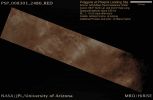
PSP_008301_2480_RED_abrowse-PCF-LXTT-00.jpgFeatures of Vastitas Borealis: Polygons (CTX Frame - Absolute Natural Colors; credits for the additional process. and color: Dr Paolo C. Fienga - Lunexit Team)133 visiteCaption NASA:"This image is one of many that have been taken over the Phoenix Landing Site. The Phoenix Lander launched from Cape Canaveral, Florida in August 2007 and will reach the surface of Mars on 25 May 2008. One of the reasons that this Region of Mars was selected for the Landing Site is based on the overall lack of rocks that could prove hazardous to the Lander. Among the many science goals, Phoenix will analyze the Surface Dust as well as dig into an ice-rich layer which is predicted to lie within inches of the Martian Surface. The Polygons are most likely the result of temperature oscillations which cause this ice to crack resulting in the Surface that is visible today. MareKromiumAgo 07, 2011
|
|

PSP_008301_2480_RED_abrowse-PCF-LXTT-01.jpgPolygons in Vastitas Borealis (EDM - Absolute Natural Colors; credits for the additional process. and color: Dr Paolo C. Fienga - Lunexit Team)135 visitenessun commentoMareKromiumAgo 07, 2011
|
|
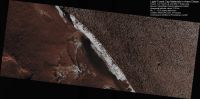
PSP_003617_1835_RED_abrowse-PCF-LXTT-00.jpgFeatures of Aram Chaos (CTX Frame - Absolute Natural Colors; credits for the additional process. and color: Dr Paolo C. Fienga - Lunexit Team)226 visitenessun commentoMareKromiumAgo 07, 2011
|
|
| 2237 immagini su 187 pagina(e) |
 |
|
|
|
|
35 | |
|
|
|
|





