| Ultimi arrivi - Mars Reconnaissance Orbiter (MRO) |

Psp_001503_2180_red-00.jpgTricks of the Light, Tricks of the Surface... (context image - 1)56 visitenessun commentoFeb 14, 2007
|
|

Psp_001503_2180_red-01.jpgTricks of the Light, Tricks of the Surface... (extra-detail mgnf - 2)61 visitenessun commentoFeb 14, 2007
|
|

Psp_001503_2180_red-02.jpgTricks of the Light, Tricks of the Surface... (extra-detail mgnf - 3)55 visitenessun commentoFeb 14, 2007
|
|

Psp_001697_1390_red.jpgUnnamed (and yet beautiful) Crater with Gullies in Terra Sirenum57 visiteThis image shows part of an unnamed crater, itself located inside the much larger Newton Crater, in Terra Sirenum. This unnamed crater is approx. 7 Km in diameter (over 4 miles) and some 700 mt (about 760 yards) deep.
Numerous gully systems are visible on the East- and South-facing walls of the crater; their characteristics are astonishingly diverse, though.
These troughs are extremely rectilinear, lack tributaries and do not seem to have terminal fan deposits: they terminate rather abruptly, some of them in a spatula-like shape. Their characteristics contrast sharply with those of gully systems elsewhere in this same crater, which are sinuous, have numerous tributaries and show distinct fan deposits.
HiRISE is unveiling the large diversity exhibited by Martian Gully Systems, thanks to its HR, stereo and color capabilities. These diverse types of gullies observed may have been produced by different mechanisms. Current leading hypotheses explaining the origin of gullies include erosion from seepage or eruption of water from a subsurface aquifer, melting of ground ice, or surface snow; and dry landslides. MareKromiumFeb 13, 2007
|
|

Psp_001700_2505_red-01.jpgThe "Frozen Lake" of Vastitas Borealis...is not a Lake, according to NASA (EDM - Enhanced Natural Colors; credits for the additional process. and color.: Dr Paolo C. Fienga - Lunexit Team)57 visiteThis EDM shows the Dunes and Frost boundary up-close. The Frost is largely absent over the Dunes and is more stable over the ground that does not have dune-shaped landforms.Gen 27, 2007
|
|

Psp_001700_2505_red-00.jpgThe "Frozen Lake" of Vastitas Borealis...is not a Lake, according to NASA (CTX Frame - Enhanced Natural Colors; credits for the additional process. and color.: Dr Paolo C. Fienga - Lunexit Team)70 visiteEcco ancora lo splendido e suggestivo Lago di Ghiaccio individuato, assieme ad altri rilievi similari, nella Regione Marziana di Vastitas Borealis. L'ESA lo aveva "scoperto" e, sebbene trasformando l'immagine reale in uno dei suoi tipici "falsi virtuali", il fascino del Lago di Ghiaccio - grazie anche alle splendide immagini NASA - Mars Odyssey ed MGS - era cresciuto a dismisura. Poi, improvvisamente, ecco che la Sonda MRO fotografa, con un margine di dettaglio davvero fantastico, questo misterioso e magnifico rilievo e noi, da poveri Ricercatori solitari, ci aspettiamo qualche commento e qualche delucidazione in più sul Lago di Ghiaccio di Vastitas Borealis e invece...E invece ZERO, NULLA, BUIO TOTALE!
Zero commenti, zero chiarimenti, zero approfondimenti. La NASA si limita a dire (anzi: neppure lo dice in maniera chiara ed aperta, ma si limita a "suggerirlo fra le righe"...) che il Lago di Ghiaccio di Vastitas non è un Lago. Non è niente. Solo un anonimo cratere delle Pianure Nordiche Marziane sul cui fondo ci sono delle dune (ovviamente create dal "vento"...) le quali sono perennemente ricoperte di brina gelata.
Signori, per favore: la Vista è ingannevole, le immagini sono ingannevoli e - siamo noi i primi a dirlo - spesso chi analizza i frames per professione finisce con il vedere quello che vuole vedere. Tutto vero e sacrosanto. Ma è anche vero e sacrosanto che il ridurre l'affascinante rilievo di Vastitas Borealis (studiato dai Ricercatori di mezzo Mondo) al "NIENTE" al quale lo ha ridotto la NASA sulla base di quanto mostrato da questo frame (che rimane fantastico e - relativamente - semplice da interpretare) a noi fa davvero venire la nausea.
Già: forse alla NASA fa comodo che i Liberi Ricercatori parlino e straparlino (e continuino a farlo) di Templi e di Piramidi e lascino stare le sempre più fantastiche ed intriganti rivelazioni che arrivano, in piena luce, dal Pianeta Rosso.
E si, devono essersi detti alla NASA: perchè stare ancora a perdere tempo facendo disinformazione e contro-informazione quando i Profeti dell'Esoarcheologia stanno già provvedendo (ed alla grande!) al riguardo?!?
E scusateci per la franchezza.MareKromiumGen 27, 2007
|
|
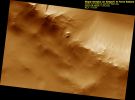
Psp_001808_1875_red.jpgSlope Streaks (or "Seeps"?) in Terra Sabaea73 visiteSlope streak formation is among the few known processes currently active on Mars. While their mechanism of formation and triggering is debated, they are most commonly believed to form by downslope movement of extremely dry sand or very fine-grained dust in an almost fluidlike manner (analogous to a terrestrial snow avalanche) exposing darker underlying material. Other ideas include the triggering of slope streak formation by possible concentrations of near-surface ice or scouring of the surface by running water from aquifers intercepting slope faces, spring discharge (perhaps brines) and/or hydrothermal activity.
Several of the slope streaks visible here, particularly the 3 longest darker streaks, show evidence that downslope movement is being diverted around obstacles such as large boulders. Several streaks also appear to originate at boulders or clumps of rocky material.
In general, the slope streaks do not have large deposits of displaced material at their downslope ends and do not run out onto the crater floor suggesting that they have little reserve kinetic energy. The darkest slope streaks are youngest and can be seen to cross cut and superpose older and lighter-toned streaks. The lighter-toned streaks are believed to be dark streaks that have lightened with time as new dust is deposited on their surface.
MareKromiumGen 27, 2007
|
|

Psp_001385_1985_red.jpgUnnamed Crater, Boulders and Pseudo-Pyramids64 visiteMost debris on crater walls slides straight downhill. In this HiRISE image we see examples of boulders that have bounced downhill, not necessarily vertically.
A prominent example looks like a dotted line from the top of the crater wall where the boulder took off to the crater floor where it finally came to rest.
Numerous boulders have slid partway down toward the crater floor, which is covered by sand dunes. This is actually a small crater (~1 Km wide) within an unnamed but much larger ~30 Km crater. Gen 12, 2007
|
|
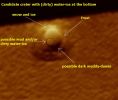
Psp_001485_2280_red-01.jpgDirty water-ice down in the crater? (EDM - False Colors)55 visitenessun commentoGen 06, 2007
|
|
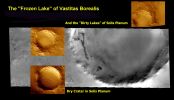
Martian_Lakes_in_Vastitas_Borealis_and_Solis_Planum.jpgWet Craters and Dry Craters: a Visual Comparison54 visitenessun commentoGen 05, 2007
|
|

PSP_001474_2520_RED-new_lake-00.jpgThe Northern Lakes: Lake "Lunexit" (context image)69 visiteQuando si sa dove guardare e che cosa cercare...Si finisce SEMPRE (o quasi...) con il trovare.
L'albedo del dettaglio che vedete a mezza altezza alla Vostra Sx è assolutamente INCONFONDIBILE.
Il detail-mgnf che abbiamo operato (e che vedrete nel prossimo quadro) è chiarissimo: c'è un nuovo Lago nelle Grandi Pianure Nordiche di Marte!
"Lake Lunexit", in onore della nostra Fondazione di Ricerca e di coloro che la rendono viva, e cioè i vari Lorenzo Foschini, Gianluigi Barca, Matteo Fagone, Alessio Feltri, Lorenzo Leone e tanti altri Ricercatori ed Appassionati che, con grandissima umiltà e modestia, stanno contribuendo a scrivere una (piccola, ma non per questo insignificante) porzione della Storia del Pianeta Rosso (nota: Lake Lunexit è stato battezzato - purtroppo - "unofficially", ma con buona pace di IAU, NASA, ESA e di tutti i Fenomeni che guardano, guardano, guardano...senza vedere mai niente e poi blaterano, blaterano e blaterano...senza dire mai nulla!).
MareKromiumGen 04, 2007
|
|

PSP_001474_2520_RED-new_lake-01.jpgThe Northern Lakes: Lake "Lunexit" (extra-detail mgnf)67 visiteEd una volta operato un extra-detail mgnf a noi pare che non possano esserci più dubbi di sorta: sul fondo di questo Cratere c'è un deposito di ghiaccio (l'albedo del ghiaccio d'acqua non tradisce!) e quindi, come già fatto in passato, possiamo parlare tranquillamente di Frozen Lake.MareKromiumGen 04, 2007
|
|
| 2237 immagini su 187 pagina(e) |
 |
|
|
|
|
178 | |
|
|
|
|





