| Ultimi arrivi - Mars Reconnaissance Orbiter (MRO) |

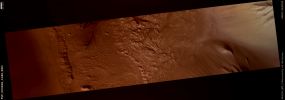
PSP_009878_2605_RED.jpgUnconformity in Gemina Lingula Layered Deposits (possible True Colors; credits: Lunar Explorer Italia)63 visiteMars Local Time: 15:15 (early afternoon)
Coord. (centered): 80,3° South Lat. and 22,6° East Long.
Spacecraft altitude: 340,6 Km (such as about 212,9 miles)
Original image scale range: 34,1 cm/pixel (with 1 x 1 binning) so objects ~1,02 mt across are resolved
Map projected scale: 25 cm/pixel
Map projection: EQUIRECTANGULAR
Emission Angle: 21,1°
Phase Angle: 45,9°
Solar Incidence Angle: 63° (meaning that the Sun is about 27° above the Local Horizon)
Solar Longitude: 122,2° (Northern Summer)
Credits: NASA/JPL/University of Arizona
Additional process. and coloring: Lunar Explorer ItaliaMareKromiumDic 28, 2008
|
|
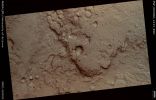
PSP_009896_1680_RED.jpgFeatures of Noctis Labyrinthus (possible True Colors; credits: Lunar Explorer Italia)64 visiteMars Local Time: 15:34 (middle afternoon)
Coord. (centered): 12,0° South Lat. and 263,0° East Long.
Spacecraft altitude: 255,4 Km (such as about 159,6 miles)
Original image scale range: 51,1 cm/pixel (with 1 x 1 binning) so objects ~1,53 mt across are resolved
Map projected scale: 50 cm/pixel
Map projection: EQUIRECTANGULAR
Emission Angle: 0,5°
Phase Angle: 61,9°
Solar Incidence Angle: 62° (meaning that the Sun is about 28° above the Local Horizon)
Solar Longitude: 122,9° (Northern Summer)
Credits: NASA/JPL/University of Arizona
Additional process. and coloring: Lunar Explorer ItaliaMareKromiumDic 28, 2008
|
|
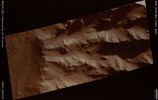
PSP_009960_2235_RED.jpgInverted Channel with Phyllosilicates (possible True Colors; credits: Lunar Explorer Italia)67 visiteMars Local Time: 15:26 (early afternoon)
Coord. (centered): 43,4° South Lat. and 309,2° East Long.
Spacecraft altitude: 303,5 Km (such as about 189,7 miles)
Original image scale range: 60,7 cm/pixel (with 1 x 1 binning) so objects ~1,82 mt across are resolved
Map projected scale: 50 cm/pixel
Map projection: EQUIRECTANGULAR
Emission Angle: 6,6°
Phase Angle: 42,0°
Solar Incidence Angle: 48° (meaning that the Sun is about 42° above the Local Horizon)
Solar Longitude: 125,2° (Northern Summer)
Credits: NASA/JPL/University of Arizona
Additional process. and coloring: Lunar Explorer ItaliaMareKromiumDic 28, 2008
|
|
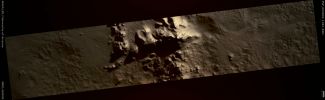
PSP_009789_1660_RED.jpgCoprates' Wall (possible True Colors; credits: Lunar Explorer Italia)65 visiteMars Local Time: 15:42 (middle afternoon)
Coord. (centered): 14,1° South Lat. and 306,6° East Long.
Spacecraft altitude: 289,5 Km (such as about 180,9 miles)
Original image scale range: 29 cm/pixel (with 1 x 1 binning) so objects ~87 cm across are resolved
Map projected scale: 25 cm/pixel
Map projection: EQUIRECTANGULAR
Emission Angle: 26,4°
Phase Angle: 46,9°
Solar Incidence Angle: 65° (meaning that the Sun is about 25° above the Local Horizon)
Solar Longitude: 118,9° (Northern Summer)
Credits: NASA/JPL/University of Arizona
Additional process. and coloring: Lunar Explorer ItaliaMareKromiumDic 28, 2008
|
|
PSP_009849_1485_RED.jpgCentral Uplift and Impact Melt in Unnammed Crater in Hesperia Region (possible True Colors; credits: Lunar Explorer Italia)61 visiteMars Local Time: 15:38 (middle afternoon)
Coord. (centered): 31,3° South Lat. and 108,7° East Long.
Spacecraft altitude: 253,2 Km (such as about 158,3 miles)
Original image scale range: 50,7 cm/pixel (with 1 x 1 binning) so objects ~1,52 mt across are resolved
Map projected scale: 50 cm/pixel
Map projection: EQUIRECTANGULAR
Emission Angle: 0,4°
Phase Angle: 74,6°
Solar Incidence Angle: 74° (meaning that the Sun is about 16° above the Local Horizon)
Solar Longitude: 121,1° (Northern Summer)
Credits: NASA/JPL/University of Arizona
Additional process. and coloring: Lunar Explorer ItaliaMareKromiumDic 28, 2008
|
|
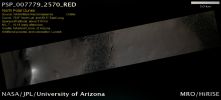
PSP_007779_2570_RED_abrowse~0.jpgDunes of the High Northern Latitudes (MULTISPECTRUM; credits: Lunexit)86 visiteIn this image, we can see that the North Pole is surrounded by a vast “sea” of Basaltic Sand Dunes. In Northern Winter a Seasonal Polar Cap composed of CO2 ice (dry ice) forms and the surrounding dunes become covered with frost. In the Spring, the ice sublimates (evaporates directly from ice to gas) loosening and moving tiny dust particles.
The bright portions of the dunes in this image are areas still covered with seasonal frost while dark spots are areas where the frost is gone or dark dust has cascaded down the sides of the dune.
The dunes imaged here are similar to Barchan dunes that are commonly found in desert regions on Earth. Barchan dunes are generally crescent-shaped with a steep slip face bordered by horns oriented in the downwind direction. Barchan dunes form by winds blowing mainly in one direction and thus are good indicators of the dominant wind direction when the dunes formed.
MareKromiumDic 28, 2008
|
|
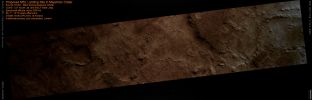
PSP_007704_1765_RED_abrowse~0.jpgProposed MSL Landing Site in Miyamoto Crater (MULTISPECTRUM; credits: Lunexit)58 visiteMiyamoto Crater is located in South-Western Meridiani Planum (and South-West of the Mars Exploration Rover Opportunity Landing Site).
This image shows fairly smooth plains and some areas covered by Windstreaks.
The streaks suggest that wind is an active process here, depositing surface material downwind in this distinctive form. This Landing Site is adjacent to the Hematite-bearing plains unit where the Opportunity Rover sits.
The CRISM instrument has detected Phyllosilicates (Clay Minerals) at this Landing Site, which scientists believe to have formed in the presence of water.
The Mars Science Laboratory rover would investigate the mineral diversity here, which includes Phyllosilicates and Sulfate Minerals.MareKromiumDic 26, 2008
|
|
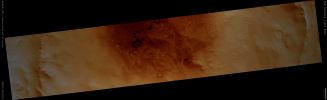
Psp_009565_1905_red.jpgDark Material on the Floor of an Unnamed Crater (Enhanced Natural Colors; credits for the additional process. and color.: Dr Paolo C. Fienga - Lunar Explorer Italia)59 visiteMars Local Time: 15:27 (early afternoon)
Coord. (centered): 10,3° North Lat. and 297,2° East Long.
Spacecraft altitude: 273,8 Km (such as about 171,1 miles)
Original image scale range: 27,4 cm/pixel (with 1 x 1 binning) so objects ~82 cm across are resolved
Map projected scale: 25 cm/pixel
Map projection: EQUIRECTANGULAR
Emission Angle: 2,5°
Phase Angle: 48,8°
Solar Incidence Angle: 51° (meaning that the Sun is about 39° above the Local Horizon)
Solar Longitude: 110,9° (Northern Summer)
Credits: NASA/JPL/University of Arizona
Additional process. and coloring: Lunar Explorer ItaliaMareKromiumDic 26, 2008
|
|
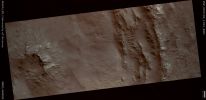
PSP_009749_1995_RED.jpgFresh "Santa Fe Crater" in Chryse Planitia (possible True Colors; credits: Lunar Explorer Italia)60 visiteMars Local Time: 15:25 (early afternoon)
Coord. (centered): 19,4° North Lat. and 312,0° East Long.
Spacecraft altitude: 283,4 Km (such as about 177,1 miles)
Original image scale range: 28,4 cm/pixel (with 1 x 1 binning) so objects ~85 cm across are resolved
Map projected scale: 25 cm/pixel
Map projection: EQUIRECTANGULAR
Emission Angle: 4,0°
Phase Angle: 51,6°
Solar Incidence Angle: 48° (meaning that the Sun is about 42° above the Local Horizon)
Solar Longitude: 117,5° (Northern Summer)
Credits: NASA/JPL/University of Arizona
Additional process. and coloring: Lunar Explorer ItaliaMareKromiumDic 26, 2008
|
|

Psp_009861_2590_red.jpgNorth Polar Terrain (possibe True Colors; credits: Lunar Explorer Italia)103 visiteMars Local Time: 14:49 (early afternoon)
Coord. (centered): 78,8° North Lat. and 120,4° East Long.
Spacecraft altitude: 321,3 Km (such as about 200,8 miles)
Original image scale range: 64,3 cm/pixel (with 1 x 1 binning) so objects ~1,93 mt across are resolved
Map projected scale: 50 cm/pixel
Map projection: EQUIRECTANGULAR
Emission Angle: 6,4°
Phase Angle: 55,4°
Solar Incidence Angle: 61° (meaning that the Sun is about 29° above the Local Horizon)
Solar Longitude: 121,6° (Northern Summer)
Credits: NASA/JPL/University of Arizona
Additional process. and coloring: Lunar Explorer ItaliaMareKromiumDic 26, 2008
|
|
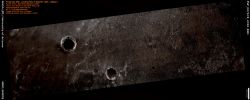
PSP_007678_2050_RED_abrowse~0.jpgProposed MSL Landing Site in Mawrth Vallis (MULTISPECTRUM; credits: Lunexit)57 visiteMawrth Vallis has a rich mineral diversity, including clay minerals that formed by the chemical alteration of rocks or loose “regolith” (soil) by water.
The CRISM instrument on the MRO Spacecraft has detected a variety of clay minerals here that could signify different processes of formation. The high resolution of the HiRISE camera helps us to see and trace out layers, polygonal fractures and, with CRISM, examine the distribution of various minerals across the surface.
This surface is scientifically compelling for the Mars Science Laboratory (MSL) Rover, although some of the terrain might be somewhat rough. Scientists use HiRISE images to find the safest possible Landing Site for the Rover.
This is one of four candidate landing sites in the Mawrth Vallis region.MareKromiumDic 26, 2008
|
|
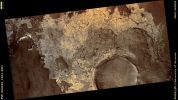
PSP_009945_1835_RED.jpgExhumed Impact Crater in Equatorial Layered Deposits (possible True Colors; credits: Lunar Explorer Italia)60 visiteMars Local Time: 15:30 (middle afternoon)
Coord. (centered): 3,4° North Lat. and 2,9° East Long.
Spacecraft altitude: 273,7 Km (such as about 171,1 miles)
Original image scale range: 27,4 cm/pixel (with 1 x 1 binning) so objects ~82 cm across are resolved
Map projected scale: 25 cm/pixel
Map projection: EQUIRECTANGULAR
Emission Angle: 6,2°
Phase Angle: 59,3°
Solar Incidence Angle: 54° (meaning that the Sun is about 36° above the Local Horizon)
Solar Longitude: 124,7° (Northern Summer)
Credits: NASA/JPL/University of Arizona
Additional process. and coloring: Lunar Explorer ItaliaMareKromiumDic 25, 2008
|
|
| 2237 immagini su 187 pagina(e) |
 |
|
|
|
|
138 | |
|
|
|
|





