| Ultimi arrivi - Mars Reconnaissance Orbiter (MRO) |

SouthPole-PIA11988.jpgThe South Pole of Mars in Spring (2)59 visitenessun commentoMareKromiumApr 18, 2009
|
|
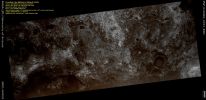
PSP_010460_2055_RED_abrowse.jpgEscarpment with Possible Clays in Mawrth Vallis (Natural Colors; credits: Lunar Explorer Italia)86 visitenessun commentoMareKromiumApr 17, 2009
|
|

ESP_012270_2035_RED_abrowse.jpgFlood-Carved Rock in Olympica Fossae (Natural Colors; credits: Lunar Explorer Italia)60 visiteThis HiRISE image is part of the Olympica Fossae in the Tharsis Region of Mars.
Tharsis is most famous for being the home of the four largest Volcanoes in the Solar System. However, the Region also hosts a variety of other geologic features formed as the ground deformed under the tremendous weight of the Volcanoes.
Most of the Fissures (or “Fossae”) in the Region are primarily places where the ground was pulled apart. However, the Olympica Fossae are somewhat different. They are oriented at an angle to the other Fissures suggesting that some other process was important in their formation.
A close-up image reveals that erosion by one or more catastrophic floods may have played a key role.
The teardrop shaped islands and the parallel ridges are rock left standing after the flood erosion. However, the deepest depression running basically East-West through the middle of the image was probably caused by tectonic extension, not flood erosion. This juxtaposition of tectonic and flood-carved valleys is visible elsewhere on Mars, suggesting that it may be common for the tectonic fracturing to release copious volumes of subterranean water.MareKromiumApr 16, 2009
|
|

ESP_011543_1665_RED_abrowse.jpgPossible "Megabreccia" in Coprates Chasma (Natural Colors; credits: Lunar Explorer talia)61 visitenessun commentoMareKromiumApr 11, 2009
|
|
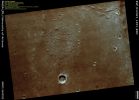
ESP_012425_1455_RED_abrowse.jpgUnusually-looking "Circular Surface Feature" (possible True Colors; credits: Dr G. Barca)61 visiteThis circular feature is a collection of hills, with some connected by ridges. The circularity suggests that perhaps there was once an impact crater here that was subsequently filled with material which was somehow more resistant to erosion than the landscape around it. Over time, as erosion stripped away the ground, the fill material was left standing higher (although it has clearly been eroded as well).
Nota Lunexit: si tratta di un "Exhumed Crater", ossìa di un cratere prima ricoperto da detriti e sedimenti e poi, a seguito di azioni prevalentemente eoliche (un vero e proprio scorticamento del suolo), è stato riportato - parzialmente - alla luce. Lo scorticamento che evidenzia il cratere sepolto è indice del fatto che i materiali i quali lo avevano ricoperto erano più resistenti e stabili dei materiali che circondano il cratere stesse (i quali, appunto, sono stati smossi dai venti). Un fenomeno similare, ma relativo ai canali, dà luogo ai cosiddetti "Inverted Channels", di cui si è già parlato in passatoMareKromiumApr 11, 2009
|
|

ESP_011575_1105_RED_abrowse.jpgSeasonal Haloes and Fractal Patterns (Natural Colors; credits: Lunar Explorer Italia)63 visiteNote Lunexit:
gli "Haloes" sono gli "Aloni di Sublimazione" ossìa quelle porzioni di terreno che, quando la temperatura superficiale del Pianeta va ad alzarsi, si scoprono/liberano dei ghiacci e delle brine di CO2 o d'acqua che li ricoprono - per sublimazione, appunto (ossìa mediante il passaggio diretto di un elemento dalla forma solida a quella gassosa).
Questo disgelo (---> "thaw"), di regola (ed a seguito delle osservazioni che abbiamo fatto) procede in maniera aureolare, partendo da un'area leggermente dislivellata (in altezza - dossi, rim di cratero ed altri rilievi) rispetto al Datum e quindi allargandosi a "macchia di leopardo" (e dando quindi l'impressione, nelle osservazioni fatte dall'alto e da distanze sensibili, che si formino, sulla superfcie, dei veri e propri aloni).
I "Fractal Patterns" sono, invece, i "Disegni Frattali" ossìa quelle configurazioni del suolo a sembianza di figura frattale (ossìa eternamente ripetitiva di se stessa) che si producono sempre durante la fase di disgelo del Suolo Marziano (e che possiamo vedere nelle Regioni Polari e presso-Polari, durante la Primavera di Marte, sia a Nord, sia a Sud).
La loro osservazione dall'alto e da grandi distanze (nell'ordine delle centinaia di Km) è produttiva di incredibili effetti ottici i quali hanno suggerito - a molti Ricercatori di Frontiera (su tutti: Skipper ed Hoagland) - l'idea che, su Marte, possano esistere delle forme esotiche di vegetazione (exx.: gli "Arthur Clarke Trees" ed i "Polar Pine Trees"). I "Fractal Patterns", però - e come capite bene - non sono rilievi che si sviluppano in altezza (come alberi), ma sono dei semplici "disegni" che appaiono al suolo e che sviluppano sempre e solo in mera estensione.
Se vogliamo, essi possono essere assimilati - da un punto di vista meramente visivo - alle famose "Piste di Nazca" (anche se, lo ripetiamo, i Disegni Frattali sono "Surface Features" DEL TUTTO ed ASSOLUTAMENTE NATURALI).MareKromiumApr 11, 2009
|
|

ESP_011580_1255_RED_abrowse.jpgThe Dunes of Russel Crater (Natural Colors; credits: Lunar Explorer Italia)58 visitenessun commentoMareKromiumApr 11, 2009
|
|

ESP_011527_1325_RED_abrowse.jpgSouthern Dunes and Volatiles (Natural Colors; credits: Lunar Explorer Italia)61 visitenessun commentoMareKromiumApr 11, 2009
|
|

ESP_011403_1905_RED_abrowse.jpgCone at the Source of Athabasca Valles (Natural - but strongly enhanced - Colors; credits: Lunar Explorer Italia)60 visiteMars Local Time: 15:50 (middle afternoon)
Coord. (centered): 10,2° North Lat. and 157,4° East Long.
Spacecraft altitude: 278,4 Km (such as about 174,0 miles)
Original image scale range: 27,8 cm/pixel (with 1 x 1 binning) so objects ~ 84 cm across are resolved
Map projected scale: 25 cm/pixel
Map projection: EQUIRECTANGULAR
Emission Angle: 7,7°
Phase Angle: 50,7°
Solar Incidence Angle: 58° (meaning that the Sun is about 32° above the Local Horizon)
Solar Longitude: 183,6° (Northern Autumn)
Credits: NASA/JPL/University of Arizona
Additional process. and coloring: Lunar Explorer ItaliaMareKromiumApr 02, 2009
|
|

ESP_011345_0950_RED_abrowse.jpgSmall Fan-like Surface Features on the South Polar Perennial Cap (Natural Colors; credits: Lunar Explorer Italia)62 visiteMars Local Time: 17:54 (late afternoon)
Coord. (centered): 84,8° South Lat. and 339,3° East Long.
Spacecraft altitude: 247,7 Km (such as about 154,8 miles)
Original image scale range: 99,1 cm/pixel (with 1 x 1 binning) so objects ~ 2,97 mt across are resolved
Map projected scale: 1 mt/pixel
Map projection: EQUIRECTANGULAR
Emission Angle: 0,9°
Phase Angle: 88,7°
Solar Incidence Angle: 89° (meaning that the Sun is about 1° above the Local Horizon)
Solar Longitude: 181,0° (Northern Autumn)
Credits: NASA/JPL/University of Arizona
Additional process. and coloring: Lunar Explorer ItaliaMareKromiumApr 02, 2009
|
|

ESP_011460_0980_RED_abrowse.jpgMonitor Seasonal Changes at a South Polar Cracked and Gullied Site (Natural Colors; credits: Lunar Explorer Italia)72 visiteMars Local Time: 17:02 (middle afternoon)
Coord. (centered): 81,7° South Lat. and 66,3° East Long.
Spacecraft altitude: 246,5 Km (such as about 154,1 miles)
Original image scale range: 49,3 cm/pixel (with 1 x 1 binning) so objects ~ 1,48 mt across are resolved
Map projected scale: 50 cm/pixel
Map projection: EQUIRECTANGULAR
Emission Angle: 1,2°
Phase Angle: 86,5°
Solar Incidence Angle: 85° (meaning that the Sun is about 5° above the Local Horizon)
Solar Longitude: 186,1° (Northern Autumn)
Credits: NASA/JPL/University of Arizona
Additional process. and coloring: Lunar Explorer ItaliaMareKromiumApr 02, 2009
|
|

ESP_011477_1275_RED_abrowse.jpgHuge Seepage in Argyre Region (Natural Colors; credits: Lunar Explorer Italia)68 visiteMars Local Time: 16:02 (middle afternoon)
Coord. (centered): 52,0° South Lat. and 304,9° East Long.
Spacecraft altitude: 251,0 Km (such as about 156,9 miles)
Original image scale range: 25,1 cm/pixel (with 1 x 1 binning) so objects ~ 75 cm across are resolved
Map projected scale: 25 cm/pixel
Map projection: EQUIRECTANGULAR
Emission Angle: 1,6°
Phase Angle: 71,6°
Solar Incidence Angle: 70° (meaning that the Sun is about 20° above the Local Horizon)
Solar Longitude: 186,9° (Northern Autumn)
Credits: NASA/JPL/University of Arizona
Additional process. and coloring: Lunar Explorer ItaliaMareKromiumApr 02, 2009
|
|
| 2237 immagini su 187 pagina(e) |
 |
|
|
|
|
124 | |
|
|
|
|





