| Ultimi arrivi - Mars Reconnaissance Orbiter (MRO) |

ESP_011630_0930_RED_abrowse.jpgFans and Polygons (Natural Colors; credits: Lunar Explorer Italia)59 visitenessun commentoMareKromiumMag 23, 2009
|
|

ESP_011633_1195_RED_abrowse.jpgDunes (Natural Colors; credits: Lunar Explorer Italia)62 visitenessun commentoMareKromiumMag 23, 2009
|
|
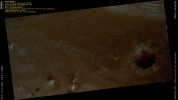
ESP_012940_1655_RED_abrowse-00.jpgThe Floor of Eos Chasma (ctx frame - Natural Colors; credits: Lunar Explorer Italia)61 visiteThe scoured and scabby floor of Eos Chasma, located East of Valles Marineris, is covered with Dunes or Ripples and Eroded Craters. The reddish-brown color likely represents older, eroded Basalt and much of this erosion may have been accomplished by water.MareKromiumMag 18, 2009
|
|

ESP_012940_1655_RED_abrowse-01.jpgThe Floor of Eos Chasma (edm - Natural Colors; credits: Lunar Explorer Italia)59 visiteAn Eroded Crater exposes compositional differences below the Surface: the bluish tones are probably fresher, boulder-rich exposures of Basalt and the lighter-toned material near the base of the crater wall may have a different composition.
The bottom of the crater is filled with material that is similarly-toned to the Surface of Eos Chasma, and was likely eroded and transported there by the wind.MareKromiumMag 18, 2009
|
|

ESP_012774_1080_RED_abrowse-01.jpgDefrosting Dunes in Richardson Crater (edm - Natural Colors; credits: Lunar Explorer Italia60 visitenessun commentoMareKromiumMag 18, 2009
|
|
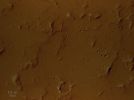
PSP_003608_1510_RED_abrowse-01.jpgProximities of Zumba Crater: Secondary Craters Field (Natural - but enhanced - Colors; credits: Lunar Explorer Italia)59 visitenessun commentoMareKromiumMag 18, 2009
|
|

ESP_011677_1655_RED_abrowse.jpgPit Crater Chain (Natural Colors; credits: Lunar Explorer Italia)59 visiteThis image shows a series of Collapse Craters called Pit Chain; of course, the Chain itself is NOT formed by Impact Craters.
There are a few potential ways that these are formed. The Pit Craters are believed to form by the collapse of Lava Tubes or Magma Chambers. They could also form when the crust of Mars gets pulled apart by extensional forces from a growing volcano Magma Chamber. This leaves structurally weak areas that have a greater chance of collapsing when the area (Lava Tubes or Magma Chamber) no longer contains molten lava or is drained from the chamber.
There is evidence that Mars is not the only Planet that has features like these. Earth also has similar Pit Chains that have formed in Iceland. This Chain was formed on a known fault line and the Pits formed when the Region experienced an earthquake.
This process may be similar to the way the Martian Pit Chains were formed. If "Marsquakes" are the cause of the formation of Pit Chains, this will support the idea that there is still geologic (tectonic) activity occurring on Mars.
The Pit Chains that have been found on Earth are considerably smaller than similar features that are found on Mars. Earth’s are smaller due to higher gravity and weathering makes them smaller and at some point completely erasing them from sight. But Mars has no system to create erosion; therefore the Chains on Mars are better preserved.MareKromiumMag 18, 2009
|
|

ESP_012774_1080_RED_abrowse-00.jpgDefrosting Dunes in Richardson Crater (ctx frame - Natural Colors; credits: Lunar Explorer Italia)62 visiteThis image shows a portion of the Dunes that fill Richardson Crater, a 55-Km-diameter crater in the South Polar Region of Mars and a frequent repeat target for the HiRISE camera.
During Southern Fall and Winter, these Dunes are coated with seasonal CO2 frost, which then sublimates into the Atmosphere as the temperature rises in Spring and Summer.
This Natural Color shows a boundary between Dunes that are mostly covered with Seasonal Frost and Dunes that have mostly thawed. The color of many dunes on Mars can change dramatically depending on the Season. Frost tends to be very bright in HiRISE images, particularly in the blue-green filter, but the Dune sand itself is very dark.
The dark streaks and spots on the frost-covered regions represent areas that are in the process of thawing out. In some areas, the frost has sublimated away. In others, a small avalanche of sand or dust may have spilled on top of the frost. Some of them may also be patches of coarse-grained ice that are relatively clear so that we can see the sand below. As Spring advances toward Summer in the South on Mars, these Dunes continue to appear darker and more red to HiRISE.
Dunes near the Polar Regions of Mars are studied both by scientists who are interested in the effects of this seasonal cycle of thawing and frosting over, and by scientists who wait for the frost to disappear so that they can study the dunes themselves.MareKromiumMag 18, 2009
|
|

ESP_012941_0930_RED_abrowse.jpgLandforms on the South Polar Residual Cap (Natural Colors; credits: Lunar Explerer Italia)57 visiteThis HiRISE image is located on the Carbon-Dioxide (CO2) rich Residual South Polar Ice Cap near 86° South Lat. and 353° East Long.
These rounded landforms evolve relatively quickly and erode into the surface of the Ice Cap (approximately 4-5 meters or 15 feet per year).
Their interesting shapes make for a striking appearance on the Surface.MareKromiumMag 18, 2009
|
|
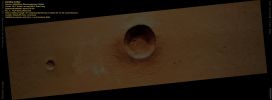
PSP_003608_1510_RED_abrowse-00.jpgThe VERY Deep Zumba Crater (Natural Colors; credits: Lunar Explorer Italia)57 visiteThis image taken at a high Sun Angle (a.k.a. "Phase Angle") shows the relatively unshadowed pristine and youthful rayed crater Zumba.
The crater’s rim-to-rim diameter is approx. 3 Km (about 1,85 miles) with a depth of about 620 mt (approx. 0,4 miles), and its rim rises about 200 mt (656 feet) above the surrounding lava-filled plains of Daedalia Planum, just South-West of the great Tharsis Volcanoes. Zumba is approximately 25% deeper than the average Martian Crater of this size – just one of several attributes that suggests it is a very fresh crater.
One estimate of Zumba’s age, generally accomplished by counting smaller superimposed craters on Zumba itself, suggests it may be 5 MY old. Even if such an estimate is off by 2-4 times, this is still a young geologic feature by Mars standards. Because Zumba is so young and so fresh, it is a perfect example of a simple crater. On Mars, a simple crater is generally less than 6-9 Km (about 3,7-5,6 miles) in diameter with a “simple” conical-bowl shape, minimal wall collapse and lacking a well-developed central feature (exx.: a peak, large pit, or ring).
By impacting into such hard durable rocks, the impact that created Zumba scattered greater than 10 million ejecta blocks at high speeds resulting in far-reaching ray segments and an impressive field of secondary impact craters. This pattern is hard to see in visible-light images, but “lights-up” spectacularly in nighttime thermal InfraRed images taken by THEMIS onboard the Mars Odyssey 2001 Orbiter. Scientists believe that some of these high-speed rocks may have even been expelled from Mars and even traveled to Earth.
Zumba is of considerable interest to scientists, whether it’s a source of Martian meteorites or not, as it possesses interesting features that are typically buried or eroded away in other older Martian Craters, and even within the freshest terrestrial craters (including Meteor crater in Arizona). These preserved and newly recognized features observed at the scale of HiRISE may reveal aspects of the impact process unknown to scientists from previous studies of craters on the terrestrial planets.
What is particularly intriguing is the presence of a pitted deposit giving Zumba the appearance that it has a relatively flat floor despite the pits. These crater-fill deposits are typically composed of lightly to highly damaged rock fragments and impact melts formed from the high temperatures achieved from the energy released by the impact event (on the order several to tens of megatons). The pits in the crater-fill deposits have not been recognized within lunar or terrestrial craters and appear to be unique to crater-fill deposits in only the freshest and best-preserved Martian Craters.
These pits may represent the result of the interactions of the very hot crater-fill deposits with water and water-ice that may have been present in the subsurface prior to impact. It is not well understood whether these pits form explosively (similar to terrestrial volcanic pits/craters formed from the interaction of hot lava with wet sediments/deposits), or by collapse from the drainage of impact melts or volatiles. The presence of pitted deposits in only the freshest and well-preserved craters suggests that they are likely related to the impact process.MareKromiumMag 18, 2009
|
|
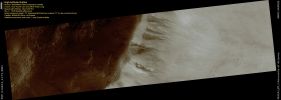
PSP_010833_1275_RED_abrowse.jpgHigh-Latitude Gullies (Natural Colors; credits: Lunar Explorer Italia)73 visitenessun commentoMareKromiumMag 05, 2009
|
|
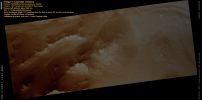
PSP_010857_1650_RED_abrowse.jpgRidge in Coprates Chasma (Natural Colors; credits: Lunar Explorer Italia)77 visitenessun commentoMareKromiumMag 05, 2009
|
|
| 2237 immagini su 187 pagina(e) |
 |
|
|
|
|
121 | |
|
|
|
|





