| |

| Ultimi arrivi - Mars Reconnaissance Orbiter (MRO) |
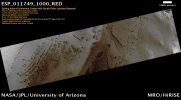
ESP_011749_1000_RED_abrowse.jpgSpring View of Unnamed Crater with South Polar Layered Material (Natural Colors; credits: Lunar Explorer Italia)61 visitenessun commentoMareKromiumLug 09, 2009
|
|

ESP_011878_1045_RED_abrowse.jpgSouth Polar Features (Natural Colors; credits: Lunar Explorer Italia)59 visiteThe SHARAD (Shallow Subsurface Radar) looks for liquid or frozen water in the first few hundreds of feet (up to 1 kilometer) of Mars' Crust.
SHARAD probes the subsurface using radar waves within a 15- to 25-megahertz frequency band to get the desired, high-depth resolution.
The Radar Wave Return (RWR), which is captured by the SHARAD antenna, is sensitive to changes in the electrical reflection characteristics of rock, sand and any water that may be present in the Surface and Subsurface. Water, like high-density rock, is highly conducting, and has a very strong RWR. Changes in the reflection characteristics of the Subsurface, caused by layers deposited by geological processes in the ancient history of Mars, are also visible.MareKromiumLug 09, 2009
|
|

ESP_012572_1685_RED_abrowse.jpgLayering and Faulting in Melas Chasma Layered Deposits (Natural Colors; credits: Lunar Explorer Italia)57 visitenessun commentoMareKromiumLug 09, 2009
|
|

ESP_011884_2045_RED_abrowse-02.jpgUnusual Translucent Surface on the edge of a candidate Collapse Pit (edm frame - Natural Colors, credits: Lunar Explorer Italia)81 visitenessun commentoMareKromiumLug 08, 2009
|
|

ESP_011884_2045_RED_abrowse-01.jpgUnusual Translucent Surface on the edge of a candidate Collapse Pit (edm frame - inset in False Colors, credits: Dr M. Faccin; inset in Natural Colors, credits: Lunar Explorer Italia)108 visiteOsservate attentamente: appena visibile nell'inset in Colori Naturali, ma del tutto evidente in quello elaborato in Falsi Colori, potete vedere NITIDAMENTE il margine (bordo) inferiore del pozzo (caratterizzato da piccoli accumuli di sabbia e pietrisco) anche guardando ATTRAVERSO LA SUPERFICIE TRASLUCIDA (color ambra nella versione in Colori Naturali e color celeste nella versione in Falsi Colori) che sembra formare una sorta di "anello" (o un numero "9") intorno al bordo superiore del pozzo.
Di qualunque materia si tratti, questo fenomeno a noi sembra straordinario; e a Voi???MareKromiumLug 08, 2009
|
|

ESP_011884_2045_RED_abrowse-00.jpgUnusual Translucent Surface on the edge of a candidate Collapse Pit (context frame - Natural Colors; credits: Lunar Explorer Italia)57 visiteChe la Regione Marziana di Mawrth Vallis costituisca una priorità nelle investigazioni orbitali poste in essere dalla NASA tramite la Sonda MRO, è un fatto; un altro fatto è che sarà un'area di questa Regione quella che costituirà, con ogni probabilità, la destinazione finale del Rover denominato Mars Science Laboratory.
Ufficialmente, Mawrth Vallis è una Regione che presenta delle caratteristiche mineralogicdhe superficiali talmente variegate e straordinarie, che l'investigazione ravvicinata delle medesime appare - effettivamente - un passaggio obbligato per la piena e corretta comprensione della Superficie del Pianeta Rosso, ivi inclusa la sua Storia ed il suo Presente.
Tuttavia, dopo aver attentamente esaminato alcune (poche, ma riteniamo significative) porzioni di Mawrth Vallis attraverso i frames MRO in formato JP2000, ci siamo convinti che la questione mineralogica, per quanto importante possa essere, non è certo l'unico motivo per cui la NASA si è fissata in maniera così evidente su questa Regione. C'è dell'altro, evidentemente.
Abbiamo individuato, ad esempio, alcuni rilievi superficiali COMPLETAMENTE ANOMALI ED INESPLICABILI (almeno da un punto di vista geomorfologico), sui quali la NASA e gli Scienziati Convenzionali hanno deciso di "glissare" completamente (insomma: dato che escludiamo l'ipotesi per cui non li abbiano notati, diciamo pure che costoro non hanno intenzione di parlarne). Beh, Voi lo sapete: noi NON SIAMO la NASA e NON SIAMO Scienziati Convenzionali e quindi...
Nel successivo detail mgnf (edm), infatti, osservando la parete Sud-Est di un rilievo che riteniamo essere un pozzo da collasso di modestissime dimensioni, potrete notare una bizzarra Superficie Translucida la quale, in particolar modo nella elaborazione in Falsi Colori (curata dal Dr Faccin), ma anche in quella in Colori Naturali (curata dal Dr Fienga), si evidenzia in tutta la sua originale complessità.
Vi risparmiamo, in questa sede ed in questo momento, le ipotesi sulla possibile Natura del dettaglio, ma Vi invitiamo ad osservarlo con ESTREMA ATTENZIONE ed APERTURA MENTALE, poichè esso rappresenta l'espressione visibile di quelle che, a nostro parere sono le vere ed uniche Surface Features che rendono Marte un Mondo Alieno, tutt'altro che "vicino" e "familiare" alla nostra Cara e Vecchia Terra...MareKromiumLug 08, 2009
|
|

ESP_012912_1320_RED_abrowse.jpgGullies in Noachis Terra (Natural Colors; credits: Lunar Explorer Italia)58 visiteGeologically young Gullies are a prime target for the HiRISE camera. Gullies are located in a variety of settings and are found all over Mars.
This "Ring Trough" or "Eroded Pit Crater", is located in the rugged Southern Highland Terrain known as Noachis Terra. The HiRISE image shows the layered, boulder-rich wall rock facing to the North-East and Gullies that are transporting material downslope.
The material collects into debris aprons along the walls, which often exhibit narrow channels along its surface.MareKromiumLug 05, 2009
|
|

ESP_013329_1070_RED_abrowse.jpgSouth Polar Layered Deposits (Natural Colors; credits: Lunar Explorer Italia)60 visiteThe Ice Caps on Mars are surrounded by a thick stack of Layered Deposits. HiRISE and other instruments have shown that these layers are composed of dusty ice. Now imagine this stack of layers as a cake with alternating layers.
What happens if someone comes and takes a big scoop out of the middle of the cake? Well, while our first reaction might be to get mad at them for ruining the cake, take a moment to think what the pattern would look like: it would have rings going round and round the hole. This is what we are seeing in this image of Mars.
The same pattern that you can see HERE!
Therefore, what you see in this frame is just the consequence of some erosional process which has scooped a big hole into the Layered Deposits.MareKromiumLug 05, 2009
|
|
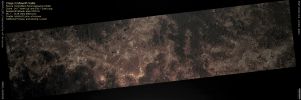
PSP_006742_2050_RED_abrowse.jpgClays in Mawrth Vallis (MULTISPECTRUM; credits: Lunexit)104 visiteMawrth Vallis is one of the most colorful parts of Mars. However, it is not quite as colorful as seen in this observation, where this “extra” color comes from the fact that HiRISE can “see” into part of the infrared, enhancing its ability to detect color differences that are indicative of various minerals.
Properly identifying those minerals is where the CRISM instrument excels.
They show that this area has a variety of different types of clay minerals: these are especially interesting because they had to form when water was interacting with rocks.
The different types of clays point to different water chemistries and temperatures.
With HiRISE, we can better pinpoint how these different materials are distributed across the surface. Furthermore, by taking two images we can produce a stereo image and see the topography, allowing the different clay-bearing layers to be traced in 3D. MareKromiumLug 02, 2009
|
|

ESP_011699_1910_RED_abrowse.jpgThe pseudo-City of Arabia Terra and "Babel" (Photomosaic - Natural Colors; credits: Dr M. Faccin & Lunar Explorer Italia)73 visiteStimolati da un Lettore che ha scovato in un Forum Italiano (UFOForum) una nuova discussione relativa ad un possibile insediamento urbano marziano (stavolta all'interno di un cratere senza nome situato nella Regione di Arabia Terra), ci fa piacere esprimere un (ennesimo) parere su questa storia delle Città di Marte (con tutto il rispetto per il Dr Viola, che stimiamo e rispettiamo) e della ricerca (esasperata e malfatta) di manufatti alieni.
Allora, innanzitutto, se si vuole provare a fare SERIAMENTE il Lavoro degli Anomaly Hunters, bisogna capire alcune cose essenziali:
1) le Anomalìe di Superficie possono essere valutate con cognizione di causa solo attraverso frames ottenuti DALLA superficie;
2) i frames orbitali (e cioè quelli ottenuti dai vari Orbiters i quali riprendono da distanze minime di 250 Km di altitudine) NON SONO IDONEI a soddisfare i requirements minimi di affidabilità che DEVONO informare SEMPRE il Lavoro dell'Anomaly Hunter;
3) se si vogliono usare comunque i frames orbitali per cercare Anomalìe di Superficie, allora bisogna impiegare i frames MRO, nella loro versione croppata ed in JP2000 (che è complessa da ottenere, ma che è l'UNICA versione capace di mostrare la superficie di Marte per ciò che essa realmente è);
4) bisognerebbe SMETTERLA di cercare le città (nel senso terrestre del termine) ed iniziare a focalizzarsi meglio e maggiormente sulle caratterizzazioni geologiche e geomorfologiche del suolo di Marte, anteponendo alla ricerca di aree urbanizzate (ed ora in rovina) la ricerca METICOLOSA di aree IDONEE all'urbanizzazione (ex.: non cercate città dentro a crateri, ma provate a ricostruire la superficie di Marte COSI' COME ESSA POTEVA ESSERE QUALCHE MILIONE e/o qalche MILIARDO DI ANNI FA - con tanto di laghi e mari - e quindi, ragionando CON LOGICA, provare a rispondere alla seguente domanda: se io fossi un Marziano che volesse costruirsi una città, DOVE andrei a costruirla?
Questi pochi punti, sia ben chiaro, non vogliono essere dei "rimbrotti punitivi" di ricerche - le quali, comunque e purtroppo - restano totalmente fini a loro stesse poichè prive di basi e sostegni logici; questi punti vorremmo solo che servissero ai Lettori (Appassionati di Eso-Geologia ed Eso-Archeologia) per capire come muoversi in un ambito tanto scivoloso e pieno di bufale quale è quello della ricerca di manufatti in rovina (città incluse) su mondi diversi dalla Terra.
Certo, l'ondata di disinformazione e di dabbenaggine lanciata da Hoagland (prima) e da tanti altri (poi) ha fatto del danno (costoro, infatti, prendendo spunto da frames orbitali a bassissima risoluzione oppure usando addirittura degli pseudo-frames, hanno INQUINATO IN MANIERA PROFONDA IL METODO DI RICERCA ED ANALISI SCIENTIFICA (ancorchè di tipo Borderline) DI ANOMALIE EXTRATERRESTRI OPERATO CON L'USO DI IMMAGINI ORBITALI), ma la Verità è che, usando il Metodo GIUSTO (il quale è fatto di logica, pragmatismo, competenza ed un pizzico - SOLO un pizzico! - di immaginazione), qualcosa di veramente importante e magari epocale potrebbe EFFETTIVAMENTE essere scoperta.
Magari non sarà una città, però...è dal mattone che si arriva alla cattedrale!
E questi sono i fatti.
Nello specifico, l'area che si vuole essere "urbanizzata" è solamente una zona della superficie caratterizzata da rilievi stratificati a cresta (ridge) i quali potrebbero essere il residuo visibile (lavorato dal vento ed ormai totalmente secco) di rilievi connessi a grandi fenomeni alluvionali occorsi in ere davvero remote (oltre il mezzo miliardo di anni fa).
Gli inset sono stati estratti - a cura del bravissimo Dr Faccin - dal frame originale nella sua versione in JP2000.
Infine, molto più interessante della pseudo-città, a tal riguardo ed a nostro parere, è invece il rilievo battezzato dallo stesso Dr Faccin come "Babele" (in omaggio alla Biblica Torre), il quale presenta delle caratterizzazioni esteriori - ad anello - davvero MOLTO PIU' COMPLESSE ed ENIGMATICHE del semplice reticolato di dossi ed avvallamenti che ha stimolato in maniera alquanto smodata (puro spirito di emulazione?) la fantasia di svariati Lettori.
Morale: su Marte, come sulla Luna, sulla Terra stessa ed ovunque nel Sistema Solare, le Anomalìe CI SONO e SONO TANTISSIME! Ma per trovarle - e scusateci la franchezza - bisogna anche avere un minimo di sobrietà e competenza specifica (insomma: BISOGNA SAPERLE CERCARE).MareKromiumLug 01, 2009
|
|
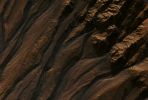
PSP_003583_1425_RED_browse-02.jpgGullies near Gorgonum Chaos (edm - Natural Colors; credits: Dr M. Faccin)59 visitePSP_003583_1425 shows incredible details of an Unnamed Crater with Gullies that provides strong evidence for gully formation involving fluid flow.
Of note is the variety of gully morphologies along the crater walls. The North and West Walls have Gullies, while the South Wall has only Landslides.
"Mass Wasting" is the more general term geologists use to describe Landslides, slumps, and other movements of the ground in response to gravity. It usually occurs on steep slopes when the force of gravity causes weak or loose material to travel downslope. Mass Wasting produces structures that are sometimes similar to gully channels, but which can usually be distinguished by their occurrence on steep slopes.
The Gullies on the North Wall have eroded all the way to the Crater Rim. They appear older than other nearby Gullies because they have existed long enough to be modified by permafrost processes as evidenced by the polgyonal fractures found on some of the channel and inter-gully walls.
Another noticeable difference among the gullies is channel lengths. The Gullies on the North Wall and the group just to the left of these have much shorter channels than the Gullies on the North-Western Wall. It is possible that the Gullies with shorter channels had less fluid flow through their systems. The Gullies appear to originate around a sequence of rocky layers near the Crater Rim.
Many of the gully channels appear to have boulders littered throughout. This is suggestive of a fluid flowing in these channels; a fluid would preferentially transport smaller particles and leave behind the larger ones, such as the boulders seen here.
There are many overprinted small channels in each gully, as can be seen in this edm. These are indicative of multiple flow events such that some channels experience flow, then are abandoned.
The edm also shows several channels merging.
Particularly interesting is the channel flowing from the top of the scene. There are several intertwining channels that merge into one just to the right of the center of the subimage. However, the way some channels truncate others suggests that there were at least three episodes of flow through this area. (written by Kerry Kolb)MareKromiumGiu 30, 2009
|
|

ESP_011732_1595_RED_abrowse-01.jpgLarge Cluster of Small Craters near Maadim Vallis (edm - Natural Colors; credits: Dr M. Faccin & Lunar Explorer Italia)58 visitenessun commentoMareKromiumGiu 21, 2009
|
|
| 2237 immagini su 187 pagina(e) |
|
|
|
|
|
116 | |
|
|
|
|
|
|





