| Ultimi arrivi - Mars Reconnaissance Orbiter (MRO) |
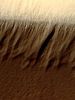
PSP_009356_1835_RED_abrowse-01.jpgRidged Margin of Elevated Plateau North-West of Pavonis Mons (edm - Natural Colors; credits: Lunar Explorer Italia)85 visitenessun commentoMareKromiumLug 23, 2009
|
|

ESP_012562_1545_RED_abrowse.jpgLight-Toned Rugged Intercrater Area in Viking Images 637A36 and 635A94 (Natural Colors; credits: Lunar Explorer Italia)61 visitenessun commentoMareKromiumLug 23, 2009
|
|

ESP_012570_1670_RED_abrowse.jpgLight and Intermediate-Toned Material near Morava Valles (Natural Colors; credits: Lunar Explorer Italia)58 visitenessun commentoMareKromiumLug 23, 2009
|
|

ESP_012934_1070_RED_abrowse.jpgTroughs and Scarps in Planum Australe (Natural Colors; credits: Lunar Explorer Italia)59 visiteThis image shows an outcrop of the South Polar Layered Deposits (SPLD). The SPLD consist of layers of ice and admixed dust and make up the bulk of the dome-shaped Planum Australe.
Planum Australe is, in some ways, analogous to the Antarctic ice sheet. Troughs and scarps carved into Planum Australe by erosional processes have exposed SPLD layers within it.
In this image, the darkest area at the bottom of the image is the bottom of the Scarp. Except for the dark material at the bottom of the slope, much of the changes in brightness in this image are due to the lighting angle, such as the direction from which the Sun is illuminating the slope.
Much like ice cores from Greenland and Antarctica and deep sea sediment cores, the icy-dusty layers of the SPLD may have preserved a record of recent Mars Climate History. Understanding that record is a complex process and involves, among many other types of analyses, examining the differences and similarities in appearance between each layer and attempting to classify layer types. This image shows nice examples of different layer textures. But what is especially interesting about this image are the Faults cutting through the Layers. These Faults appear as diagonal lines, on either side of which, the layering is offset.
Note that the Faults are not clean, single lines, but appear in long groups of short lines. What caused these Faults is still under investigation, but, among other possibilities, they could be related to an earlier time when temperatures were higher and the ice was flowing at a much faster rate than it is today.MareKromiumLug 23, 2009
|
|
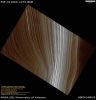
ESP_013066_1070_RED_abrowse.jpgFault in the South Polar Layered Deposits (Natural Colors; credits: Lunar Explorer Italia)62 visitenessun commentoMareKromiumLug 23, 2009
|
|
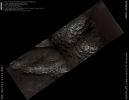
PSP_007013_1105_RED_abrowse.jpgDunefield in Jeans Crater: Seasonal Monitoring (Natural Colors; credits: Lunar Explorer Italia)66 visitenessun commentoMareKromiumLug 20, 2009
|
|
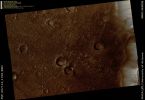
PSP_007119_1700_RED_abrowse.jpgCrater and Plains Deposit North-West of Herschel Crater (Natural Colors; credits: Lunar Explorer Italia)57 visitenessun commentoMareKromiumLug 20, 2009
|
|
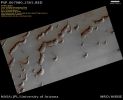
PSP_007080_2565_RED_abrowse.jpgSouth Polar Dunes (Natural Colors; credits: Lunar Explorer Italia)59 visitenessun commentoMareKromiumLug 20, 2009
|
|
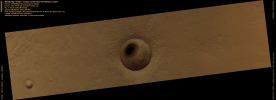
PSP_007004_2000_RED_abrowse.jpgRelatively "Fresh" Crater on the Floor of Pasteur Crater (Natural Colors; credits: Lunar Explorer Italia)67 visitenessun commentoMareKromiumLug 20, 2009
|
|
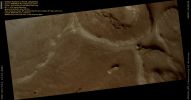
PSP_007035_1670_RED_abrowse.jpgLight-Toned Layers in Noctis Labyrinthus (Natural Colors; credits: Lunar Explorer Italia)57 visitenessun commentoMareKromiumLug 20, 2009
|
|

ESP_011873_1675_RED_abrowse.jpgLayering and Faulting in Candor Chasma (Natural Colors; credits: Lunar Explorer Italia)59 visitenessun commentoMareKromiumLug 10, 2009
|
|

ESP_013089_2040_RED_abrowse.jpgTooting Crater (Natural Colors; credits: Lunar Explorer Italia)60 visiteThis image is of the Ejecta Blanket of the Tooting Crater in the Northern Hemisphere of Mars.
Tooting is a "rampart" crater that is roughly 29 Km (about 18 miles) in diameter and appears to be one of the youngest craters of this size.
A "rampart crater" is one where the material ejected from the crater during impact forms lobes that end with a low ridge, or rampart. One indication of Tooting Crater's youth is its ratio of depth to width.
As a crater ages, the walls of the crater will tend to erode and debris will accumulate in the crater's floor making its apparent depth less, while also making its width larger.
One of the major features of Tooting Crater are its multiple ejecta layers that build a sequence of ramparts. The shapes of these ramparts suggest that the ejected material acted as a fluid (like mud) as it moved across the surface.
Most researchers think that such fluid ejecta indicates that there was ice in the ground when the crater formed.MareKromiumLug 09, 2009
|
|
| 2237 immagini su 187 pagina(e) |
 |
|
|
|
|
115 | |
|
|
|
|





