| Ultimi arrivi - Mars Reconnaissance Orbiter (MRO) |
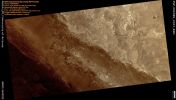
PSP_006989_2025_RED_abrowse.jpgWell-exposed Scarp along Nili Fossae (Natural Colors; credits: Lunexit)58 visitenessun commentoMareKromiumAgo 24, 2009
|
|
PSP_006962_2215_RED_abrowse.jpgPolygonal Terrain (Natural Colors; credits: Lunexit)72 visitenessun commentoMareKromiumAgo 23, 2009
|
|
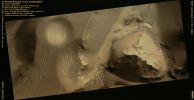
PSP_009342_1725_RED_abrowse-00.jpgPseudo-Pyramid, Dunes, Boulders and Other Misteries...75 visiteUn frame in apparenza di scarso interesse per gli Anomaly Hunters (ma ricco di suggestione per i Cultori delle Scienze Planetarie, con tutte le Surface Features da erosione eolica e da fluidi che mostra), sembra essersi rivelato - dopo un'analisi approfondita svolta usando la sua versione in JP2 - come un'autentica "Fucina di Anomalìe e Singolarità".
Fra le svariate Anomalìe individuabili nel frame, abbiamo deciso di investigarne due: la prima, suggeritaci dalla nostra Amica Elisabetta Bonora - e che ha già suscitato grandi interessi nei Forum di mezzo mondo, a cominciare da quello dei nostri Amici Americani di "AboveTopSecret") -, è rinvenibile in una Surface Feature che, ancora una volta, sembra mostrare ai nostri occhi, avidi di Mistero e di Immaginazione, un Monolito (davvero molto simile a quello di "2001 Odissea nello Spazio").
La seconda, invece, individuata dal nostro Marco Faccin, pare mostrare ai Terrestri il "volto" (si fa per dire...) di una bizzarra e, per certi versi, inquietante Forma Vitale Indigena.
Osservate e giudicate Voi stessi...MareKromiumAgo 20, 2009
|
|
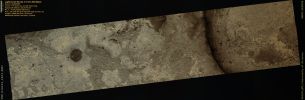
PSP_010222_1815_RED_abrowse.jpgLight-Toned Rock and Dunes in Meridiani Planum (Natural Colors; credits: Lunexit)60 visiteNote Lunexit: in questo frame, un esempio di come il processing in Natural Colors (cioè i colori che percepirebbe un essere umano il quale si trovasse in loco) possa condurre a risultati radicalmente differenti rispetto al processing in (possible) True Colors (frame precedente).
ATTENZIONE: entrambi i processing sono veritieri (nel senso di eseguiti "A Regola d'Arte" e senza alterazioni intenzionali dei dati), eppure i colori che si vedono sono PROFONDAMENTE diversi!
E' - anche - per questo motivo che la diatriba sui "Colori Veri" di un Mondo (un qualsiasi Mondo) è intrinsecamente complessa, contraddittoria e, per certi versi, anche fuorviante - oltre che, a nostro avviso, tendenzialmente infinita...).
Pensateci sopra...MareKromiumAgo 20, 2009
|
|

PSP_001348_1770_RED_abrowse-01.jpgUnusual Crater in Meridiani Planum (EDM-JP2; credits: Dr M. Faccin)57 visitenessun commentoMareKromiumAgo 18, 2009
|
|

PSP_001348_1770_RED_abrowse-02.jpgUnusual Crater in Meridiani Planum (SuperEDM-JP2 - Natural Colors; credits: Dr M. Faccin & Lunar Explorer Italia)58 visitenessun commentoMareKromiumAgo 18, 2009
|
|

PSP_001348_1770_RED_abrowse-00.jpgUnusual Crater in Meridiani Planum (Natural Colors; credits: Lunar Explorer Italia)75 visiteQuesto è il context frame dal quale è stato estratto il particolare controverso che potete vedere nella Sezione "X-Mars" (frame "What is THAT???"). La colorizzazione è quanto di più realistico si possa ottenere usando la metodologia Made by Lunexit denominata "MULTISPECTRUM".
In questo frame, oltre al dettaglio che ha "intrigato" tanti Amici Lettori, potete vedere (e BENE) anche un elemento che, di fatto, supporta la nostra idea/ipotesi per cui, (poco) al di sotto della Superficie di Meridiani Planum, vi potrebbe essere un ulteriore ambiente (una sorta di intercapedine) destinato ad ospitare - magari stagionalmente - delle acque correnti e - chissà - forse anche delle Forme Vitali Indigene.
Il bolide che ha scavato questo cratere senza nome, infatti, se ci fate caso, pare aver sfondato l'ambiente-intercapedine il quale, per come appare in questa immagine, potrebbe trovarsi a non più di 8/10 metri al di sotto del Datum (o Altitudine Zero).
Solo "Fantasie"? Staremo a vedere...MareKromiumAgo 18, 2009
|
|

Craters-Victoria_Crater-PIA12167.jpgVictoria Crater (Natural Colors; credits: Lunexit)62 visiteThis image of Victoria Crater in the Meridiani Planum Region of Mars was taken by the High Resolution Imaging Science Experiment (HiRISE) camera on NASA's Mars Reconnaissance Orbiter at more of a sideways angle than earlier orbital images of this feature.
The camera pointing was 22° East of straight down, yielding a view comparable to looking at the landscape out an airplane window. East is at the top. The most interesting exposures of geological strata are in the steep walls of the Crater, difficult to see from straight overhead.
Especially prominent in this oblique view is a bright band near the top of the Crater wall.
Earlier HiRISE images of Victoria Crater supported the exploration of this Crater by NASA's Opportunity Rover and contributed to joint scientific studies. Opportunity explored the Rim and interior of this 800-meter-wide (about 0,5-mile-wide) Crater from September 2006 through August 2008.
The Rover's on-site investigations indicated that the bright band near the top of the Crater wall was formed by diagenesis (chemical and physical changes in sediments after deposition). The bright band separates bedrock from the material displaced by the impact that dug the Crater.
This view is a cutout from a HiRISE exposure taken on July 18, 2009. Some of Opportunity's Tracks are still visible to the North of the Crater (left side of this cutout).
Full-frame images from this HiRISE observation, catalogued as ESP_013954_1780, are at http://hirise.lpl.arizona.edu/ESP_013954_1780.
The full-frame image is centered at 2,1° South Latitude and 354,5° East Longitude. It was taken at 2:31 p.m. Local Mars Time. The scene is illuminated from the West with the Sun about 49° above the Local Horizon (therefore the S.I.A. was about 41°).MareKromiumAgo 16, 2009
|
|

ESP_013545_1110_RED_abrowse-02.jpgSouthern Dust Devil (Perspective View - Natural Colors; credits: Dr M. Faccin)72 visitenessun commentoMareKromiumAgo 14, 2009
|
|

PSP_001578_1425_RED_abrowse.jpgSouthern Crater with Gullies and a small Landslide (Natural Colors; credits: Lunexit)59 visitenessun commentoMareKromiumAgo 14, 2009
|
|

PSP_001367_1620_RED_abrowse.jpgGratteri Crater (Natural Colors; credits: Lunexit)58 visitenessun commentoMareKromiumAgo 13, 2009
|
|

ESP_013545_1110_RED_abrowse-01.jpgSouthern Dust Devil (EDM - Natural Colors; credits: Lunexit)61 visitenessun commentoMareKromiumAgo 13, 2009
|
|
| 2237 immagini su 187 pagina(e) |
 |
|
|
|
|
112 | |
|
|
|
|





