| Ultimi arrivi - The Universe Inside |
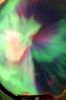
Aurora_Borealis-Coronal_Aurora-1.jpg"Auroral Corona" from l'Observatoire de la Découverte in Val Belair near Quebec - Canada87 visiteDa "NASA - Picture of the Day" del 9 Novembre 2004: "...This fisheye picture captures a particularly active and colorful 'Auroral Corona' that occurred on November 7, 2004 (...) The above aurora has an unusually high degree of detail, range of colors and breadth across the sky. The vivid green, red, and blue auroral colors are likely caused by high atmospheric oxygen and hydrogen reacting to incoming electrons. The trigger events were magnetically induced explosions on the Sun from sunspot region 696 over the past few days. Continued activity from this active solar region could mean more auroras visible to northern observers over the next few days. Early in the morning but far in the background, planets, stars and the Moon will be simultaneously putting on their own show".
Una piccola (nostra) nota di commento: dietro la vivace bellezza dell'immagine ed i "romantici" commenti, c'è un nuovo incremento dell'attività solare in un periodo in cui, invece, il nostro Sole è usualmente calmo. Nov 09, 2004
|
|

ZZ-Jupiter and Venus.jpgJupiter and Venus in the dawn108 visiteUna spettacolare congiunzione Giove-Venere del Novembre 2004, come ripresa, pochi minuti prima dell'alba, nei cieli della Turchia (la città che appare nello sfondo è Bursa).
Si tratta di una fotografia amatoriale - a posa breve - ottenuta con estrema semplicità e senza l'ausilio - a quanto ci è dato vedere - di particolari accortezze tecniche. Nov 08, 2004
|
|

ZZ-Venus from Space.jpgVenus from the Earth's orbit140 visiteCaption NASA originale:"Venus can appear as a brilliant evening star. Besides the Sun and Moon, Venus is the brightest object visible in Earth's sky. Because it is closer to the Sun than Earth, Venus never strays far from the Sun in its apparent position and is seen during the year as either a bright morning or evening star. This beautiful sunset imaged from low earth orbit by the Atlantis space shuttle crew in May 1989 also reveals the planet Venus blazing above Earth's horizon. It is a fitting image for this mission and crew. It was recorded following the successful release of the robot Venus-explorer Magellan, the first planetary probe to be deployed from a space shuttle".Ott 16, 2004
|
|

Sun pillar.jpgAnother light Sun Pillar93 visitenessun commentoOtt 16, 2004
|
|

Sundogs.jpgThe "Sundogs", again154 visiteCaption NASA originale da "NASA - Picture of the Day" del 23 Agosto 1999 :"What if you woke up one morning and saw more than one Sun in the sky? Most probably, you would be seeing Sundogs, extra-images of the Sun created by falling ice-crystals in the Earth's atmosphere. As water freezes in the atmosphere, small, flat, six-sided, ice crystals might be formed. As these crystals flutter to the ground, much time is spent with their faces flat, parallel to the ground. An observer may pass through the same plane as many of the falling ice crystals near sunrise or sunset. During this alignment, each crystal can act like a miniature lens, refracting sunlight into our view and creating parhelia, the technical term for sundogs. Sundogs were photographed here in a cloudy sky above the Very Large Array of radio telescopes. A bright Sundog is visible on the far right, and a dim one on the far left. Ice-crystals can create other strange illusions of the Sun and Moon including halos and pillars".Ott 15, 2004
|
|

Sun_Pillar_in_blue_and_violet.jpgSun Pillar from Lake Tahoe - Nevada State Park (USA)134 visiteCaption originale NASA: "Sometimes the unknown is beautiful. In 2000 February near Lake Tahoe, Nevada, two amateur photographers noticed an unusual red column of light rise mysteriously from a setting sun. During the next few minutes, they were able to capture the pillar and a photogenic sunset on film. Pictured above, the red column is seen above a serene Lake Tahoe and snow-capped mountains across from Lake Tahoe-Nevada State Park. The mysterious column, they learned later, is a Sun Pillar, a phenomenon where sunlight reflects off of distant falling ice crystals".Set 15, 2004
|
|

ZA-Green flash from the Sun (2).jpgA "Green Flash" from the Sun (Portugal)105 visiteCaption NASA originale: "Many think it is just a myth. Others think it is true but its cause isn't known. Adventurers pride themselves on having seen it. It's a green flash from the Sun. The truth is the green flash does exist and its cause is well understood. Just as the setting Sun disappears completely from view, a last glimmer appears startlingly green. The effect is typically visible only from locations with a low, distant horizon and lasts just a few seconds".Set 14, 2004
|
|

Sun_Pillar.jpgA light "Sun-pillar" from somewhere in USA106 visiteCaption originale NASA. "Have you ever seen a sun pillar? When the air is cold and the Sun is rising or setting, falling ice crystals can reflect sunlight and create an unusual "column of light". Ice sometimes forms flat, stop-sign shaped crystals as it falls from high-level clouds; air resistance causes these crystals to lie nearly flat much of the time as they flutter to the ground. Then sunlight reflects off crystals that are properly aligned, creating the so-called "Sun-pillar" effect". Set 09, 2004
|
|

ZA-Green flash from the Sun.jpgAnother "green flash" from the Sun (Finland)155 visiteThe same phoenomenon represented by the previous picture.Set 09, 2004
|
|

Sundogs1.jpgThe "Dogs of the Sun"158 visiteI "Cani del Sole", un evento naturale decisamente curioso e, purtroppo, piuttosto raro dalle nostre parti (diciamo purtroppo poichè si tratta di un fenomeno alquanto suggestivo). Secondo i Navajo, l'apparizione dei due (apparenti) Soli Minori (i "cani", appunto) accanto al Sole Maggiore, costituiva di regola un presagio favorevole e, per i guerrieri/cacciatori, il verificarsi di questa "apparizione" costituiva l'annuncio di una stagione di caccia (o anche di una semplice "battuta", magari) particolarmente favorevole. I "Cani del Sole" e la relativa leggenda vennero anche - incidentalmente - ripresi nel film (ormai entrato nella Storia del Cinema) "The Deer Hunter", con R. de Niro.Ago 05, 2004
|
|

VENUS_MERCURY.jpgMercury and Venus from Earth110 visiteGli elementi sino ad ora individuati in questa "esosfera" sono H, He, O2, Na, K e Ca.
I primi 2 elementi giungono, molto probabilmente, dalla corrente di gas ionizzati proveniente dal Sole (ciò che comunemente chiamiamo "Vento Solare"), mentre gli altri 4 potrebbero scaturire direttamente dalle rocce esistenti sulla (o al di sotto della) superficie di Mercurio.
Come? Abbiamo tre ipotesi al riguardo (e tutte ugualmente plausibili):
1) potrebbe trattarsi di una lenta "evaporazione" (!) delle rocce superficiali causata dalla (e, per lunghi periodi di tempo, costante) temperatura elevatissima;
2) fenomeni di "outgassing" simili a quelli che - si dice - accadano anche sulla nostra Luna (si tratta di sacche di gas, imprigionate da ere ed ere al di sotto della superficie del Pianeta, che si liberano improvvisamente - a seguito di eventi sismici o di impatti veri e propri - e fuoriescono, ora incendiandosi e generando delle "flares" - fiammate o fiaccole -, ora disperdendosi nell'ambiente circostante); Lug 08, 2004
|
|

MERCURY SKY.jpgMercury from Earth168 visitenessun commentoLug 08, 2004
|
|
| 496 immagini su 42 pagina(e) |
 |
|
|
|
|
|
|
|
|
41 |
|








