| |

| Ultimi arrivi - The Universe Inside |

Autumn_s Moon.jpgLuna d'Autunno83 visitenessun commentoLug 21, 2006
|
|
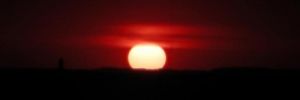
Fireball.jpgTime to sleep...116 visitenessun commentoLug 21, 2006
|
|

FIRST DREAM.jpgThe 10000th Image for LunExIt: First Dream185 visiteCon questa immagine, scelta fra le 97 che abbiamo ricevuto, celebriamo la pubblicazione dei primi 10000 frames sul nostro Sito. Lunar Explorer Italia ringrazia, tramite il Presidente, lo Staff, i Collaboratori Interni, quelli Esterni ed i Soci Attivi, tutti coloro che hanno dato, danno e daranno il loro contributo per fare della nostra Fondazione un Punto di Riferimento, un domani, per coloro che cercano, investigano, si pongono domande e cercano, con onestà e pragmatismo, ma senza porre limiti alla propria mente, di vedere che cosa si nasconde "Oltre il Buio della Notte" (e così citiamo una splendida - e datata! - novella di Arthur C. Clarke che, a nostro avviso, costituisce una pietra miliare nel panorama della Science-Fiction di alto livello).
L'immagine First Dream ci è stata mandata da Gianluigi & Paola Barca, che ringraziamo di cuore.
Uno speciale ringraziamento anche ai nostri Amici "più presenti", e cioè il Dr Alessio Feltri, Lorenzo Leone, Matteo Fagone, Massimo Granzo, il Dr Alessandro Pullini, Fabio Italiano, il Dr Gino Sartarelli e tanti altri che, pur se non citati in questa sede, sono comunque nei nostri cuori e nei nostri pensieri.
Grazie a TUTTI!
Lunar Explorer ItaliaLug 21, 2006
|
|

Through the clouds.jpgThrough the clouds...92 visite"Dovremmo saper parlare, dobbiamo vedere
La differenza fra le azioni e le intenzioni;
Suggerisci l’attimo e la circostanza
Osservi, ma senza spiare, e sai distinguere
Le speranze dalle illusioni,
E se è il Tempo a dare la saggezza
Tu che lo possiedi tutto, allora sai...
Il Tuo volto nasconde, i segni delle ere
Ed il colore della Tua pelle è luce ed ombra
Osservi le nostre vicende e sorridi
Immutata ed immutabile
Non riesci a dire una parola
E lasci che gli uomini parlino per Te...
Ho letto dei Tuoi momenti e dei Tuoi mari
Delle Tue apparizioni e delle Tue scomparse
Dal Tuo momento possono cogliersi presagi;
Sei il grigio del baratro, ma puoi splendere
E, se lo desideri, quando giunge l’istante,
Puoi gettare la Terra nell’ombra...
La Tua bellezza è figlia della distanza
Ed è con questa pallida e cinerea luce
Che spieghi le ragioni del Tuo silenzio
Eppure, contraddittoria, lasci che sia io a parlare
Ed io so che nulla può sfuggire all’Occhio Infinito
Ed io so che l’Occhio Infinito sfugge ad ogni cosa...
Luna Maligna, insegnami a tacere
Insegnami a custodire i segreti che raccolgo
Guardami con benevolenza e perdonami
Guidami verso il Tuo lato nascosto
Laddove il cielo pullula di pulsanti stelle
Aiutami a guardare e, guardando, a vedere...
Paolo C. Fienga – “Luna Maligna”
Lug 19, 2006
|
|

The Moon.jpgThe Moon "in flames"116 visitenessun commentoLug 17, 2006
|
|

Moon and Pleiades.jpgOld Moon...83 visiteDa "NASA - Picture of the Day" del 29 Giugno 2006:"An old crescent Moon shares the Eastern Sky over Menton, France, with the Sister Stars of the Pleiades cluster in this early morning skyscape recorded just last Friday, June 23rd. (Bright Venus was also near the Eastern horizon, but is not pictured here.) Astronomical images of the well-known Pleiades often show the cluster's alluring blue reflection nebulae, but they are washed out here by the bright moonlight. Still, while the crescent Moon is overexposed, surface features can be seen on the dim lunar night side illuminated by earthshine - light from sunlit planet Earth. Of course, you can spot a young crescent Moon in the early evening sky tonight.
Having left the Pleiades behind, a lovely lunar crescent now appears in the West, lining up with planets Mars, Saturn and Mercury along the Solar System's Ecliptic Plane".Giu 29, 2006
|
|
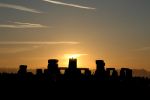
Solstice over Stonehenge.jpgSolstice on Stonehenge100 visiteDa "NASA - Picture of the Day" del 21 Giugno 2006:"Today the Sun reaches its northernmost point in the planet Earth's sky.
Called a "solstice", the date traditionally marks a change of seasons -- from Spring to Summer in Earth's Northern Hemisphere and from Fall to Winter in Earth's Southern Hemisphere. Pictured above is the 2005 Summer Solstice celebration at Stonehenge in England. The event was rare because Stonehenge was not always open to the public, and because recent Summer Solstices there had been annoyingly cloudy.
In 2005, however, thousands of people gathered at sunrise to see the sun rise through the 4000 year old solar monument.
Due to the precession of the Earth's orbital axis over the millennia, the Sun no longer rises over Stonehenge in an astronomically significant way, although the photographer was able to find a good spot where the rising Sun appeared over one of Stonehenge's massive standing stones".Giu 22, 2006
|
|

hideaway_nielsen_big.jpgHideaway136 visite"...On the day I called, you answered me,
You increased my strength of soul..."
Psalm 138:3Giu 22, 2006
|
|

Fantasy APOD.jpgThe Universe is "on sight"!114 visiteDa "NASA - Picture of the Day" del 16 Giugno 2006:"The first APOD appeared 11 years ago today, on 1995, June 16. Although garnering only 14 page views on that day, we are proud to estimate that APOD has now served over 400 million space-related images over the last 11 years. That early beginning, along with a nearly unchanging format, has allowed APOD to be a consistent and familiar site on a web frequently filled with change. Many people don't know, though, that APOD is now translated daily into many major languages. We again thank our readers and NASA for their continued support, but ask that any potentially congratulatory e-mail go to the folks who created the great pictures - many times with considerable effort - that APOD has been fortunate enough to feature over the past year. Many can be contacted by following links found in the credit line under the image. Some of these images are featured in the above spectacular collage of a fantasy sky above Mars submitted by an enthusiastic APOD reader skilled in digital image manipulation. How many APOD images can you identify?".Giu 16, 2006
|
|

SunDogs.jpgSuomi's Sundogs80 visiteWhat's happened to the Sun? Sometimes it looks like the Sun is being viewed through a large lens. In the above case, however, there are actually millions of lenses: ice crystals. As water freezes in the upper atmosphere, small, flat, six-sided, ice crystals might be formed. As these crystals flutter to the ground, much time is spent with their faces flat, parallel to the ground. An observer may pass through the same plane as many of the falling ice crystals near sunrise or sunset. During this alignment, each crystal can act like a miniature lens, refracting sunlight into our view and creating phenomena like parhelia, the technical term for sundogs. The above image was taken during early 2006 February near Helsinki, Finland with a quickly deployed cellular camera phone. Visible in the image center is the Sun, while two bright sundogs glow prominently from both the left and the right. Also visible is the 22° halo also created by sunlight reflecting off of atmospheric ice crystals. Giu 13, 2006
|
|

Moon from Hawaii.jpgHaleakala's Moon99 visiteDa "NASA - Picture of the Day" del 10 Giugno 2006:"A waxing crescent Moon shines over the caldera of dormant volcano Haleakala and observatory domes in this dramatic view from above the clouds.
Looking West from Maui, Hawaii on May 31st, the scene also records the lights of Honolulu on the horizon. Near the strongly overexposed crescent, is bright planet Saturn, but included in the skyscape are planet Mars and the Gemini stars Castor and Pollux.
Of course, skywatchers also found star cluster M 44, The Beehive Cluster, in this early evening sky, wedged between Saturn and the Moon. In fact, as it closes with Saturn, Mars will pass in front of the Beehive on June 15, so just keep looking West".Giu 10, 2006
|
|

Final Light.jpgFinal Light227 visite"...Giù ed ancora più giù: non potrai fermarti, e spingerai la Luce sino alle Radici del Mare..."
P.C. Floegers - "Conversations"Mag 21, 2006
|
|
| 496 immagini su 42 pagina(e) |
|
|
|
|
|
32 | |
|
|
|
|
|
|








