| |

| Ultimi arrivi - The Universe Inside |

Red_Sky-20260622_212804.jpgRed Sky over the Lake of Como and surrounding mountains (Credits: Tatiana Balbiani)258 visite"你或许听过人类的音乐,却未曾听过地球的音乐。
你或许听过地球的音乐,却未曾听过天堂的音乐."
(traduzione)
"Può darsi che abbiate udito la musica dell’uomo, ma non la musica della Terra.
Può darsi che abbiate udito la musica della Terra, ma non la musica del Cielo".
(Chuang Tzu)MareKromiumGiu 26, 2026
|
|

Venus_Moon_2026_06_17.jpgCosmic Kiss (Image Credit & Copyright: Debra Ceravolo)161 visiteVenus is now appearing on the celestial stage as Earth's brilliant evening star, performing with the Moon, other wandering planets, and bright stars in western skies.
For evening sky gazers on June 17, 2026, the celestial beacon rose after sunset close by a young, slender, crescent Moon.
But from some locations the Moon could be seen to occult or pass in front of Venus.
And from a backyard observatory in southern British Columbia, Canada, the lunar occultation was played out in daylight.
This stunning telescopic snapshot captured a scene in dramatically cloudy skies, following Venus' hour long disappearance, as the evening star emerged beyond the bright lunar limb.MareKromiumGiu 26, 2026
|
|

Anti-Crepuscular_Rays_1024.jpgAnticrepuscular Rays over Sicily (Image Credit & Copyright: Marcella Giulia Pace - Text: Cecilia Chirenti (NASA GSFC, UMCP, CRESST II)183 visiteThe Sun has just set... in the opposite side of the sky. Pictured here are anticrepuscular rays apparently converging in the east in this image of the limestone plateau in the heart of the Hyblaean Mountains of southeastern Sicily, in Italy. How were these anticrepuscular rays formed, if the Sun wasn't there? After the Sun set (in the west, as usual) its light still illuminated a cloud higher up in the sky. Partially blocked by the cloud, the sunlight produced patterns of light and shadow, crossing the sky in parallel lines. Perspective makes it look like they converge in the east, in the same way that train tracks appear to meet in the distance. This effect can also happen at sunrise, only the directions are exchanged. In rare cases, both crepuscular and anticrepuscular rays can be seen at the same time.MareKromiumGiu 26, 2026
|
|

Kardashev-00.jpgThe Kardashev Scale (Theory) - so named after Nikolaj Semënovič Kardašëv (Семёнович Кардашёв - Москва город, Aпрель 25, 1932 – Москва город, Август 3, 2019)153 visiteThe Kardashev scale (шкала Кардашёва – shkala Kardashova) is a method of measuring a civilization's level of technological advancement based on the amount of energy it is capable of harnessing and using.
The measure was proposed by Soviet astronomer Nikolai Kardashev in 1964, and was named after him.
Kardashev first outlined his scale in a paper presented at the 1964 conference that communicated findings on BS-29-76, Byurakan Conference in the Armenian SSR, which he initiated, a scientific meeting that reviewed the Soviet radio astronomy space listening program.
The paper was titled "Передача информации внеземными цивилизациями" ("Transmission of Information by Extraterrestrial Civilizations").
Starting from a functional definition of civilization, based on the immutability of physical laws and using human civilization as a model for extrapolation, Kardashev's initial model was developed.
He proposed a classification of civilizations into three types, based on the axiom of exponential growth:
• A Type I civilization (planetary) is able to access all the energy available on its planet and store it for consumption.
• A Type II civilization (stellar) can directly consume a star's energy.
• A Type III civilization (galactic) is able to capture all the energy emitted by its galaxy, and every object within it, such as every star, black hole, etc.
Under this scale, the sum of human civilization does not reach Type I status, though it continues to approach it.
Extensions of the scale have since been proposed, including a wider range of power levels (Types 0, IV, and V) and the use of metrics other than pure power, e.g., computational growth or food consumption.
In a second article, entitled "Strategies of Searching for Extraterrestrial Intelligence", published in 1980, Kardashev wonders about the ability of a civilization, which he defines by its ability to access energy, to sustain itself, and to integrate information from its environment.
Two more articles followed: "On the Inevitability and the Possible Structure of Super Civilizations" and "Cosmology and Civilizations", published in 1985 and 1997, respectively; the Soviet astronomer proposed ways to detect super civilizations and to direct the SETI (Search for Extra Terrestrial Intelligence) programs.
A number of scientists have conducted searches for possible civilizations, but with no conclusive results.
However, in part thanks to such searches, unusual objects, now known to be either pulsars or quasars, were identified.
MareKromiumGiu 21, 2026
|
|
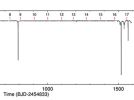
Kardashev-01.jpgThe Kardashev Scale: the Case of "KIC 8462852" (1)124 visiteSo far, there is no valid scientific explanation for the dimming of a star 1,480 light-years away. Some have advanced the hypothesis of an extraterrestrial system capturing energy. Have you ever heard of a Type II Kardashev civilization? Human civilization has not yet reached Type I (0.73) and will (perhaps) get there in 200-300 years.
A Type II Kardashev civilization is a technologically advanced society capable of harnessing all the energy emitted by its star through enormous orbiting systems. Science fiction?
Great authors such as Isaac Asimov, Carl Sagan, and Arthur C. Clarke have discussed it, among others.
In 1964, Soviet scientist Nikolai Kardashev devised a scale that linked the level of development of potential extraterrestrial civilizations with their ability to harness the entire energy of a planet (type I), a solar system (type II), or an entire galaxy (type III).
An important corollary of his studies is that to find a highly advanced alien civilization, you don't need to try to pick up a radio signal (as the Arecibo radio telescope has been doing for 45 years without—yet—finding anything), but rather observe whether a star's light appears much dimmer than it should be, whether it experiences sudden and inexplicable drops in light energy, or—in extreme cases—whether its light is completely absent. This would mean that "someone" or "something" is "harvesting" the star's energy.MareKromiumGiu 21, 2026
|
|

Kardashev-02.jpgThe Kardashev Scale: the Case of "KIC 8462852" (2)101 visiteNow, in an article submitted to the scientific community on September 11th and signed by 29 scientists led by Tabetha Boyajian of Yale University, which will soon be followed by another article by Jason Wright of Penn State University, attention is drawn to the anomalies recorded in observations of the star KIC 8462852 in the constellation Cygnus, about 1,480 light-years away and one and a half times the size of our Sun. KIC 8462852 is a class F5 star (yellow-white dwarf) on the main sequence, invisible to the naked eye (the Sun is a class G2 yellow dwarf) and observable only with very sophisticated instruments.
Observations by the Kepler space telescope have shown variations in the star's brightness that cannot be explained by any "natural" hypothesis known to date, except for a highly unlikely swarm of comets, which would in any case be incompatible with the star's age. Two in particular are the "mysterious" episodes: the first with a single 15% dip in brightness (2011), the second about 750 days later (2013) with a series of dips whose maximum was 22%, which would suggest a series of objects transiting in front of the star. A previous episode had been recorded in 2009. The one expected in 2015 was not recorded because Kepler partially malfunctioned (as always, when something "new" is glimpsed).MareKromiumGiu 21, 2026
|
|
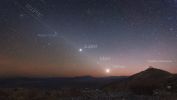
Planets_zodiac_beletsky_labels.jpgMorning Planets116 visiteCanis Major (Overdog)
The great Overdog,
That heavenly beast
With a star in one eye,
Gives a leap in the east.
He dances upright
All the way to the west
And never once drops
On his forefeet to rest.
I'm a poor underdog,
But tonight I will bark
With the great Overdog
That romps through the dark.
By Robert Frost (1874-1963)
MareKromiumGiu 09, 2026
|
|
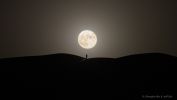
The_Moon~2.jpgFull Moonlight (Credits & Copyright: Zhengjie Wu and Jeff Dai - TWAN)122 visiteThe Full Moon is the brightest lunar phase, and tonight you can stand in the light of the first Full Moon of 2026. In fact, the Moon's full phase occurs on January 3 at 10:03 UTC, while only about 7 hours later planet Earth reaches its 2026 perihelion, the closest point in its elliptical orbit around the Sun, at 17:16 UTC. January's Full Moon was also not far from its own perigee, or closest approach to planet Earth. For this lunation the Moon's perigee was on January 1 at 21:44 UTC.MareKromiumGiu 08, 2026
|
|

Dyson_Swarm_-_03.jpgThe Dyson Sphere171 visiteHow It Works: each satellite in the Swarm absorbs or reflects the star’s sunlight and beams it to where it is needed—such as to an inhabited planet or orbital space stations.
Uses: the captured energy could power an entire civilization, propel massive spaceships using photon sails, or run planetary-scale supercomputers and artificial intelligence networks.
Materials: constructing a comprehensive Swarm requires a staggering amount of raw materials. Theorists suggest that disassembling an entire rocky planet, like Mercury, could provide enough mass to build the initial stages of a Swarm.
Gradual Build: our Civilization wouldn't build a full Swarm all at once. We would likely start with a "proto-swarm" consisting of space-based solar arrays, expanding it over thousands of years.MareKromiumGiu 01, 2026
|
|

Dyson_Swarm_-_01.jpgThe Dyson Swarm144 visiteSome have suggested that Dyson Sphere habitats could be built around white dwarfs or pulsars.
In 2022 it was suggested that a Dyson Swarm around the Sun could be launched from either Mercury or Mars.
In order to transmit the energy back (Microwaves and high frequency IR Radiations maybe?), far-field radiative wireless power transfer was proposed, a technology that is not yet fully developed. But the question remains open...
A Dyson swarm is a hypothetical megastructure that orbits a star to capture its radiant energy. Proposed as an alternative to the solid, unbuildable "Dyson Sphere," it consists of a vast cloud of independent satellites or habitats that harness massive amounts of stellar power.
The Inspiration: Physicist Freeman Dyson first proposed the concept in 1960. He theorized that highly advanced alien civilizations would require exponentially more energy than a single planet could provide, prompting them to build structures around their host star.
Dyson Sphere vs. Dyson Swarm: Dyson Sphere vs. Dyson Swarm: While a traditional "Dyson sphere" is often imagined in sci-fi as a single, solid shell around a star, this is mechanically impossible due to immense gravitational stresses. A swarm solves this by using millions or billions of independent solar collectors, mirrors, and space habitats traveling in their own individual orbits. MareKromiumGiu 01, 2026
|
|
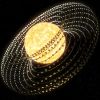
Dyson_Swarm_-_04.jpegThe Dyson Swarm164 visiteBecause these megastructures absorb so much starlight, they would emit a unique infrared signature (waste heat). Astronomers look for these anomalies when searching for highly advanced, Extraterrestrial Civilizations (so-called "Technosignatures").MareKromiumGiu 01, 2026
|
|

Dyson_Sphere_-_07.jpegThe Dyson Sphere195 visiteAlthough Dyson Spheres in the form of a swarm are theoretically possible, building a stable megastructure around the Sun is currently far beyond humanity's engineering capacity. The number of craft required to obtain, transmit, and maintain a complete Dyson sphere exceeds present-day industrial capabilities.
Dyson Spheres have prompted speculation into the feasibility of a class of proposed stellar engines, hypothetical megastructures whose purpose is to extract useful energy from a star, sometimes for specific purposes.
For example, Matrioshka brains have been proposed to use energy extracted by Dyson Spheres for computation, while Shkadov thrusters would extract energy for propulsion. Some proposed stellar engine designs are based on the Dyson Sphere. Futurist George Dvorsky has advocated the use of self-replicating robots to overcome the limitation of humanity's engineering capacity in the relatively near term.MareKromiumGiu 01, 2026
|
|
| 495 immagini su 42 pagina(e) |
2 | |
|
|
|
|
|
|
|
|
|
|
|








