| Ultimi arrivi - Mars through the eyes of Soujourner-Pathfinder |

SOU-SOL011-marspath_sunset.jpgMartian Sunset... - Sol 11107 visiteColori veri, quasi-veri o falsi?
Uno scorcio bellissimo, comunque, di un Cielo Marziano che si tinge di un intenso color rosso-fuoco, nelle ore del tardo pomeriggio.
Caption NASA originale:"This highly color-enhanced and horizontally stretched image shows layering of dust in the Martian Atmosphere brought out by the Martian Sunset of Sol 11 at the Pathfinder Landing Site. The dust is distributed high in the martian atmosphere, causing the sky to remain light over an hour after Sunset. The point of Sunset is off the right side of the frame".Lug 11, 2006
|
|

SOU-SOL003-A.jpg"Twin Peaks" and Soujourner-Pathfinder (natural colors)91 visiteUn'immagine che poteva essere bellissima ma che invece si risolve in un (grande) campionario di abrasioni, difetti (più o meno voluti) di "cucitura" tra i diversi frames che formano il panorama, sfuocature inspiegabili e colorazioni, in alcune zone, del tutto improbabili.
Peccato...Lug 11, 2006
|
|

SOU-SOL033.jpgApproaching the Sunset... - Sol 3372 visiteCaption originale:"A Pathfinder image taken near Sunset.
The forward scattered region near the Sun is dimmed by the dust as well as reddened".Apr 09, 2006
|
|

SOU-SOL036-1.jpgMartian Skies, according to NASA... - Sol 3671 visiteCaption originale di Don Davis:"Only one instance of color adjusting of images has aroused any concern to me regarding integrity of presentation. This Pathfinder Martian Sunrise photo was first released with a pink cloudy sky; a later version of the same picture, on the right, balanced with more care towards presenting what the cameras saw, revealed a much more subdued scene. Clearly the conclusions on cloud lighting and atmospheric conditions will be affected by such colors".
Nota: Don Davis è molto attento e "comprensivo" verso la NASA e noi possiamo anche capirlo.
Tuttavia, a nostro modo di vedere, quando l'Ente Spaziale più moderno, famoso ed accreditato al Mondo rilascia al Pubblico, in tempi diversi (e senza precisare alcunchè), due (o più) immagini identiche le quali, però, sono state sottoposte ad una tale ri-elaborazione da apparire, alla fine, come totalmente diverse, esso fa solamente - scusateci - "casino".
In questo modo, come dimostrato nell'articolo del Dr Fienga pubblicato sul Nexus Magazine ("Gioco di Specchi"), non si rende un buon servizio nè alla Scienza, nè alla Divulgazione.
In questo modo, insomma, si fa solo confusione (per non dire che, alla fine, ci rimane pure il sospetto che il caos sia stato voluto...).Apr 09, 2006
|
|

SOU-SOL035-2.jpgFrom the "Pathfinder Frames" to the "Real Colors of Mars"69 visiteUn'estrapolazione "datata", ma non per questo trascurabile, del bravo Ricercatore Don Davis. Essa è basata sulle immagini di Marte ottenute dalla Sonda Pathfinder. Un lavoro discutibile, certo, ma molto attento ed interessante (oltre che originale).
Caption originale:"Sampling the above distinct colors as labeled, I have attempted to extrapolate from the Pathfinder results the global colors of Mars. The assumption is made that the major distinct colors of Mars are sampled at the Pathfinder site and most of a global map of Mars could be made by the use of these colors. This may or may not be true, as some Regions may well have more variety of rock color. Once more of the planet is photographed from orbit and the surface in RGB color such a color chart will undoubtedly grow in variety".Apr 09, 2006
|
|
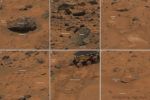
SOU-SOL035-1.jpgThe colors of the soil near Pathfinder89 visitenessun commentoApr 09, 2006
|
|

SOU-SOL039-1~0.jpgPre-dawn clouds (1) - Sol 39119 visiteCaption NASA originale:"These are more wispy blue clouds from Sol 39 as seen by the Imager for Mars Pathfinder. The bright clouds near the bottom are about 10° above the horizon. The clouds are believed to be at an altitude of 10 to 15 Km and are thought to be made of small water ice particles. The picture was taken about 40 minutes before Sunrise". Mar 19, 2006
|
|

SOU-SOL039-4.jpgLIARS!!!146 visiteQuesta è la sovrapposizione dei frames (1) e (3): l'immagine in verde-azzurro (dice la NASA) rappresenta il cielo del mattino ad Est, a 30° di altezza sull'orizzonte; l'immagine in rosso/rosa, invece - e sempre a detta della NASA - rappresenterebbe nuvole che si trovano ad un'altezza di 10° sull'orizzonte. La sovrapposizione ci mostra, inequivocabilmente, che i frames (1) e (3) sono, in realtà, lo stesso frame. Solo che il frame (1) è stato originariamente capovolto (dalla NASA) e "passato" sotto il filtro rosso.
Che tristezza. E comunque, dato che noi non pretendiamo che ci crediate sulla parola, andate a vedere Voi stessi: per il frame in versione rosa-rossa l'indirizzo è:
http://marsprogram.jpl.nasa.gov/MPF/ops/sol54.html;
per il frame in verde-azzurro, invece, l'indirizzo è:
http://marsprogram.jpl.nasa.gov/MPF/ops/sol45-46.html.
Noi non siamo Scienziati, ma non siamo neppure dei poveri fessi...Mar 19, 2006
|
|
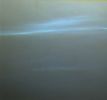
SOU-SOL039-3.jpgPre-dawn clouds (3) - Sol 39119 visiteCaption NASA originale:"This true color image shows the eastern sky, 30 degrees above the horizon at 05:13 MLT on Sol 39. The bright streaks are probably ice clouds which have formed during the night. In the true colour image, the clouds appear to be blue compared to the background. This is a real effect. Unlike the red dust, the clouds are almost invisible at infrared wavelengths.
The clouds are also moving. In order to create this image, the individual, single color, data frames have had to be shifted with respect to each other. The motion indicates that the clouds are moving from the north-east to the South-West".
ATTENZIONE: questa immagine non è altro che il medesimo frame, da noi rubricato come "Pre-Dawn Clouds (1)", capovolto e con filtro/colore modificato, passando dal Rosso/Rosa/Arancio al Verde/Azzurro! Ebbene, grazie all'attenzione che poniamo nell'analisi dei frames, questa volta la NASA può solo nascondersi: li abbiamo beccati! E, se ancora non foste convinti, andate a vedere il frame che segue il quale altro non è se non la sovrapposizione dei frames (1) e (3). La NASA avrà anche i mezzi, ma sta MENTENDO SPUDORATAMENTE DA (almeno) 40 ANNI! E sapete queal'è la cosa che più ci meraviglia? Ma come abbiamo fatto a non accorgerci prima di una simile mistificazione?
Che pena, cari Amici, che pena...Mar 19, 2006
|
|

SOU-SOL039-2.jpgPre-dawn clouds (2) - Sol 3992 visiteCaption NASA originale:"These are more wispy blue clouds from Sol 39 as seen by the Imager for Mars Pathfinder. The bright clouds near the bottom are about 30° above the horizon. The clouds are believed to be at an altitude of 10 to 15 Km, and are thought to be made of small water ice particles. The picture was taken about 35 minutes before Sunrise".
ATTENZIONE: nel prossimo frame, una (modesta, ma significativa, almeno a nostro parere)"rivelazione"...Mar 19, 2006
|
|

SOU-SOL024-1.jpgSunset (1) - Sol 2486 visiteThis is a close-up of the Sunset on Sol 24. The red sky in the background and the blue around the Sun are approximately as they would appear to the human eye. The color of the Sun itself is not right - the Sun was over exposed in each of the 3 color images that were used to make this picture - and it might be near white or slightly bluish. Mar 19, 2006
|
|

SOU-SOL024-2.jpgSunset (2) - Sol 2480 visiteThis image of the Martian sunset from Sol 24 shows much more color variation than had previously been seen. The blue color near the Sun is not caused by clouds of water ice, but by the Martian dust itself. The dust in the atmosphere absorbs blue light, giving the sky its red color, but it also scatters some of the blue light into the area just around the Sun because of its size. The blue color only becomes apparent near Sunrise and Sunset, when the light has to pass through the largest amount of dust.Mar 19, 2006
|
|
| 150 immagini su 13 pagina(e) |
 |
|
|
5 | |
|
|
|
|
|
|








