| Ultimi arrivi - Mariner, Viking & MGS's Maps & Mars in the '70s |

O-Mariner9-71-PIA03100_modest.jpgMars from Mariner 9: Olympus Mons standing above the Martian Dust Storm (HR)141 visiteCaption NASA originale:"In pictures taken early in the Mariner 9 Mission, this region, shows a dark mountain standing above the Martian dust storm. This HR photograph shows that the area contains a complex crater, called Olympus Mons (Nix Olympica or Snows of Olympus), nearly 64 Km (40 miles) in diameter. The multiple crater form with scalloped margins, is characteristic of calderas - volcanic collapse depressions on Earth. In the Mariner 6 and 7 flights in 1969, an outer ring, 1600 Km (1.000 miles) in diameter, was seen. It is hidden by the dust in the oblique picture. Earth-based radar observations show that this is a high region on Mars and is usually covered by a white cloud when observed telescopically. This picture was taken on November 27, 1971".
Come potete vedere benissimo in questo frame - sebbene i contorni dell'immagine non sìano perfetti - la tecnica fotografica adottata per scattare fotografie della superficie di Marte da un'orbita stabile era già molto avanzata 34 anni fa. Oggi, grazie alle Sonde Mars Global Surveyor; 2001 - Mars Odyssey; Mars Express etc. riusciamo ad ottenere risultati fotografici sostanzialmente analoghi...Feb 14, 2005
|
|

O-Mariner9-71-PIA02999_modest.jpgMars from Mariner 9: Ascraeus Lacus above the Martian Dust Storm151 visiteCaption NASA originale:"Oblique view of the crater complex near Ascraeus Lacus in the Tharsis region of Mars taken by Mariner 9. It is the northernmost of the prominent dark spots observed by Mariner during its approach to the Planet. The spot consists of several intersecting shallow crater-like depressions.
The main crater is approximately 21 Km (13 miles) across, the whole complex about 40 Km (25 miles) across.
The crater probably is in a relatively high area of the Martian surface, which accounts for its being visible above the dust storm.
The faint circular features outside the crater are probably atmospheric disturbances".Feb 14, 2005
|
|

O-Mariner9-71-PIA02998_modest.jpgMars from Mariner 9: Canyon System emerging from Martian Dust Storms142 visiteOggi, come sapete, le Missioni "Mars Rovers" vengono - sia pure solo "a singhiozzo"... - celebrate ogniqualvolta i "robottini" si imbattono in qualcosa di "interessante e/o curioso", a detta degli Operatori del Centro Controllo Missione. Ogni risultato ottenuto dalla NASA (o dall'ESA, ancorchè in misura minore), oggi, viene - quantomeno inizialmente - celebrato come un autentico "Trionfo della Scienza e della Tecnologia". Un Trionfo del "Sapere Umano", insomma. Ma risultati tecnologici simili o analoghi o - parlando di fotografia, p.e. - SUPERIORI (!), erano già stati conseguiti 30 anni fa, nel silenzio totale (o quasi) dei mass-media. Dunque perchè meravigliarsi tanto se oggi, AD 2005, riusciamo a far marciare un mini-semovente sulle sabbie di Marte quando, già più di 30 anni addietro, avevamo mandato una macchina (con tanto di Autista!) sulla Luna?!? Dov'è lo sviluppo tecnologico reale? Nel fatto che Marte è più lontano della Luna?!? Dov'è la "vera conquista"?...Feb 14, 2005
|
|

O-Mariner9-71-PIA02989_modest.jpgSouth Polar Cap from Mariner 9 and 7155 visiteCaption NASA originale:"This mosaic of Mariner 9 frames (top), taken during the first orbit, shows the remnants of the South Polar Cap of Mars dimly through the great dust storm. Mariner 7 photographed the same area in August, 1969 (bottom) at which time the entire region was covered with dry ice. The strange quasilinear features of 1969 have been replaced by a number of bright curved appendages never before seen on Mars and, at this time, unexplained. Mariner 9 was the 1st spacecraft to orbit another planet. The spacecraft was designed to continue the atmospheric studies - begun by Mariners 6 and 7 - and to map over 70% of the Martian surface from the lowest altitude (1500 Km [approx. 900 miles]) and at the highest resolutions (1 Km per pixel to 100 meters per pixel) of any previous Mars mission".
Eccezionale, semplicemente: Mariner 9 venne lanciato il 30 Maggio 1971 ed arrivò a destinazione il 14 Novembre dello stesso anno. Feb 14, 2005
|
|

N-Mariner4-64-PIA02980_modest.jpgThe "Atlantis Region" of Mars127 visite...Pensateci: eravamo solo alla metà degli Anni '60 e già esisteva - ed abbiamo queste immagini che lo dimostrano! - la tecnologia sufficiente per arrivare su Marte in 6 mesi, entrare in orbita attorno al Pianeta Rosso e fotografarlo a piacere. E questa non era una tecnologia esclusivamente "Made in USA"! Anche l'URSS - sebbene con alcuni (crediamo reali) limiti in più rispetto agli Americani (limiti determinati dalla "fretta" e da budget ridotti davvero "all'osso"...) - era in grado di fare quasi le stesse cose ed ottenere le medesime prestazioni. Marte fu visitato più e più volte e la Luna venne raggiunta prima della fine degli Anni '60, così come era nelle intenzioni e nei desideri del Presidente J.F. Kennedy il quale, di fatto, "inaugurò" quella che poi sarebbe stata chiamata l'"Era Spaziale". Sono questi i "fatti" che, a nostro modo di vedere, ci possono aiutare a capire quale sia la verità che si nasconde dietro l'improvvisa fine delle Missioni Apollo/Luna e l'accantonamento del Mars Human Programme.Feb 14, 2005
|
|
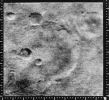
N-Mariner4-64-PIA02979.jpgMariner Crater from Mariner 4154 visiteCaption NASA originale:"Mariner 4 image of the crater named after it, the 151 Km diameter Mariner Crater at 35°S, 164°W. Running from the lower left corner of the frame through the bottom of the crater is a linear ridge which is part of Sirenum Fossae. The image was taken from 12.600 Km and covers 250 Km by 254 Km. North is up. (Mariner 4, frame 11E).
Mariner 4 was the first spacecraft to get a close look at Mars. Flying as close as 9.846 Km (6.118 miles), Mariner 4 revealed Mars to have a cratered, rust-colored surface, with signs on some parts of the planet that liquid water had once etched its way into the soil. Mariner 4 was launched on November 28, 1964 and arrived at Mars on July 14, 1965". Il commento NASA originale ed una semplice occhiata alle date della Missione dovrebbe esserci sufficiente per capire che la repentina interruzione dello "Human Space Program" deve aver avuto la sua reale ragione in motivi - a nostro avviso - diversi dai "budget cuts"...Feb 14, 2005
|
|

Mariner7-69-PIA02981_modest.jpgMars from Mariner 7: Nix Olympia (alias Olympus Mons)128 visiteNegli "Anni Gloriosi" dell'Esplorazione Spaziale (e non stiamo certo parlando di oggi, AD 2005...) la Luna e Marte erano - molto spesso - "graditi ospiti" nelle nostre case. Come mai? Perchè la "Conquista dello Spazio", dai primi anni '60 e sino alla metà (circa) degli anni '70, era un "Obbiettivo Vero". Immagini sbiadite e sfuocate ci mostravano i primi dettagli della vicina Luna e del "Rosso Marte" il quale, per un'infinità di motivi, era il corpo celeste - assieme a Saturno - più conosciuto. In questo frame Marte viene ripreso - da una distanza di oltre 320.000 Km - dal Mariner 7: vediamo bene il rilievo NIX Olympia - poi identificato come vulcano e rinominato Olympus Mons - e le calotte polari.
"...Mariner 6 and 7 were designed specifically to concentrate on Mars. Better quality imaging was planned to give a more complete picture of the Martian surface to help in planning future missions to Mars...".
Mariner 7 partì il 27 Marzo 1969 ed arrivò il 4 Agosto dello stesso anno. Non male, vero?!?Feb 12, 2005
|
|
|
| 115 immagini su 10 pagina(e) |
 |
|
|
|
|
|
|
10 |
|








