| Ultimi arrivi - Mercury |

ZO-Mercury01_Messenger.jpgApproaching Mercury68 visiteDa "NASA - Picture of the Day", del 16 Gennaio 2008:"Two days ago, the MESSENGER Spacecraft became only the second in Human History to swoop past Mercury. The last spacecraft to visit the Sun's closest Planet was Mariner 10, over 35 years ago.
Mariner 10 was not able to photograph Mercury's entire surface, and the images it did send back raised many questions. Therefore, much about planet Mercury remains unknown. This week's MESSENGER flyby was only the first of three. Over the next few years MESSENGER will swing past Mercury twice more and finally orbit in 2011, but MESSENGER is currently moving too fast to enter orbit around Mercury now.
This image was taken by MESSENGER two days ago upon approach to Mercury.
Many detailed images of Mercury are expected to be sent back over the next few days. The data acquired by MESSENGER will help better understand how Mercury's surface was formed, and why it is so dense".MareKromiumGen 16, 2008
|
|

ZO-Mercury02_Messenger.jpgMessenger's First Look at Mercury's Previously Unseen Side78 visiteCaption NASA:"This image was taken on January 14, 2008, by NASA's MESSENGER Spacecraft at a distance of approx. 17.000 miles following the Spacecraft's closest approach to Mercury. The image shows features as small as 6 miles in size.
Similar to previously mapped portions of Mercury, this Hemisphere appears heavily cratered. It also reveals some unique and distinctive features.
On the upper right is the giant Caloris basin, including its western portions never before seen by spacecraft. Formed by the impact of a large asteroid or comet, Caloris Basin is one of the largest, and perhaps one of the youngest basins in the Solar System". MareKromiumGen 16, 2008
|
|

B-Mercury-PIA02948.jpgOld Basin Filled with by Smooth Plains (natural colors - elab. Lunexit)69 visiteCaption NASA:"Old basin, 190 km in diameter, filled by smooth plains at 43° South Latitude and 55° West Longitude. The basin's hummocky rim is partly degraded and cratered by later events. Mariner 10 frame 166607".MareKromiumAgo 09, 2007
|
|

DiscoveryScarp-PIA02446.jpgThe "Discovery Scarp"61 visiteCaption NASA originale:"One of the most prominent lobate scarps (Discovery Scarp), photographed by Mariner 10 during it's first encounter with Mercury, is located at the center of this image (extending from the top to near bottom). This scarp is about 350 Km long and transects two craters 35 and 55 Km in diameter. The maximum height of the scarp south of the 55-Km crater is about 3 Km. Notice the shallow older crater (near the center of the image) perched on the crest of the scarp. (FDS 17389 and 27399)".Mar 20, 2006
|
|

Craters-PIA02429.jpgRayed Craters on Mercury64 visiteCaption NASA originale:"These two prominent rayed craters are located at 40° North and 124° West. Bright halos extend as far as 2 crater diameters beyond crater rims. Individual rays extend from halo. Bright streak extending from middle top to lower is unrelated to the two craters. Craters are 40 Km in diameter. This image (FDS 275) was taken during the spacecraft's first encounter with Mercury".Mar 20, 2006
|
|

Hero Rupes-PIA02413.jpgHero Rupes84 visiteCaption NASA originale:"After passing Mercury the first time and making a trip around the Sun, Mariner 10 again flew by Mercury on September 21 at 1:59 PMPDT. This encounter brought the spacecraft in front of Mercury in the southern hemisphere.
Hero Rupes, the large scarp visible running across the bottom of the image, is thought to thought to have been formed by global tectonic forces, possibly due to shrinkage of the planet as it cooled. Mariner 10 was looking obliquely across Mercury's southern hemisphere when it acquired this dramatic shot near the beginning of its southern hemisphere pass (FDS166618)".Mar 20, 2006
|
|

C-Mercury-HR-PIA02416.jpgA slice" of Mercury... (HR)63 visiteCaption NASA originale:"A limping Mariner 10 spacecraft was coaxed into a third and final encounter with Mercury in March of 1975. Due to several problems with the aging spacecraft, only ~450 useful images of the planet were acquired, though many are at significantly higher resolution than previous encounters. This is one of the highest resolution images of Mercury acquired by Mariner 10: Frame 528922, ~90 m/pixel.
The vertical (tall narrow) format of the third encounter images resulted from problems with the tape recorder and transmitter on the spacecraft. Only the middle quarter of each frame could be sent back".Mar 20, 2006
|
|

B-B-Mercury-PIA02947.jpgIntercrater Plain near Caloris Basin72 visiteCaption NASA originale:"Intercrater Plains and heavily cratered terrain typical of much of Mercury outside the area affected by the formation of the Caloris Basin are shown in this image (FDS 166738) taken during the spacecraft's second encounter with Mercury. Abundant shallow elongate craters and crater chains are present on the intercrater plains.
North is to the top of this image, centered at 56° South, 128° West and measuring about 400 Km across".
Note: The Mariner 10 mission, managed by the Jet Propulsion Laboratory for NASA's Office of Space Science, explored Venus in February 1974 on the way to 3 encounters with Mercury (March and September 1974 and March 1975). The spacecraft took more than 7000 photos of Mercury, Venus, the Earth and the Moon.Mar 20, 2006
|
|
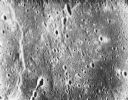
B-A-Mercury-PIA02961.jpgMercury, in HR61 visiteCaption NASA originale:"Taken only minutes after Mariner 10 made its closest approach to the planet Mercury on March 29, 1974, this is one of the highest resolution pictures obtained during the Mission. Craters as small as 150 mt (roughly 500 feet) across can be seen. The picture, taken from a distance of about 5900 Km (such as approx. 3700 miles), measures 50 by 40 Km (such as approx. 931 by 25 miles). The relativity level surface contrasts with the abundant relief seen in some close-up views on the opposite side of the planet. The long, narrow area of hills and scarps to the left resembles ridges in the mare of Earth's Moon. Abundant craters in various stages of degradation dot the surface".Mar 20, 2006
|
|

B-Mercury-PIA02939.jpgDark-rimmed crater and extensive "Ejecta Blanket"63 visiteCaption NASA originale:"Mariner 10 took this picture (FDS 166840) from a distance of 63.400 Km (39.300 miles) about one hour after it passed under the South Pole of Mercury. The dark-rimmed crater at upper left is 67 Km (42 miles) in diameter. It is surrounded by an extensive ejecta blanket and exhibits a bright ray pattern, which extends into and beyond the larger crater (120 Km - or 75 miles) to its right and near the picture's center. The dark-rimmed crater is similar to crater Tycho on Earth's moon. The center of this picture is located 33° South Lat. and 158° West Long. North is to the top".Gen 31, 2005
|
|

B-Mercury-PIA02946.jpgCraters on the morning terminator...62 visiteCaption NASA originale:"As Mariner 10 passed by Mercury on its second encounter with the planet on September 21, 1974, this picture (FDS 166850) of a large circular (350 Km - or 220 mile diameter) basin was obtained near the morning terminator. The basin appears to have been flooded with the plain material and then subsequently cratered by numerous large events. Filling of the basin, presumably by lava flows analogous to those of the lunar maria, partially inundated small craters which had formed along the basin rim (lower left) and in some places overflowed the basin rim and spilled onto the surrounding terrain (top)".Gen 31, 2005
|
|

B-Mercury-PIA02424.jpgA VERY LARGE crater on Mercury74 visiteCaption NASA originale:"This image (FDS 166), acquired during the spacecraft's first encounter with Mercury, features a 140 Km diameter crater and it's surrounding zone of secondary craters. The narrow width of the rim facies, the prominent subradial secondary crater chains and grooves are representative of the larger mercurian craters".Gen 31, 2005
|
|
| 248 immagini su 21 pagina(e) |
 |
|
|
|
|
|
|
|
19 | |
|





