| Ultimi arrivi - Mercury |

ZZ-Mercury-Craters-Unnamed_Craters-PIA14191-PCF-LXTT.jpgUnnamed Craters (Absolute Natural Colors; credits for the additional process. and color: Dr Paolo C. Fienga - Lunexit Team)181 visiteImage Mission Elapsed Time (MET): 209889250
Image ID: 65107
Instrument: Narrow Angle Camera (NAC) of the Mercury Dual Imaging System (MDIS)
Center Latitude: 1,7° North
Center Longitude: 354,3° East
Resolution: approx. 246 mt/pixel
Scale: this image is approx. 390 Km acrossMareKromiumGiu 20, 2011
|
|

ZZ-Mercury-Craters-Debussy_Crater-PIA14080-PCF-LXTT.jpgRays from Debussy Crater (Absolute Natural Colors; credits for the additional process. and color.: Dr Paolo C. Fienga - Lunexit Team)143 visiteBright Rays, consisting of Impact Ejecta and Secondary Craters, spread across this NAC image and radiate from Debussy Crater, located at the top. The image, acquired during the first orbit for which MDIS was imaging, shows just a small portion of Debussy's large System of Rays in greater detail than ever previously seen. Images acquired during MESSENGER's second Mercury Fly-By showed that Debussy's Rays extend for hundreds of Km across Mercury's Surface. Debussy Crater was named in March 2010, in honor of the French composer Claude Debussy (1862-1918).
Date Acquired:March 29, 2011
Image Mission Elapsed Time (MET):209885555
Image ID:65082
Instrument: Narrow Angle Camera (NAC) of the Mercury Dual Imaging System (MDIS)
Center Latitude: 36,4° South
Center Longitude: 16,1° East
Resolution: approx. 300 mt/pixel (0,19 miles/pixel)
Scale: Debussy Crater has a diameter of about 80 KmMareKromiumGiu 19, 2011
|
|
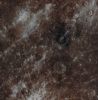
ZZ-Mercury-Global_View_of_the_Surface-PIA14082-PCF-LXTT.jpgCraters and Striations (Enhanced Absolute Natural Colors; credits for the additional process. and color.: Dr Paolo C. Fienga - Lunexit Team)156 visiteDate Acquired: March 29, 2011
Image Mission Elapsed Time (MET): 0209894354, 0209894356, 0209894362
Image ID: 65195, 65196, 65200
Instrument: Wide Angle Camera (WAC) of the Mercury Dual Imaging System (MDIS)
WAC filter: 6,7,9 (433, 749, 996 nanometers wavelength)
Center Latitude: 18,1° North
Center Longitude: 18,3° East
Resolution: approx. 980 meters/pixel
Scale: image width is approx. 510 kmMareKromiumGiu 19, 2011
|
|

ZZ-Mercury-Limb-PIA14190-PCF-LXTT-1.jpgThe Limb of Mercury (Enhanced Natural Colors; credits for the additional process. and color.: Dr Paolo C. Fienga - Lunexit Team)155 visitenessun commentoMareKromiumGiu 19, 2011
|
|

ZZ-Mercury-Limb-PIA14190-PCF-LXTT-0.jpgMercurian Limb165 visiteImage Mission Elapsed Time (MET): 209890193, 209890197, 209890213
Image ID: 65109, 65110, 65114
Instrument: Wide Angle Camera (WAC) of the Mercury Dual Imaging System (MDIS)
WAC filter: 6,7,9 (433, 749, 996 nanometers wavelength)
Center Latitude: 3,1° North
Center Longitude: 352,3° East
Resolution: approx. 1,5 Km/pixel
Nota Lunexit: abbiamo operato una leggerissima saturazione del frame NASA-Original per evidenziare come una "fetta" (decisamente abbondante) del frame - "fetta" relativa allo Spazio circum-Mercuriano - SEMBRA essere stata, di fatto, rimossa (od oscurata). Sia detto con chiarezza: questo è quello che appare dalla semplice analisi del frame, una volta operata - ripetiamo - una leggerissima "schiaritura" (over-saturation) dell'immagine. Quali i motivi di questa operazione di make-up (se di make-up effettivamente si trattasse)? Non ne abbiamo idea. Ma le Vostre opinioni al riguardo saranno, come sempre, apprezzate.MareKromiumGiu 19, 2011
|
|
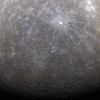
ZZ-Mercury-Z1.jpgThe "Face" of Mercury (Natural Colors; credits for the additional process. and color.: NASA/JHU APL/CIW)192 visiteCaption NASA:"On March 17, 2011, the MESSENGER Spacecraft became the first to orbit Mercury, the Solar System's Innermost Planet. This is its first processed color image since entering Mercury orbit. Larger, denser, and with almost twice the Surface Gravity of Earth's moon, Mercury still looks moon-like at first glance.
But in this view its Terrain shows light blue and brown areas near Craters and long bright rays of material streaking the Surface. The prominent bright ray crater Debussy at the upper right is approx. 80 Km (49,68 miles) in diameter. Terrain toward the bottom of the historic image extends to Mercury's South Pole and includes a region not previously imaged from Space".MareKromiumMar 31, 2011
|
|

ZY-Mercury-PCF-LXTT.jpgThe "Face" of Mercury (Enhanced Absolute Natural Colors; credits for the additional process. and color.: Dr Paolo C. Fienga - Lunexit Team)199 visitenessun commentoMareKromiumMar 31, 2011
|
|

ZX-Mercury-PIA13840.jpgCrescent Mercury (an Image-Mosaic by NASA/Johns Hopkins University Applied Physics Laboratory/Carnegie Institution of Washington)95 visiteThis HR mosaic of NAC images shows Mercury as it appeared to MESSENGER as the Spacecraft departed the Planet following its first mission's Fly-By. This mosaic resembles the historic first image transmitted back to Earth after that Fly-By and shows a portion of the Planet never previously seen by Spacecrafts.
Date Acquired: January, 14th, 2008
Instrument: Narrow Angle Camera (NAC) of the Mercury Dual Imaging System (MDIS)MareKromiumFeb 19, 2011
|
|

ZY-Mercury-PIA13840-PCF-LXTT.jpgCrescent Mercury (an Image-Mosaic by NASA/Johns Hopkins University Applied Physics Laboratory/Carnegie Institution of Washington - Absolute Natural Colors; credits for the additional process. and color.: Dr Paolo C. Fienga - Lunexit Team)104 visiteThis HR mosaic of NAC images shows Mercury as it appeared to MESSENGER as the Spacecraft departed the Planet following its first mission's Fly-By. This mosaic resembles the historic first image transmitted back to Earth after that Fly-By and shows a portion of the Planet never previously seen by Spacecrafts.
Date Acquired: January, 14th, 2008
Instrument: Narrow Angle Camera (NAC) of the Mercury Dual Imaging System (MDIS)MareKromiumFeb 19, 2011
|
|

ZZ-Mercury-Craters-Crater_Field-PIA13823-2-PCF-LXTT_(2).jpgThe Surface of Mercury (Absolute Natural Colors; credits for the additional process. and color.: Dr Paolo C. Fienga - Lunexit Team)124 visitenessun commentoMareKromiumGen 30, 2011
|
|

ZZ-Mercury-Craters-Crater_Field-PIA13823-1.jpgSome Mercurian Surface Features explained (False Colors; credits: 74 visiteCaption NASA:"During MESSENGER's second Fly-By of Mercury, MDIS acquired a strip of HR images obtained with each of the WAC's 11 different color filters. The graphic shown here displays the resulting enhanced-color mosaic and gives considerable detail about the images, how the mosaic was created and the Geologic Features that can be seen.
Currently, these images are the Highest-Resolution color images ever obtained of the Solar System's innermost Planet, but not for long! On March 18, 2011, MESSENGER will enter into orbit about Mercury and the mission's extensive, year-long science observation campaign will begin.
That campaign includes capturing color images of Mercury's Surface at higher resolution than ever before".MareKromiumGen 30, 2011
|
|

ZZ-Mercury-Rupes-PIA13748-1.jpgBeagle Rupes and Impact Craters Sveinsdottir, Izquierdo and Kunisada (Edited EDM)120 visitenessun commentoMareKromiumGen 23, 2011
|
|
| 248 immagini su 21 pagina(e) |
 |
|
|
|
|
10 | |
|
|
|
|





