| |

| Ultimi arrivi - Mercury |
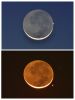
ZG-Mercury_occulted_by_the_Moon-2026Feb18-Melandri.jpgOccultation (Credit & Copyright: Fabrizio Melandri)164 visitenessun commentoMareKromiumApr 26, 2026
|
|

ZZZ-Mercury-PIA19448.jpgFarewell Messenger!....131 visiteCaption NASA:"Originally planned to orbit Mercury for one year, the mission exceeded all expectations, lasting for over four years and acquiring extensive datasets with its seven scientific instruments and radio science investigation. This afternoon, the Spacecraft succumbed to the pull of Solar Gravity and impacted Mercury's Surface.
The image shown here is the last one acquired and transmitted back to Earth by the mission. The image is located within the Floor of the roughly 93-Km-diameter Impact Crater named "Jokai". The Spacecraft struck the Planet just north of Shakespeare Basin".
Date acquired: April 30, 2015
Image Mission Elapsed Time (MET): 72716050
Image ID: 8422953
Instrument: Narrow Angle Camera (NAC) of the Mercury Dual Imaging System (MDIS)
Center Latitude: 72,0° North
Center Longitude: 223,8° East
Resolution: 2,1 meters/pixel
Scale: This image is about 1 Km across
Solar Incidence Angle: 57,9° (meaning that the Sun was 32,1° high on the Local Horizon)
Emission Angle: 56,5°
Phase Angle: 40,7°MareKromiumGen 20, 2020
|
|

ZZZ-Mercury-PIA19445.jpgReady to say "Farewell"....97 visiteCaption NASA:"This image, acquired on April, 29th, 2015, is one of MESSENGER's last. On April 30th, the Spacecraft will complete its highly successful orbital mission and impact the Surface of Mercury.
Impact was expected at 19:26:02 UTC (3:26:02 pm EDT) but will occur out of sight and communication with the Earth. The MESSENGER Team will try to establish communications with the Spacecraft when its orbit would allow it to be visible from Earth. The inability to establish communications between MESSENGER and the scheduled Earth-based tracking antenna will provide the first confirmation that the Spacecraft has impacted the Surface. After about 30 minutes following the predicted Mercury Impact Time, the Team plans to announce whether MESSENGER's orbital mission has come to an end".
Date acquired: April 29, 2015
Image Mission Elapsed Time (MET): 72595737
Image ID: 8414772
Instrument: Narrow Angle Camera (NAC) of the Mercury Dual Imaging System (MDIS)
Center Latitude: 69.46° North
Center Longitude: 229,49° East
Resolution: 1,7 meters/pixel
Scale: The largest crater in this image has a diameter of about 330 meters.MareKromiumGen 20, 2020
|
|

ZZZ-Mercury-PIA19424.jpg102 visiteCaption NASA:"The MESSENGER Spacecraft sent this frame back to Earth after the it emerged from Superior Solar Conjunction, when the communication is largely blocked by the Sun. This is one of our last views of Mercury from MESSENGER. Featured here is the Ejecta Blanket of a (relatively) fresh Unnamed Impact Crater located just outside the scene. Ejecta scoured the Surface leaving behind beautiful patterns of Secondary Impact Craters".
Date acquired: April 16, 2015
Image Mission Elapsed Time (MET): 71544702
Image ID: 8343072
Instrument: Narrow Angle Camera (NAC) of the Mercury Dual Imaging System (MDIS)
Center Latitude: 55,67° North
Center Longitude: 97,37° East
Resolution: 19,9 meters/pixel
Scale: This scene is approximately 20 Km acrossMareKromiumGen 20, 2020
|
|

ZZ-Mercury-Terminator-PIA10937-1.jpgNorthern Latitudes and a possible Orbital Anomaly (EDM - Enhanced Natural Colors; credits for the add. process. and color.: Dr Paolo C. Fienga)) 129 visiteRaggio Cosmico, senza dubbi.MareKromiumGen 06, 2020
|
|

ZZ-Mercury-Craters-Unnamed_Impact_Crater_with_Pond-PIA18371-PCF-LXTT-IPF.jpgImpact's Melt "Pond" (CTX Frame - Absolute Natural Colors; credits for the additional process. and color.: Dr Paolo C. Fienga/Lunar Explorer Italia/Italian Planetary Foundation)141 visiteThis High-Resolution Contextual (CTX) Image, taken by NASA - MESSENGER Spacecraft on the date of March, 10, 2014, shows us a few Ponds (---> small Lake-like Features) made of Impact Melt (remember that this kind of Surface Features appear to us way smoother than the Terrain which surrounds them).
In particular, these Melt Ponds (where the bigger one looks like some sort of a Flat Ellipse, with its Major Axis measuring approx. 1 Km - and visible at about 10 o' clock of the frame) were deposited (probably) as Fluid Ejecta (---> such as Ejecta made of liquid or semi-liquid Rock) coming from an Unnamed Impact Crater located to the North (top) of the picture, but not visible here.
Date acquired: March, 10th, 2014
Image Mission Elapsed Time (MET): 36770132
Image ID: 5908036
Instrument: Narrow Angle Camera (NAC) of the Mercury Dual Imaging System (MDIS)
Center Latitude: 63,77° North
Center Longitude: 254,70° East
Solar Incidence Angle: 72,5° (meaning that the Sun, at the time that the picture was taken, was about 17,5° above the imaged Local Mercurian Horizon)
Emission Angle: 6,3°
Sun-Mercury-Messenger (or "Phase") Angle: 78,9°
This picture (which is an Original NASA - MESSENGER Spacecraft's b/w and Map-Projected image published on the NASA - Planetary Photojournal with the ID n. PIA 18371) has been additionally processed, contrast enhanced, Gamma corrected, magnified to aid the visibility of the details and then colorized in Absolute Natural Colors (such as the colors that a human eye would actually perceive if someone were onboard the NASA - MESSENGER Spacecraft and then looked outside, towards the Surface of Mercury), by using an original technique created - and, in time, dramatically improved - by the Lunar Explorer Italia Team. Different colors, as well as different shades of the same color, mean, among other things, the existence of different Elements (Minerals) present on the Surface of Mercury, each having a different Albedo (---> Reflectivity) and Chemical Composition.MareKromiumMag 17, 2014
|
|

ZZ-Mercury-Hill-PIA18248-PCF-LXTT-IPF.jpgMercurian Hill (Absolute Natural Colors; credits for the additional process. and color.: Dr Paolo C. Fienga/Lunar Explorer Italia/Italian Planetary Foundation)140 visiteThis Vertical Relief (a very small Hill perhaps?), photographed by the NASA - MESSENGER Spacecraft on March, 25, 2014, lies towards the Edge of Mercury's expansive Northern Plains. The Sun, at the time when the picture was taken, was already very low on the Local Mercurian Horizon (---> only 6°), and this circumstance caused the creation of a long Shadow, approximately 3,3 Km (such as about 2,04 miles) long.
Using a simple formula (actually, it is a Trigonometric relationship) - and knowing, in addition to the length of the Shadow, the Local Solar Incidence Angle - it was easy to calculate the height of the Hill, which is approx.(~) 340 meters (such as about (~) 0,2111 miles).
This Vertical Relief, according to NASA Planetary Scientists, could be (even thougb we, as IPF, stronglt disagree with such an hypothesis) a partial remnant of the Rim of an old Impact Crater that, some time in a very remote past of Mercury, was flooded (---> invaded and then almost completely covered) by fluid Lava. North is to the right of this image.
Date acquired: March, 25th, 2014
Image Mission Elapsed Time (MET): 38066727
Image ID: 6000245
Instrument: Narrow Angle Camera (NAC) of the Mercury Dual Imaging System (MDIS)
Center Latitude: 83,92° North
Center Longitude: 242,30° East
Solar Incidence Angle: 84,0° (meaning that the Sun, at the time that the picture was taken, was about 6,0° above the imaged Local Mercurian Horizon)
Emission Angle: 1,9°
Sun-Mercury-Messenger (or "Phase") Angle: 82,0°
This picture (which is an Original NASA - MESSENGER Spacecraft's b/w and NON Map-Projected image published on the NASA - Planetary Photojournal with the ID n. PIA 18248) has been additionally processed, contrast enhanced, Gamma corrected, magnified to aid the visibility of the details and then colorized in Absolute Natural Colors (such as the colors that a human eye would actually perceive if someone were onboard the NASA - MESSENGER Spacecraft and then looked outside, towards the Surface of Mercury), by using an original technique created - and, in time, dramatically improved - by the Lunar Explorer Italia Team. Different colors, as well as different shades of the same color, mean, among other things, the existence of different Elements (Minerals) present on the Surface of Mercury, each having a different Albedo (---> Reflectivity) and Chemical Composition.MareKromiumMag 17, 2014
|
|

ZZ-Mercury-Craters-Unnamed_Crater-PIA18372-PCF-LXTT-IPF.jpgUnnamed Crater with Hollows (Absolute Natural Colors; credits for the additional process. and color.: Dr Paolo C. Fienga/Lunar Explorer Italia/Italian Planetary Foundation)128 visiteAs the NASA - MESSENGER Spacecraft passes progressively closer to the Planet Mercury, we are able to see Always better resolved Surface Features in the images that the Spacecraft returns. Here, in this frame, at a pixel scale of 9 meters, we can see the Eastern Portion of an Unnamed Impact Crater approx. 13 Km (such as about 8,073 miles) in diameter. The Inner Wall of the Crater is replete (---> full of), as you can see, with smaller, superposed Impact Craters, some of which appear elongated (---> ellipsoidal), possibly because they impacted on the larger Crater's inclined Inner Wall.
Interestingly, there are also Bright Spots on the Sunlit Portion of this Unnamed Crater's Wall (Right Side - Dx - of the frame, at about 4 o'clock), and that is exctly the right place where we might reasonably expect to see, in a near future, some new "Hollows" (actually, we, as IPF, do believe that the Surface Features visible in the area indicated by NASA are ALREADY FORMED "Hollows" whose shapes and dimensions, probably, are still in course of modification).
Date acquired: March, 3rd, 2014
Image Mission Elapsed Time (MET): 36136338
Image ID: 5862963
Instrument: Narrow Angle Camera (NAC) of the Mercury Dual Imaging System (MDIS)
Center Latitude: 56,30° North
Center Longitude: 301,60° East
Solar Incidence Angle: 59,3° (meaning that the Sun, at the time that the picture was taken, was about 30,7° above the imaged Local Mercurian Horizon)
Emission Angle: 43,0°
Sun-Mercury-Messenger (or "Phase") Angle: 102,3°
This picture (which is an Original NASA - MESSENGER Spacecraft's b/w and NON Map-Projected image published on the NASA - Planetary Photojournal with the ID n. PIA 18372) has been additionally processed, contrast enhanced, Gamma corrected, magnified to aid the visibility of the details and then colorized in Absolute Natural Colors (such as the colors that a human eye would actually perceive if someone were onboard the NASA - MESSENGER Spacecraft and then looked outside, towards the Surface of Mercury), by using an original technique created - and, in time, dramatically improved - by the Lunar Explorer Italia Team. Different colors, as well as different shades of the same color, mean, among other things, the existence of different Elements (Minerals) present on the Surface of Mercury, each having a different Albedo (---> Reflectivity) and Chemical Composition.MareKromiumMag 17, 2014
|
|

ZZ-Mercury-Craters-Scarlatti_Crater-PIA18215-PCF-LXTT-IPF.jpgScarlatti Crater (Absolute Natural Colors; credits for the additional process. and color.: Dr Paolo C. Fienga/Lunar Explorer Italia/Italian Planetary Foundation)128 visiteIn this image-mosaic, obtained by putting together three frames taken by the NASA - MESSENGER Spacecraft on March, 30, 2014, we can see, located almost at the center of the frame, the large (such as approx. 132 Km - such as about 81,97 miles - in diameter) Peak-Ring Basin known as Scarlatti.
While Scarlatti has a typical Peak-Ring in many respects, if you take a good look towards its North/Eastern Section (upper right side - Dx - of the Feature), you will be able to notice its "transition" to a relatively wide (in this case, approx. 30 Km - such as about 18,63 miles - across) sort of Collapse Pit, surrounded by High-Reflectance (white and reddish in color) Surface Material. This Pit (perhaps a Volcanic Vent or a Caldera, eons ago), according to several NASA Planetary Scientists, could have been - and we say, as IPF, reasonably, considering all the visible Features characterizing it - the site of some (most likely extremely ancient as well as really powerful) Explosive Volcanic Activity.
Date acquired: March, 30th, 2014
Images Mission Elapsed Time (MET): 38528557, 38528553, 38528551
Images ID: 6032934, 6032932, 6032931
Instrument: Wide Angle Camera (WAC) of the Mercury Dual Imaging System (MDIS)
Center Latitude: 40,70° North
Center Longitude: 258,90° East
Solar Incidence Angle: 86,2° (meaning that the Sun, at the time that the picture was taken, was about 3,8° above the imaged Local Mercurian Horizon)
Emission Angle: 51,1°
Sun-Mercury-Messenger (or "Phase") Angle: 137,3°
This picture (which is an Original NASA - MESSENGER Spacecraft's false colors and NON-Map-Projected image-mosaic published on the NASA - Planetary Photojournal with the ID n. PIA 18215) has been additionally processed, contrast enhanced, Gamma corrected, magnified to aid the visibility of the details and then re-colorized in Absolute Natural Colors (such as the colors that a human eye would actually perceive if someone were onboard the NASA - MESSENGER Spacecraft and then looked outside, towards the Surface of Mercury), by using an original technique created - and, in time, dramatically improved - by the Lunar Explorer Italia Team. Different colors, as well as different shades of the same color, mean, among other things, the existence of different Elements (Minerals) present on the Surface of Mercury, each having a different Albedo (---> Reflectivity) and Chemical Composition.MareKromiumMag 07, 2014
|
|

ZZ-Mercury-Craters-Waters_Crater-PIA18228-PCF-LXTT-IPF.jpgWaters Crater (EDM - Possible Absolute Natural Colors; credits for the additional process. and color.: Dr Paolo C. Fienga/Lunar Explorer Italia/Italian Planetary Foundation)123 visiteIn this beautiful image, obtained by the NASA - MESSENGER Spacecraft on September, 16, 2013, we can see the extremely unusually-looking Impact Crater known as Waters. The South-heading Dark Impact Melt Flow of Waters Crater (approx. 15 Km - such as about 9,315 miles - in diameter and so named, in the AD 2012, after the blues legend Muddy Waters - Mc Kinley Morganfield, born in Issaquena County - Mississippi - USA -, on April 4, 1913 and deceased in Westmont, Illinois, on April 30, 1983) has always been - we'd say, obviously - a Surface Feature of great interest for Planetary Scientists, and the Targeted Color Imaging Campaign carried out by the NASA - MESSENGER Spacecraft showed quite well, and more than once, the distinctive dark gray-greenish-bluish color of the aforementioned Impact Melt Flow.
As a consequence of such a great interest, during the late AD 2013, this High-Resolution Image was then acquired, and it revealed stunning new details (like the Wavy Texture) of the Impact Melt Flow - details which were (as far as their visual quality was and is concerned) way beyond the ones that had been photographed in other (previous) frames.
Date acquired: September, 16th, 2013
Image Mission Elapsed Time (MET): 21673915
Image ID: 4834878
Instrument: Narrow Angle Camera (NAC) of the Mercury Dual Imaging System (MDIS)
Center Latitude: 9,00° South
Center Longitude: 254,70° East
Solar Incidence Angle: 44,0° (meaning that the Sun, at the time that the picture was taken, was about 46,0° above the imaged Local Mercurian Horizon)
Emission Angle: 44,8°
Sun-Mercury-Messenger (or "Phase") Angle: 85,5°
This picture (which is an Original NASA - MESSENGER Spacecraft's b/w and NON-Map-Projected image published on the NASA - Planetary Photojournal with the ID n. PIA 18228) has been additionally processed, contrast enhanced, Gamma corrected, magnified to aid the visibility of the details and then colorized in Absolute Natural Colors (such as the colors that a human eye would actually perceive if someone were onboard the NASA - MESSENGER Spacecraft and then looked outside, towards the Surface of Mercury), by using an original technique created - and, in time, dramatically improved - by the Lunar Explorer Italia Team. Different colors, as well as different shades of the same color, mean, among other things, the existence of different Elements (Minerals) present on the Surface of Mercury, each having a different Albedo (---> Reflectivity) and Chemical Composition.MareKromiumMag 07, 2014
|
|

ZZ-Mercury-Craters-Waters_Crater-PIA15389-PCF-LXTT-IPF.jpgWaters Crater, in context (Possible Absolute Natural Colors; credits for the additional process. and color.: Dr Paolo C. Fienga/Lunar Explorer Italia/Italian Planetary Foundation)72 visiteIn this High Resolution Image-Mosaic, obtained by putting together three frames taken by the NASA - MESSENGER Spacecraft on May, 16, 2011, we can see, once again, the approx. 15-Km (such as about 9,315 miles) diameter Impact Crater named Waters that, as you can easily understand just by looking at the picture, should be relatively young, as indicated by the Bright Rays that cross the neighboring (---> meaning located in its proximities) Surface Features. As we have already drawn to your attention in the past, an unusually-looking "Tongue-like Feature", most likely made of Impact Melt - and which shows a very dark gray color, when compared to the nearby Mercurian Surface - appears to have flowed out of the Crater itself, most likely at the time of - or just right after - its formation.
Date acquired: May, 16th, 2011
Images Mission Elapsed Time (MET): 214069807, 214069811, 214069815
Images ID: 261719, 261720, 261721
Instrument: Wide Angle Camera (WAC) of the Mercury Dual Imaging System (MDIS)
Center Latitude: 8,82° South
Center Longitude: 254,90° East
Solar Incidence Angle: 41,8° (meaning that the Sun, at the time that the picture was taken, was about 48,2° above the imaged Local Mercurian Horizon)
Emission Angle: 25,6°
Sun-Mercury-Messenger (or "Phase") Angle: 67,4°
This picture (which is an Original NASA - MESSENGER Spacecraft's false colors and Map-Projected image-mosaic published on the NASA - Planetary Photojournal with the ID n. PIA 15389) has been additionally processed, contrast enhanced, Gamma corrected, magnified to aid the visibility of the details and then re-colorized in Absolute Natural Colors (such as the colors that a human eye would actually perceive if someone were onboard the NASA - MESSENGER Spacecraft and then looked outside, towards the Surface of Mercury), by using an original technique created - and, in time, dramatically improved - by the Lunar Explorer Italia Team. Different colors, as well as different shades of the same color, mean, among other things, the existence of different Elements (Minerals) present on the Surface of Mercury, each having a different Albedo (---> Reflectivity) and Chemical Composition.
MareKromiumMag 07, 2014
|
|

ZZ-Mercury-Craters-Unnamed_Crater-PIA18246-PCF-LXTT-IPF.jpgIntersecting Craters (Absolute Natural Colors - Credits for the additional process. and color.: Dr Paolo C. Fienga/Lunar Explorer Italia/Italian Planetary Foundation)81 visiteRunning diagonally though the scene (which is approx. 14 Km - such as about 8,69 miles - across), and running from the upper left (Sx) to the lower right (Dx) corner of the frame, you can see the Wall of an ancient Impact Ccrater that encompasses another Impact Crater known as Purcell. Purcell Crater and this other one (both quite large) are both pretty ancient, as evidenced by the numerous small Impact Craters that cover them, including their Walls. Furthermore, this High-Resolution Image taken by the NASA - MESSENGER Spacecraft on April, 11, 2014, also reveals how the small Impact Craters that formed on the Wall display some differences from the ones which formed on the Flat neighboring Surfaces. Frankly speaking, we, as IPF, honestly believe that the differences (mostly in shape) existing among these smaller Impact Craters that NASA is talknig about, may simply (and reasonalbly) be due to different Angles of Impact, rather than their age and/or the size of the Impactors that created them.
Date acquired: April, 11th, 2014
Image Mission Elapsed Time (MET): 39535979
Image ID: 6104625
Instrument: Narrow Angle Camera (NAC) of the Mercury Dual Imaging System (MDIS)
Center Latitude: 81,25° North
Center Longitude: 212,20° East
Solar Incidence Angle: 81,4° (meaning that the Sun, at the time that the picture was taken, was about 8,6° above the imaged Local Mercurian Horizon)
Emission Angle: 36,3°
Sun-Mercury-Messenger (or "Phase") Angle: 82,5
This picture (which is an Original NASA - MESSENGER Spacecraft's b/w and Map-Projected image published on the NASA - Planetary Photojournal with the ID n. PIA 18246) has been additionally processed, contrast enhanced, Gamma corrected, magnified to aid the visibility of the details and then colorized in Absolute Natural Colors (such as the colors that a human eye would actually perceive if someone were onboard the NASA - MESSENGER Spacecraft and then looked outside, towards the Surface of Mercury), by using an original technique created - and, in time, dramatically improved - by the Lunar Explorer Italia Team. Different colors, as well as different shades of the same color, mean, among other things, the existence of different Elements (Minerals) present on the Surface of Mercury, each having a different Albedo (---> Reflectivity) and Chemical Composition.MareKromiumMag 07, 2014
|
|
| 248 immagini su 21 pagina(e) |
1 |
|
|
|
|
|
|
|
|
|
|
|
|





