| Ultimi arrivi - Artistic Views of the Solar System |

NeptuneandTriton-PIA00344.jpgNeptune and Triton181 visiteCaption NASA originale:"Composite view showing Neptune on Triton's horizon. Neptune's South Pole is to the left; clearly visible in the planets' Southern Hemisphere is a Great Dark Spot, a large anticyclonic storm system located about 20° South. The foreground is a computer generated view of Triton's maria as they would appear from a point approximately 45 Km above the surface. The terraces visible in this image indicate multiple episodes of 'cryovolcanic' flooding. This three-dimensional view was created from a Voyager 2 image by using a 2-dimensional photoclinometric model. Relief has been exaggerated roughly 30-fold, the actual range of the relief is about 1 Km. Would Neptune appear to be rising or setting? Neither, due to the motion of Triton relative to Neptune, it would appear to move laterally along the horizon, eventually rising and setting at high latitudes".Mar 15, 2005
|
|

Olympus Mons.jpgThe Olympus Mons and the Great Ocean of Mars204 visiteUna splendida visione artistica di Marte (reperita sul Sito "The Enterprise Mission" - laddove essa funge da visual introduction" per un articolo redatto dal Collega Mike Bara) nel tempo - remoto? - in cui un Oceano "liquido" occupava buona parte delle sue aree equatoriali. Si tratta di un'Opera, a nostro parere, davvero molto bella e di grande impatto visivo.
Per quanto riguarda l'articolo di Mr Bara, preferiamo evitare ogni commento ed invitarVi a leggerlo direttamente e quindi a maturare le Vostre convinzioni in completa autonomia e senza 'imbeccate'...Mar 02, 2005
|
|

West Spur-HD-S2-PIA06917.jpgSunset on West Spur290 visiteQuesta immagine è una "invenzione" di Lunar Explorer Italia: i colori del Cielo e della superficie del Pianeta Rosso sono stati riveduti e corretti usando la logica e le immagini (ed informazioni ad esse relative) disponibili.
Il Sole che tramonta e gli effetti prismatici sono un banalissimo effetto speciale (Microsoft Photo Editor) che abbiamo utilizzato per rendere più affascinante questa (comunque) "fredda" visione di Marte.Feb 04, 2005
|
|

TitanandHuygens_968A4_L.jpgTitan, Huygens and Saturn in the sky138 visiteUna "visione" davvero bellissima di Titano: forse la migliore.Gen 22, 2005
|
|

Planets in my mind-294.jpgPlanets in my mind...133 visiteIn questa immagine, un omaggio ai Pianeti che orbitano dentro di noi.
Pianeti dai colori fantastici ed affascinanti, popolati dai nostri sogni e dalle nostre paure; Pianeti che vivono nelle e delle nostre Fantasie.
Pianeti che non verranno mai scoperti nè battezzati da nessuno scienziato; Pianeti che non verranno mai visti da nessun telescopio (nè terrestre, nè spaziale).
Pianeti che non vedranno Sonde orbitargli attorno e sui quali non camminerà mai nessun astronauta.
Sono i Pianeti della nostra Mente, in una visione "frattale" dell'Amico ed Artista, Michael Wirtz.
(Gennaio 2005)
Gen 19, 2005
|
|
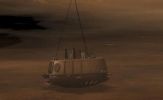
Titan-IMG001293-br500.jpgHuygens is landed on Titan!103 visitenessun commentoGen 15, 2005
|
|
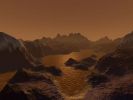
Titan-IMG000629-br500.jpgPools on Titan116 visiteUna piccolissima annotazione: quasi tutte le "Visioni Artistiche" di Titano sono caratterizzate da una sostanziale "luminosità" e "limpidezza" del paesaggio. A nostro modo di vedere - ed in accordo ai risultati che abbiamo ottenuto con un semplicissimo programma di simulazione - Titano, a differenza di quanto sino ad ora "artisticamente" ipotizzato, dovrebbe essere un mondo decisamente buio. E', inoltre, fortemente plausibile - anche se speriamo di sbagliarci - che la qualità delle immagini che verranno riprese e trasmesse dalla superficie del pianeta sia decisamente cattiva non solo per la scarsità di illuminazione, ma anche a causa della fitta nebbia che, a ben vedere, potrebbe essere presente anche sulla superficie di Titano (e non solo negli strati alti e medio-alti della sua spessa atmosfera).Gen 14, 2005
|
|

Titan-IMG000630-br500.jpgTitan's descent (3D)97 visitenessun commentoGen 14, 2005
|
|

s going to Titan-IMG000616-br500.jpgDown to Titan!92 visiteCaption NASA originale:"This artist's conception of the Cassini orbiter shows the Huygens probe separating to enter Titan's atmosphere. After separation, the probe drifts for about 3 weeks until reaching its destination, Titan. Equipped with a variety of scientific sensors, the Huygens probe will spend 2-2,5 hours (maybe more) descending through Titan's dense, murky atmosphere of nitrogen and carbon-based molecules, beaming its findings to the distant Cassini orbiter overhead. The probe could continue to relay information for up to 30 minutes after it lands on Titan's frigid surface, after which the orbiter passes beneath the horizon as seen from the probe". Dic 24, 2004
|
|

Huygens to Titan-IMG001244-br500.jpgHuygens probe's going to Titan114 visiteAn artist's concept of the European Space Agency's Huygens Probe en route to Titan after release from the NASA Cassini orbiter. Dic 24, 2004
|
|

Titan.jpgLanding on Titan219 visiteWill the Huygens probe land or splash down? In the next few days, the Cassini spacecraft currently orbiting Saturn will release a probe that will descend toward Saturn's largest moon in mid-January. That moon, Titan, has a surface normally hidden from view by thick methane cloud decks. What the car-sized flying-saucer-shaped probe will find is unknown. Once reaching the surface, Huygens may survive for as long as 150 minutes and take as many as 1.100 images. These images will be beamed up to the passing Cassini mothership for subsequent transmission to a waiting Earth. The Huygens probe is depicted above entering Titan's atmosphere and deploying its parachute. Uncovering the most mysterious moon in the Solar System may reveal a surface so strange that images of it may not be immediately understood.Dic 21, 2004
|
|

Wild 2-PIA06283_modest.jpgComet Wild 2100 visiteThis is an artist's concept depicting a view of comet Wild 2 as seen from NASA's Stardust spacecraft during its flyby of the comet on Jan. 2, 2004.Dic 03, 2004
|
|
| 91 immagini su 8 pagina(e) |
 |
|
|
5 | |
|
|








