| |

| Ultimi arrivi - Jupiter: the "King" and His Moons |
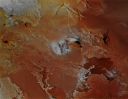
Io-Galai_Patera-PIA00324-PCF-LXTT-IPF.jpgVolcanic Plains and Paterae on Io: Galai Patera (Absolute Natural Colors; credits for the additional process. and color.: Dr Paolo C. Fienga/Lunar Explorer Italia/Italian Planetary Foundation)106 visiteIo's Volcanic Plains and at least 9 (nine) Paterae are shown, once again, in this really beautiful and highly suggestive NASA - Voyager 1 Space Probe image, which spans an area of about 1030 Km (such as approx. 640 miles) from left to right. North is at about the 01:30 o'clock position on the frame. A number of active Volcanic Calderae and huge Lava Flows are visible here: the most important (both for size and activity) is the dark red "teardrop-shaped" Surface Feature visible near the center of the frame, slightly to the right, which is Galai Patera, an approx. 100-Km-long (such as about 62 miles) Lava-flooded Caldera (---> Collapsed Vent). As we have already mentioned in yesterday's APOD, the exact composition of Io's Volcanic Plains and Lava Flows has not been determined yet; however, the prevalent yellow, brown, and orange materials may consist, dominantly, of Sulphur, with Surface Frosts made of Sulphur Dioxide and Silicates (such as Basalt), encrusted with Sulphur and Sulphur Dioxide Condensates. The dark red (and, sometime, almost black) spots visible all around the frame, of course including Galai Patera, are hot Sulphur Lava Lakes, which may remain molten for a long time, thanks to the intrusions of molten Silicate Magma that (probably in an almost continuous way) comes up from deep inside Io. Finally, the whitish patches visible at the upper left corner, in the center and on the lower left side of the picture are, most likely, Fresh Deposits of Sulphur Dioxide Frost.
This picture (which is an Original NASA - Voyager 1 Space Proble color image mosaic published on the NASA - Planetary Photojournal with the n. PIA 00324) has been additionally processed and then re-colorized in Absolute Natural Colors (such as the colors that a human eye would actually perceive if someone were onboard the NASA - Voyager 1 Space Probe and then looked outside, towards the limb of the Jovian moon Io), by using an original technique created - and, in time, dramatically improved - by the Lunar Explorer Italia Team. Different colors, as well as different shades of the same color, mean, among others, the existence of different Elements present on the Surface of Io, each having a different Albedo (---> Reflectivity) and Chemical Composition.MareKromiumSet 30, 2012
|
|

Ganymede-V1-PIA02233-PCF-LXTT-IPF.jpgFeatures of Ganymede (Absolute Natural Colors; credits for the additional process. and color.: Dr Paolo C. Fienga/Lunar Explorer Italia/Italian Planetary Foundation)89 visiteThis frame was acquired by the NASA - Voyager 1 Spacecraft during its approach to Ganymede, from a distance of about 272.000 Km; the center of the picture lies at approx. 13° North Latitude and and 359° East Longitude. Ganymede (also known as Jupiter III) is the largest moon in the Solar System and the seventh moon (and third Galilean Satellite) outward from the Gas-Giant Planet Jupiter. Completing an orbit in roughly 7 (seven) Earth days, Ganymede participates in a 1:2:4 Orbital Resonance with the other Jovian moons Europa and Io, respectively. Ganymede has a diameter of about 5268 km (such as approx. 3273 miles), and, even though Ganymede is something like 8% larger than the planet Mercury, it only has about 45% of Mercury's mass; furthermore, its diameter is about 2% larger than the one of the Saturnian moon Titan, which is the second largest moon in the Solar System. Ganymede also has the highest mass of all Planetary Satellites, with approx. 2,02 times the mass of the Earth's Moon. This image shows detail on the Surface of Ganymede with a resolution of approx. 4,5 Km per pixel. What we see here, is a portion of a Region of Ganymede located in its Northern Hemisphere, near the Terminator. It shows a variety of Impact Structures, including both Rayed and Unrayed Impact Craters, as well as some odd-looking, Groove-like Surface Features (already discovered by the NASA - Voyager 1 Spacecraft in the lighter Regions of this Jovian moon). The most striking Surface Features, however, are the Bright Rayed Impact Craters which show a distinct light blueish color that, to some Observer, may also also appear white, with pink nuances, against the darker background. Ganymede's Surface is known to contain large amounts of Surface Water Ice and it appears that these (relatively) young Craters might have spread bright and (always relatively speaking) fresh Ice Materials all over the place. Likewise, the lighter color and Albedo (---> reflectivity) of the Grooved Areas suggests that over there, too, some cleaner and fresh Water Ice Material can be found. In fact, and as far as we know at the present day, Ganymede is composed of approximately equal amounts of Silicate Rock and Water Ice. It is a fully differentiated Celestial Body with an Iron-rich and still liquid core. Very recent studies suggest that, just like it has been speculated about the other Jovian moon Europa, even Ganymede may host a Subterranean Ocean, nearly 200 Km below its frozen Surface, somehow "sandwiched" between several different Layers of Rock and Ice. In addition to the above, the Surface of Ganymede is composed of two main types of Terrain: the Dark Terrain, saturated with Impact Craters and dated up to 4 (four) Billion Years ago (a Terrain that covers about a third of the moon), and the Lighter Terrain, which is crosscut by extensive Grooves and Ridges and that could be, likely, much less ancient. The cause of the Light Terrain's so-called "Disrupted Geology" is not yet fully known, but it could reasonably be the result of some powerful Tectonic Activity brought about by Tidal Heating (and let us not forget that Tidal Heating - due to Tidal Friction - may also be the primary reason why a Liquid Ocean can exist, deep down and inside the otherwise Frozen Crust of Ganymede). The NASA - Voyager 1 Spacecraft Original b/w frame has been additionally processed and then colorized, according to an informed speculation carried out by Dr Paolo C. Fienga (LXTT-IPF), in Absolute Natural Colors (such as the colors that a human eye would actually perceive if someone were onboard the NASA - Voyager 1 Spacecraft and then looked outside, towards the Jovian moon Ganymede), by using an original technique created - and, in time, dramatically improved - by the Lunar Explorer Italia Team. Different colors, as well as different shades of the same color, mean, among others, the existence of different Elements present on the Surface of Ganymede, each having a different Albedo (---> Reflectivity) and Chemical Composition.MareKromiumSet 03, 2012
|
|

Ganymede-V1-PIA02278-PCF-LXTT-IPF.jpgFeatures of Ganymede (Absolute Natural Colors; credits for the additional process. and color.: Dr Paolo C. Fienga/Lunar Explorer Italia/Italian Planetary Foundation)82 visiteThis picture of Ganymede was taken by the NASA - Voyager 1 Spacecraft on the afternoon of March 5, 1979, from a range of about 253.000 Km (such as approx. 151.800 miles). The picture, that is centered at about 66° South Latitude and 3° East Longitude, shows a portion of the South Western Limb Region of Ganymede. The smallest visible Surface Features are about 2,5 Km (roughly 1,5 miles) across. The Surface of this moon shows numerous ancient Impact Craters, many of which - like we have recently seen on Planet Mercury , thanks to the NASA - Messenger Spacecraft and Orbiter - have extensive Bright Ray Systems. The light Bands that we can see crossing the whole Surface of Ganymede contain alternating bright and dark lines which, probably, represent deformation of the Icy Material that form them. Despite the NASA - Voyager 1 Spacecraft data, some evidence relevant to the existence of a tenuous Oxygen-based Atmosphere (---> a so-called "Exosphere") on Ganymede (an Exhosphere which, by the way, very similar to the one found on the other Jovian moon Europa), was discovered by the Hubble Space Telescope (HST) in the AD 1995. The HST actually observed an Airglow of Atomic Oxygen in the far-UltraViolet at the wavelengths of 130,4 and 135,6 nanometers. Such an Airglow is excited when Molecular Oxygen gets dissociated by way of Electron Impacts (and that phenomenon is a further evidence about the existence of a significant Neutral Atmosphere around Ganymede, which is predominantly composed of O2 molecules). The Oxygen, however, is not a direct evidence of the presence, on Ganymede, of some possible Earth-like Lifeforms; as a matter of fact, the Oxigen that we find in the Atmosphere of this huge moon, is thought to be produced the when Water Ice that is largely present on the Surface of Ganymede gets split into Hydrogen and Oxygen through the action of Radiation, with the Hydrogen being more rapidly lost in the circum-Ganymedian Space due to its low Atomic Mass. Furthermore, the Airglow observed over Ganymede is not spatially homogeneous like the one existing over Europa. The HST also observed two bright spots located in the Northern and Southern Hemispheres of Ganymede, near ± 50° of Latitude, which is exactly the Boundary Region between the Open and the Closed Field Lines of the Ganymedian Magnetosphere. These bright spots, according to our present day knowledge, could have probably been tWO Ganymedian Polar Auroras, caused by Plasma Precipitation along the Open Field Lines of its Magnetosphere. The NASA - Voyager 1 Spacecraft Original b/w frame has been additionally processed and then colorized, according to an informed speculation carried out by Dr Paolo C. Fienga (LXTT-IPF), in Absolute Natural Colors (such as the colors that a human eye would actually perceive if someone were onboard the NASA - Voyager 1 Spacecraft and then looked outside, towards the Jovian moon Ganymede), by using an original technique created - and, in time, dramatically improved - by the Lunar Explorer Italia Team. Different colors, as well as different shades of the same color, mean, among others, the existence of different Elements present on the Surface of Ganymede, each having a different Albedo (---> Reflectivity) and Chemical Composition.MareKromiumSet 03, 2012
|
|

Io-Eruption-VG1_p21286.jpgActive and Powerful Volcanic Eruption seen from Atop (Extremely Enhanced Natural Colors; credits for the additional process. and color.: Dr Paolo C. Fienga - Lunar Explorer Italia)233 visitenessun commentoMareKromiumAgo 26, 2011
|
|

Io-PIA03530-Loki-PCF-LXTT.jpgThe Loki Region of Io (Enhanced and Darkened Natural Colors; credits for the additional process. and color.: Dr Paolo C. Fienga - Lunar Explorer Italia)199 visitenessun commentoMareKromiumAgo 13, 2011
|
|
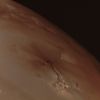
Io-PIA02232-PCF-LXTT.jpgIo's Limb (Absolute Natural Colors; credits for the additional process. and color.: Dr Paolo C. Fienga - Lunar Explorer Italia)179 visitenessun commentoMareKromiumAgo 13, 2011
|
|
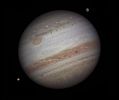
Jupiter-PIA14410.jpgJupiter and "Sons": Io and Ganymede87 visitenessun commentoMareKromiumAgo 13, 2011
|
|

Jupiter-PIA14411.jpgJupiter, from Earth79 visitenessun commentoMareKromiumAgo 13, 2011
|
|

Jupiter-Red_Spot-PCF-LXTT.jpgJupiter's Great Red Spot from Voyager 1 (Credit: NASA, JPL - Additional processing and color.: Dr Paolo C. Fienga - Lunexit Team)336 visiteCaption NASA:"It is a hurricane twice the size of the Earth. It has been raging at least as long as telescopes could see it, and shows no signs of slowing. It is Jupiter's Great Red Spot, the largest swirling storm system in the Solar System.
Like most astronomical phenomena, the Great Red Spot was neither predicted nor immediately understood after its discovery. Still today, details of how and why the Great Red Spot changes its shape, size, and color remain mysterious. A better understanding of the weather on Jupiter may help contribute to the better understanding of weather here on Earth.
The above image is a recently completed digital enhancement of an image of Jupiter taken in 1979 by the Voyager 1 Spacecraft as it zoomed by the Solar System's largest planet.
At about 117 AU from Earth, Voyager 1 is currently the most distant human made object in the Universe and expected to leave the entire Solar Heliosheath any time now".
MareKromiumMag 13, 2011
|
|

Jupiter-Red_Spot-BJ.jpgJupiter's Great Red Spot from Voyager 1 (Credit: NASA, JPL; Digital processing: Dr Björn Jónsson - IAAA)109 visiteCaption NASA:"It is a hurricane twice the size of the Earth. It has been raging at least as long as telescopes could see it, and shows no signs of slowing. It is Jupiter's Great Red Spot, the largest swirling storm system in the Solar System.
Like most astronomical phenomena, the Great Red Spot was neither predicted nor immediately understood after its discovery. Still today, details of how and why the Great Red Spot changes its shape, size, and color remain mysterious. A better understanding of the weather on Jupiter may help contribute to the better understanding of weather here on Earth.
The above image is a recently completed digital enhancement of an image of Jupiter taken in 1979 by the Voyager 1 Spacecraft as it zoomed by the Solar System's largest planet.
At about 117 AU from Earth, Voyager 1 is currently the most distant human made object in the Universe and expected to leave the entire Solar Heliosheath any time now".MareKromiumMag 13, 2011
|
|

Europa-Ridges-PIA00518-PCF-LXTT.jpgRidges on Europa (Absolute Natural Colors; credits for the additional process. and color.: Dr Paolo C. Fienga - Lunexit Team)156 visitenessun commentoMareKromiumApr 03, 2011
|
|

Europa-2-PCF-LXTT.jpgRising Europa (Absolute Natural Colors; credits for the additional process. and color.: Dr Paolo C. Fienga - Lunexit Team)159 visitenessun commentoMareKromiumApr 03, 2011
|
|
| 325 immagini su 28 pagina(e) |
|
|
4 | |
|
|
|
|
|
|
|
|
|





