| Ultimi arrivi - Saturn: the "Ringed Beauty" and His Moons |

Tethys-PIA08254-1.jpgMelanthius Crater (detail mgnf)56 visiteCaption NASA:"Cassini looks into the 245-Km (150-mile) wide crater Melanthius in this view of the Southern Terrain on Tethys. The crater possesses a prominent cluster of peaks in its center which are relics of its formation.
Notable here is a distinct boundary in crater abundance -- the cratering density is much higher in the farthest Western Terrain (left side of the image) than elsewhere.
North on Tethys is up and rotated 45° to the left.
The image was taken in visible light with the Cassini spacecraft narrow-angle camera on July 23, 2006 at a distance of approx. 120.000 Km (such as about 75.000 miles) from Tethys and at a Sun-Tethys-spacecraft, or phase, angle of 29°.
Image scale is roughly 715 mt (such as about 2,345 feet) per pixel".Ago 29, 2006
|
|

Saturn-PIA08253.jpgThe "Ring-Masters"59 visiteCaption NASA:"This view looks down onto the unlit side of Saturn's Ringplane. It nicely shows a near-arm/far-arm brightness asymmetry in the B-Ring: The near arm of the B-Ring (in the lower half of the image) is notably darker from this viewing geometry than is the far arm (above).
Imaging scientists believe this to be a manifestation of the reflection of light from the disk of Saturn falling predominantly on the far arm of the Rings. (At the time this image was taken, Cassini was more or less on the dark side of the Planet.) As the B-Ring is the thickest part of Saturn's Rings, it scatters less sunlight from below, and reflects more Saturnshine from above, than either the A or C-Rings, making the effect look more dramatic in the B-Ring. Two small moons appear in this scene as well: Atlas and Pandora (32 and 84 Km across, respectively); between the two moons lie multiple clumps of material in the F-Ring.
The image was taken in visible light with the Cassini spacecraft wide-angle camera on July 25, 2006 at a distance of approximately 1 million kilometers (600,000 miles) from Saturn and at a Sun-Saturn-spacecraft, or phase, angle of 128 degrees. Image scale is 58 kilometers (36 miles) per pixel.Ago 28, 2006
|
|
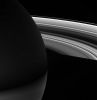
Saturn-PIA08252.jpgSaturnian Night59 visiteCaption NASA:"The night skies of Saturn are graced by the Planet's dazzling Rings, but as this image shows, one's view could be very different depending on the Season and from which Hemisphere one gazes up.
This point of view shows that the Southern Hemisphere is much brighter on the planet's night side than the Northern Hemisphere, owing to the brilliance of Sunlight reflecting off the Southern illuminated Rings. The Northern Hemisphere sees only the ghostly glow of the dim scattered light that manages to penetrate the Rings.
The Planet's shadow eclipses the Rings themselves in the lower half of this scene, but close inspection shows ringlets in the C-Ring silhouetted against the Southern Latitudes.
The image was taken in visible light with the Cassini spacecraft wide-angle camera on July 25, 2006 at a distance of approx. 952.000 Km (about 592.000 miles) from Saturn and at a Sun-Saturn-spacecraft, or phase, angle of 124°. Image scale is roughly 53 Km (about 33 miles) per pixel".Ago 25, 2006
|
|
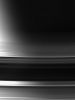
Saturn-PIA08250.jpgThe Rings over Saturn's Terminator58 visiteCaption NASA originale:"With Saturn's Terminator as a backdrop, this view of the unlit face of the Rings makes it easy to distinguish between areas that are actual gaps, where light passes through essentially unimpeded, and areas where the Rings block or scatter light. The gaps are regions in which the brightness varies strongly from left to right as the background goes from bright to dark.
Parts of the image are saturated at left.
The image was taken in visible light with the Cassini spacecraft wide-angle camera on July 24, 2006 at a distance of approx. 577.000 Km (such as about 359.000 miles) from Saturn and at a Sun-Saturn-spacecraft, or phase, angle of 101°. Image scale is roughly 31 Km (about 19 miles) per pixel".Ago 24, 2006
|
|
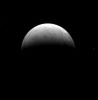
Enceladus-PIA08249.jpgEnceladus58 visiteCaption NASA:"Few large craters are to be found in the wrinkled terrain of Enceladus, where the surface has been reworked by geologic processes presumably resulting from the moon's inner warmth.
Cassini spied the bright crescent of Enceladus on July 23, 2006 at a distance of approx. 628.000 Km (about 391.000 miles).
The image was taken in visible light with the Cassini spacecraft narrow-angle camera at a Sun-Enceladus-spacecraft, or phase, angle of 103°. Image scale is roughly 4 Km (about 2 miles) per pixel".Ago 22, 2006
|
|
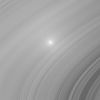
The Rings-PIA08248.jpgOpposition "Surge" on the B-Ring72 visiteBoth images ("A" and "B" Ring) were taken in visible light with the Cassini spacecraft wide-angle camera on July 23, 2006 at a distance of approxi. 262.000 Km (about 163.000 miles) from Saturn.
Image scale in the radial, or outward from Saturn, direction is roughly 13 Km (such as about 8 miles) per pixel.
Ago 22, 2006
|
|
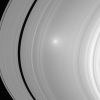
The Rings-PIA08247.jpgOpposition "Surge" on the A-Ring55 visiteThe Opposition Effect exists because of two contributing factors: one is due to the fact that the shadows of Ring particles directly opposite the Sun from Cassini - the Region of Opposition - fall completely behind the particles as seen from the spacecraft. These shadows are thus not visible to the spacecraft: all ring particle surfaces visible to the spacecraft in this image are in Sunlight and therefore bright. Much farther away from the Region of Opposition, the Ring particle shadows become more visible and the scene becomes less bright. The brightness falls off in a circular fashion around the Opposition Point. The main factor to the Opposition Surge in this image is an optical phenomenon called "coherent backscatter": here, the electromagnetic signal from the rays of scattered Sunlight making its way back to the spacecraft is enhanced near the Region of Opposition because, instead of canceling, the electric and magnetic fields comprising the scattered radiation fluctuate in unison.Ago 22, 2006
|
|
Saturn-W00016810.jpgTurbulence (4)59 visiteCaption NASA:"W00016810.jpg was taken on August 16, 2006 and received on Earth August 18, 2006. The camera was pointing toward Saturn that, at the time, was approximately 191.791 Km away.
This image was taken using the CB2 and CL2 filters".Ago 19, 2006
|
|
Saturn-W00016804.jpgTurbulence (3)57 visiteCaption NASA:"W00016804.jpg was taken on August 16, 2006 and received on Earth August 18, 2006. The camera was pointing toward Saturn that, at the time, was approx. 219.458 Km away.
This image was taken using the CB2 and CL2 filters".Ago 19, 2006
|
|
Saturn-W00016803.jpgTurbulence (2)58 visiteCaption NASA:"W00016803.jpg was taken on August 16, 2006 and received on Earth August 18, 2006. The camera was pointing toward Saturn that, at the time, was approx. 219.806 Km away.
This image was taken using the MT3 and CL2 filters".Ago 19, 2006
|
|
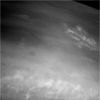
Saturn-W00016795.jpgTurbulence (1)57 visiteCaption NASA:"W00016795.jpg was taken on August 16, 2006 and received on Earth August 18, 2006. The camera was pointing toward Saturn that, at the time, was approx. 226.622 Km away.
This image was taken using the CB2 and CL2 filters".Ago 19, 2006
|
|

Dione-N00064763.jpgThe "Night" of Dione (3)56 visiteCaption NASA:"N00064763.jpg was taken on August 16, 2006 and received on Earth August 18, 2006.
The camera was pointing toward Dione that, at the time, was approximately 155.433 Km away.
This image was taken using the CL1 and CL2 filters".Ago 19, 2006
|
|
| 2245 immagini su 188 pagina(e) |
 |
|
|
|
|
99 | |
|
|
|
|





