| Ultimi arrivi - Saturn: the "Ringed Beauty" and His Moons |

Saturn-W00018110.jpgDust and other particles in the E-Ring Space (2)58 visitenessun commentoSet 23, 2006
|
|

Saturn-W00018107.jpgDust and other particles in the E-Ring Space (1)67 visitenessun commentoSet 23, 2006
|
|

Saturn-W00018136.jpgFrom "A" to "E"!58 visitenessun commentoSet 23, 2006
|
|

Saturn-W00018153.jpgSunshine on Saturn...58 visitenessun commentoSet 23, 2006
|
|

Saturn-PIA08272.jpgA "Clash of Clouds" in Saturn's upper atmosphere58 visiteCaption NASA originale:"The Cassini spacecraft presents a tempestuous scene in which the clouds of Saturn's bright Equatorial Region entwine with those in darker, Southerly Latitudes.
The image was taken using a filter sensitive to wavelengths of infrared light centered at 890 nanometers. The image was acquired with the Cassini spacecraft wide-angle camera on Aug. 16, 2006 at a distance of approx. 289.000 Km (about 180.000 miles) from Saturn. Image scale is roughly 14 Km (such as about 8 miles) per pixel".Set 22, 2006
|
|
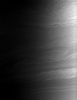
Saturn-PIA08263.jpgSaturn's Terminator56 visiteCaption NASA originale:"Saturn's clouds billow and swirl in the turbulent zones of shear between Eastward- and Westward-flowing jets. This view looks toward the Terminator on Saturn, where night gives way to day.
The image was taken using a spectral filter sensitive to wavelengths of infrared light centered at 728 nanometers.
The image was obtained with the Cassini spacecraft wide-angle camera on Aug. 16, 2006 at a distance of approx. 338.000 Km (about 210.000 miles) from Saturn and at a Sun-Saturn-spacecraft, or phase, angle of 67°.
Image scale is roughly 17 Km (about 10 miles) per pixel". Set 20, 2006
|
|

Saturn-PIA08270.jpgNight-flight around Saturn...58 visiteCaption NASA originale:"Saturn's shadow cuts sharply across the Rings in this remarkable night side view.
The Planet's Northern Latitudes are in darkness in the upper portion of this scene, while the Southern reaches are bathed in Ringshine. On the left, Sunlight filters through the Rings, and on the right the Rings are blocking the reflected Ringshine in the shadow of Saturn. The overexposed, sunlit crescent at lower left marks the transition from Saturnian day to night.
Mimas hovers below center - a tiny bauble, ornamenting the Ringed Giant.
The image was taken in visible green light with the Cassini spacecraft wide-angle camera on August 19, 2006 at a distance of approx. 1,5 MKM (about 1 MMs) from Mimas and 1,7 MKM (about 1,1 MMs) from Saturn.
Image scale is roughly 92 Km (about 57 miles) per pixel on Mimas and approx. 103 Km (about 64 miles) on Saturn".Set 20, 2006
|
|
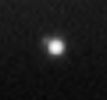
Earth-PIA08324-2.jpgEarth, from Saturn's Space (2)60 visiteThis magnified view of the image taken through the clear filter (monochrome) shows the Moon as a dim protrusion to the upper left of Earth. Seen from the Outer Solar System through Cassini's cameras, the entire expanse of direct human experience, so far, is nothing more than a few pixels across. Earth no longer holds the distinction of being our Solar System's only "water world", as several other bodies suggest the possibility that they too harbor liquid water beneath their surfaces. The Saturnian moon, Enceladus, is among them, and is also captured on the left in this image, with its plume of water ice particles and swathed in the blue E-Ring which it creates. Delicate fingers of material extend from the active moon into the E-Ring. The narrow and tenuous G-Ring and the Main Rings are seen at the right. The view looks down from about 15° above the un-illuminated side of the Rings.
Images taken using red, green and blue spectral filters were combined to create this view. The image was taken by the Cassini spacecraft wide-angle camera on Sept. 15, 2006, at a distance of approx. 2,1 MKM (about 1,3 MMs) from Saturn and at a sun-Saturn-spacecraft angle of almost 179°.
Image scale is roughly 129 Km (about 80 miles) per pixel.
At this time, Cassini was nearly 1,5 BKM (about 930 MMs) from Earth.
Set 20, 2006
|
|

Earth-PIA08324-1.jpgEarth, from Saturn's Space (1)85 visiteCaption NASA originale:"Not since NASA's Voyager 1 spacecraft saw our home as a pale blue dot from beyond the orbit of Neptune has Earth been imaged in color from the Outer Solar System. Now, Cassini casts powerful eyes on our home Planet, and captures Earth, a pale blue orb - and a faint suggestion of our Moon - among the glories of the Saturn System.
Earth is captured here in a natural color portrait made possible by the passing of Saturn directly in front of the Sun from Cassini's point of view. At the distance of Saturn's orbit, Earth is too narrowly separated from the Sun for the spacecraft to safely point its cameras and other instruments toward its birthplace without protection from the Sun's glare.
The Earth-and-Moon System is visible as a bright blue point on the right side of the image above center. Here, Cassini is looking down on the Atlantic Ocean and the Western Coast of North Africa. The phase angle of Earth, seen from Cassini is about 30°".Set 20, 2006
|
|

Saturn-W00018089.jpgWhat do some images show? (5)113 visitenessun commentoSet 19, 2006
|
|
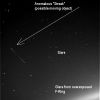
Saturn-W00018088.jpgWhat do some images show? (4)73 visiteNota: lo "streak" lo abbiamo definito anomalo poichè NON si tratta di un photo-artifact (sicuramente) e non pare proprio essere un "raggio cosmico".
Il motivo per cui escludiamo l'ipotesi di "raggio cosmico" deriva dalla circostanza per cui lo "streak" appare, innanzitutto, troppo lungo - esperienza su immagini relative a precedenti "raggi cosmici" confermati come tali dalla NASA alla mano - e poi perchè, operando un'elevata risoluzione del frame, la traccia si risolve in una serie di "puntini" allineati, tipici - anche in fotografia terrestre - della ripresa di un oggetto luminoso in movimento su campo scuro (es. aereo o satellite artificiale in transito).Set 19, 2006
|
|

Saturn-W00017998.jpgWhat do some images show? (3)59 visitenessun commentoSet 19, 2006
|
|
| 2245 immagini su 188 pagina(e) |
 |
|
|
|
|
95 | |
|
|
|
|





