| Ultimi arrivi - Saturn: the "Ringed Beauty" and His Moons |

The_Rings-PIA08941.jpgDaphnis, Atlas and the Rings57 visiteCaption NASA:"Across the expanse of Saturn's Rings, the Cassini spacecraft spies 2 small moons in consort.
Atlas is seen exterior to the bright outer edge of the A-Ring. Daphnis, below Atlas in this view, orbits Saturn within the narrow Keeler Gap. The presence of Daphnis is revealed by the waves it raises in the ring material surrounding it on the edges of the gap. Daphnis and its waves moved between exposures taken to create this color view, resulting in their slight displacement in each color.
This view looks toward the unilluminated side of the Rings from about 18° above the Ring-Plane. Bright clumps are visible in the narrow F-Ring.
Images taken using red, green and blue spectral filters were combined to create this natural color view. The images were acquired with the Cassini spacecraft narrow-angle camera on April 13, 2007 at a distance of approx. 1,8 MKM (about 1,1 MMs) from Atlas.
Image scale is roughly 11 Km (about 7 miles) per pixel".MareKromiumMag 18, 2007
|
|

Saturn-PIA08942.jpgDeep Blue (IR view of the Rings)56 visiteThe Cassini spacecraft surveys Saturn's outstretched Ring System in the infrared from a vantage point high above the Planet's Northern Latitudes. Nearly the full expanse of the main rings is visible here -- from the C-Ring to the outer edge of the A-Ring (in the upper left corner).
Ring shadows are visible on the planet at lower left, and two large storms swirl near center.
This view looks toward the unilluminated side of the Rings from about 52° above the Ring-Plane.
The image was taken with the Cassini spacecraft wide-angle camera using a combination of spectral filters sensitive to wavelengths of infrared light centered at 752 (red channel), 890 (blue channel) and 728 (green channel) nanometers.
The view was acquired on April 5, 2007 at a distance of approx. 1,4 MKM (about 900.000 miles) from Saturn. Image scale is roughly 81 Km (approx. 51 miles) per pixel.MareKromiumMag 18, 2007
|
|

Saturn-PIA08939.jpgCandy Stripes59 visiteCaption NASA:"This strongly enhanced false color view is a departure from the familiar bluish North and golden South seen in natural color Cassini spacecraft images, but the contrast between regions north and South of the Ring shadows is here more readily apparent.
The Northern Region is marked by a multitude of bright, patchy clouds.
The Region south of the Ring shadows contains the bright equatorial band seen in many monochrome Cassini views taken at infrared wavelengths (see PIA07590).
Taken just minutes after PIA08936, this view makes Saturn's Rings faintly visible at lower left. The false color enhancement brings out additional detail in the Planet's clouds that is not visible in the natural color view.
This view looks toward the unilluminated side of the Rings from about 52° above the Ring-Plane".MareKromiumMag 14, 2007
|
|

Dione-PIA08938.jpgThe South Polar Regions of Dione59 visiteCaption NASA:"The Cassini spacecraft takes in the crater-strewn surface near Dione's South Pole in this natural color view. Long fractures slice across the surface here, as on other parts of the moon. Previous Cassini imaging investigations have shown that the canyons seen here do not appear to have the bright, presumably youthful, walls seen in fractures nearer the Equator.
Images taken using red, green and blue spectral filters were combined to create this natural color view. The images were taken in visible light with the Cassini spacecraft narrow-angle camera on April 8, 2007 at a distance of approx. 268.000 Km (such as about 166.000 miles) from Dione and at a Sun-Dione-spacecraft, or phase, angle of 92°.
Image scale is roughly 2 Km (5249 feet) per pixel".MareKromiumMag 12, 2007
|
|

Saturn-PIA08936.jpgA Planetary "Smile", from Saturn...58 visiteCaption NASA:"Brooding Saturn seems to be missing its rings, but their shadows on the Planet betray their presence. The inner rings are in fact contained within this scene, but they are so tenuous as to be nearly invisible.
This view looks toward the unilluminated side of the Rings from about 52° above the Ring-Plane. Some motion is apparent in Saturn's clouds between the exposures used to create this color composite, as evidenced by the 'rainbow' effect seen here and there across the face of the Planet.
Images taken using red, green and blue spectral filters were combined to create this natural color view. The images were taken with the Cassini spacecraft wide-angle camera on April 5, 2007 at a distance of approx. 1,5 MKM (about 900.000 miles) from Saturn.
Image scale is roughly 84 Km (about 52 miles) per pixel".MareKromiumMag 10, 2007
|
|

Saturn-PIA08370.jpgSaturn (natural colors - elab. NASA)57 visiteCaption NASA:"Colorful Saturn tilts its darkened Ring-Plane toward Cassini. Against the dark sky, the Rings are made visible by the light that scatters through them toward the camera.
The F-Ring shepherd moon Pandora is faintly visible at the top, left of center. Pandora's brightness was increased by a factor of three to aid its visibility.
This view looks toward the unilluminated side of the Rings from about 18° above the Ring-Plane. The Planet is visible through the innermost and outermost portions of the Rings.
Images taken using red, green and blue spectral filters were combined to create this natural color view. The images were obtained by the Cassini spacecraft wide-angle camera on April 13, 2007, at a distance of approx. 1,8 MKM (about 1,1 MMs) from Saturn.
Image scale is roughly 108 Km (about 67 miles) per pixel".MareKromiumMag 09, 2007
|
|

Saturn-PIA08934.jpgThe Upper Atmosphere of Saturn58 visiteCaption NASA:"Whorls, streamers and eddies play in the banded atmosphere of a Gas Giant. Strong image enhancement renders unto Saturn's clouds a grainy texture not unlike sandstone. However, the loss in delicate smoothness is compensated for by an increase in discernible detail.
The image was taken with the Cassini Spacecraft wide-angle camera using a combination of spectral filters sensitive to wavelengths of infrared light centered at 728 (green channel), 752 (red channel) and 890 (blue channel) nanometers. The semi-transparent red features across the image are clouds detected by the 752 nanometer filter. The view was acquired on Aug. 19, 2005 at a distance of approx. 492.000 Km (such as about 306.000 miles) from Saturn. Image scale is roughly 26 Km (about 16 miles) per pixel".MareKromiumMag 07, 2007
|
|

Saturn-PIA08933.jpgSaturnian Shadows58 visiteCaption NASA:"The Cassini spacecraft looks across Saturn's cloud-dotted North and shadowed Pole, and out across the lanes of ice that compose its Rings.
Prometheus is visible between the A and F-Rings near the center of the image.
This view looks toward the unilluminated side of the Rings from about 42° above the Ring-Plane. The Planet's shadow stretches toward the lower right corner.
The image was taken in visible light with the Cassini spacecraft wide-angle camera on April 1, 2007 at a distance of approx. 2 MKM (about 1,2 MMs) from Saturn.
Image scale is roughly 119 Km (about 74 miles) per pixel".MareKromiumMag 06, 2007
|
|

Saturn-PIA08932.jpgThe bluish Northern Latitudes of Saturn (natural colors - elab. NASA)57 visiteCaption NASA:"In Saturn's bluish North, day ends for the dreamy white clouds that stretch here into twilight.
This natural color scene shows middle latitudes in Saturn's North at excellent resolution, and with little detectable blur due to spacecraft motion.
North on Saturn is up and rotated 22° to the right.
Images taken using red, green and blue spectral filters were combined to create this color view. The image was taken with the Cassini spacecraft narrow-angle camera on April 1, 2007 at a distance of approx. 2 MKM (about 1,2 MMs) from Saturn and at a Sun-Saturn-spacecraft, or phase, angle of 86°.
Image scale is roughly about 12 Km (approx. 7 miles) per pixel".MareKromiumMag 04, 2007
|
|
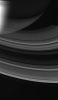
Saturn-PIA08929.jpgSuncatcher57 visiteCaption NASA:"The Rings of Saturn glow softly as sunlight from below wends its way through. Some of the Sun's light bounces off the Rings' opposite side and can be seen illuminating Saturn's night side Southern Hemisphere.
Such a view is only possible from the Saturn-orbiting Cassini spacecraft.
This view looks toward the unilluminated side of the rings from about 33° above the Ring-Plane. Shadows of the innermost Rings are cast upon the Planet at upper left. The edge of Saturn's shadow cuts a straight line across the Rings near upper right.
The image was taken in visible light with the Cassini spacecraft wide-angle camera on March 30, 2007 at a distance of approx. 1,9 MKM (about 1,2 MMs) from Saturn. Image scale is roughly 117 Km (about 73 miles) per pixel".MareKromiumMag 02, 2007
|
|

Dione-N00081707.jpgDione in black & white59 visitenessun commentoMareKromiumApr 29, 2007
|
|
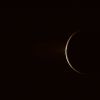
Enceladus-N00081661.jpgFountains in the Darkness (1) - natural colors, elab. Lunexit61 visiteCaption NASA:"N00081662.jpg was taken on April 24, 2007 and received on Earth April 25, 2007.
The camera was pointing toward ENCELADUS that, at the time, was approx. 189.092 Km away, and the image was taken using the CL1 and CL2 filters.
This image has not been validated or calibrated".
Nota: nei primi due frames le "plumes" di ghiaccio d'acqua (le "Fontane", come le abbiamo battezzate qui) che si dipartono dalle Regioni Sud Polari di Encelado possono essere già individuate, da un occhio attento e con l'immagine portata in full-size, anche se esse esplodono in tutta la loro bellezza ed evidenza nei frames 3 e 4.MareKromiumApr 26, 2007
|
|
| 2245 immagini su 188 pagina(e) |
 |
|
|
|
|
82 | |
|
|
|
|





